



Filter
-
(133)
-
(733)
-
(4)
-
(1)
-
(47832)
-
(91)
-
(25)
-
(14)
-
(433)
-
(7)
-
(181)
-
(8)
-
(33)
-
(17)
-
(7)
-
(9)
-
(9)
-
(5)
-
(21)
-
(8)
-
(12)
-
(9)
-
(3)
-
(10)
-
(10)
-
(56)
-
(45)
-
(12)
-
(3)
-
(7)
-
(6)
-
(5)
-
(8)
-
(7)
-
(11)
-
(58)
-
(13)
-
(30)
-
(8)
-
(5)
-
(10)
-
(5)
-
(14)
-
(4)
701 - 710
of 52753 results
-
 Article TrainingNot every graduate student will follow the footsteps of their mentor.Apr 21, 2021
 -
 Article Career PathsAs new faculty at the Princeton Neuroscience Institute, Annegret Falkner is also new to managing a lab. In this interview, she shares who and what has defined her approach to running the Falkner Lab, her advice for empowering curiosity and decision-making in trainees, and the rewards of coaching others as a PI.Apr 20, 2021
 -
 Journal ArticleDespite various histological, electrophysiological, and imaging studies, the topographic organization of saccade-related activity in the posterior parietal cortex (PPC) has been notoriously difficult to characterize. In part, this is because areas of interest in PPC are often embedded deep in sulci in macaques and humans. Understanding the extent of topographic organization in PPC can provide insights into the computation contributions of PPC. The lissencephalic cortex of the common marmoset offers a unique opportunity to investigate fine-scale topographic organization in PPC. Recordings were obtained from the PPC of two male marmosets performing a visually-guided center-out saccade task with 8 or 36 peripheral targets using multi-channel electrode arrays with 100 μm spacing. By plotting the pattern of saccade direction tuning preferences across all penetrations and cortical depths, uncovered topographic organizational features within PPC were uncovered. Like other primates, multiunits in marmoset PPC tend...Sep 19, 2025
 -
Journal ArticleThe integration of olfactory and spatial information is critical for guiding animal behavior. The lateral entorhinal cortex (LEC) is reciprocally interconnected with cortical areas for olfaction and the hippocampus and thus ideally positioned to encode odor-place associations. Here, we used mini-endoscopes to record neural activity in the mouse piriform cortex (PCx) and LEC. We show that in head-fixed mice, odor identity could be decoded from LEC ensembles, but less accurately than from PCx. In male mice freely navigating a linear track, LEC ensemble activity at the odor ports was dominated by spatial information. Spatial position along the linear track could be decoded from LEC and PCx activity, however, PCx but not LEC exhibited strong behavior-driven modulation of positional information. Together, our data reveal that information about odor cues and spatial context is differentially encoded along the PCx-LEC axis. Significance statement For most animals, the sense of smell is essential for successfully...Sep 19, 2025
-
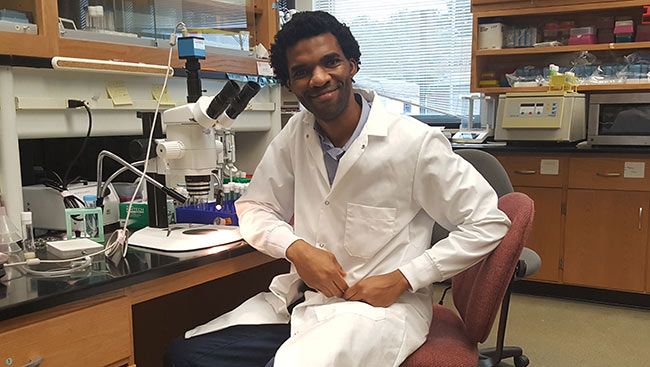 Article Professional DevelopmentThroughout his training and beginning of his career, Hakeem Lawal, an assistant professor at Delaware State University (DSU), has transitioned from one country (Nigeria) to another (the United States) — and then across three different U.S. states.Apr 14, 2021
 -
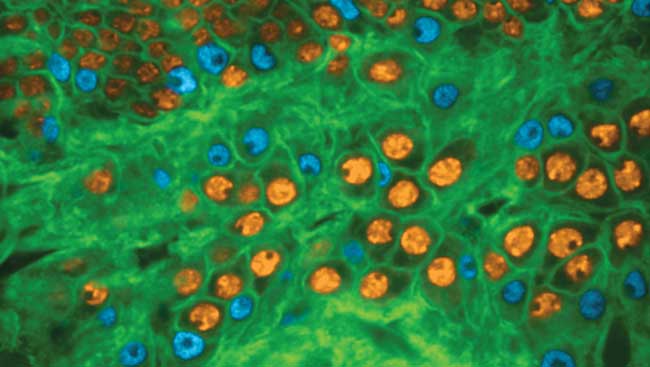 Poster TrainingThe Neurodata Without Borders: Neurophysiology project (NWB) is an effort to standardize the description and storage of neurophysiology data and metadata. NWB enables data sharing and reuse and reduces the energy-barrier to applying data analytics both within and across labs. Several laboratories, including the Allen Institute for Brain Science, have wholeheartedly adopted NWB. The community needs to join forces to achieve data standardization in neurophysiology. This course will provide an introduction to NWB and walk through tutorials on how to use NWB software tools to store different types of data in NWB. This course is intended for MATLAB users.Apr 13, 2021
 -
 Article CommunityIn response to the recent killings of Ahmaud Arbery, George Floyd, and Breonna Taylor, many organizations, corporations, professional sports teams, and individuals have issued statements expressing their support for the Black Lives Matter movement and their condemnation of racist violence, police brutality, and the systematic and structural racism that exists in our society. Among the organizations that have published statements are three closely connected to many members of the International Neuroethics Society (INS) and to those working in neuroethics – the American Bar Association (ABA), the American Philosophical Association (APA), and the Society for Neuroscience (SfN).Apr 6, 2021
 -
 Article Career PathsI’ve been interested in science, literature, and writing — creative writing especially — since I was young.Mar 31, 2021
 -
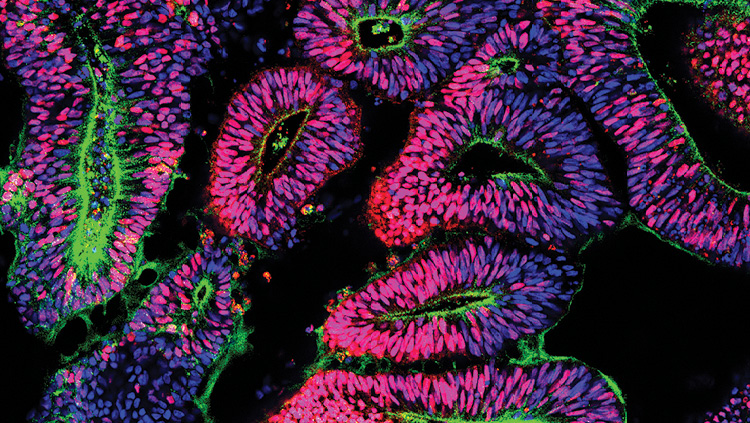 Webinar Scientific ResearchThis webinar is exclusive for SfN members and FENS members. Please log in or link your FENs membership for access. Thousands of non-coding (nc)RNAs have been identified with functions in processes, such as translation regulation and RNA processing. Different classes of ncRNAs exist, including microRNAs, circRNAs and tRNAs, some of which are enriched in the nervous system and neural cells. This webinar will discuss some of the functions of these ncRNAs in the developing and adult brain and highlights how their deregulation contributes to brain trauma and disease.Mar 25, 2021
 -
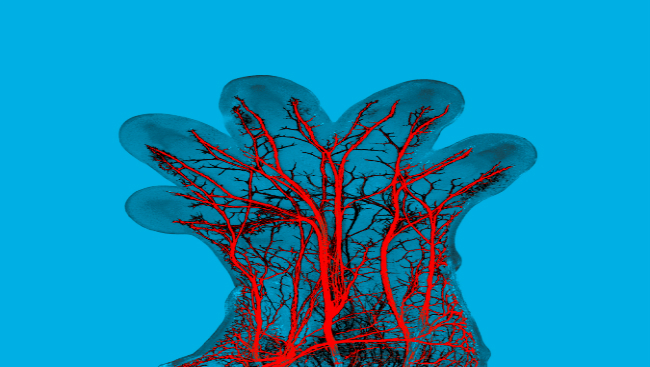 Article Career PathsGabriella D’Arcangelo explains why she pursued a career in researching and finding therapies for human brain malformations.Mar 25, 2021




