



Filter
-
(133)
-
(733)
-
(4)
-
(1)
-
(47832)
-
(91)
-
(25)
-
(14)
-
(433)
-
(7)
-
(181)
-
(8)
-
(33)
-
(17)
-
(7)
-
(9)
-
(9)
-
(5)
-
(21)
-
(8)
-
(12)
-
(9)
-
(3)
-
(10)
-
(10)
-
(56)
-
(45)
-
(12)
-
(3)
-
(7)
-
(6)
-
(5)
-
(8)
-
(7)
-
(11)
-
(58)
-
(13)
-
(30)
-
(8)
-
(5)
-
(10)
-
(5)
-
(14)
-
(4)
641 - 650
of 52753 results
-
 Article CommunityStarting grad school brought me from the most poverty-stricken county in the country to Portland, Oregon. And yet, much of the advice I’ve received about surviving in grad school assumes I have the same background as other students. That I have the same fears and priorities they do. I started talking to my mentors about my background and the challenges I faced. From those discussions, my mentors came to understand my needs are different than other students’.Jul 6, 2021
 -
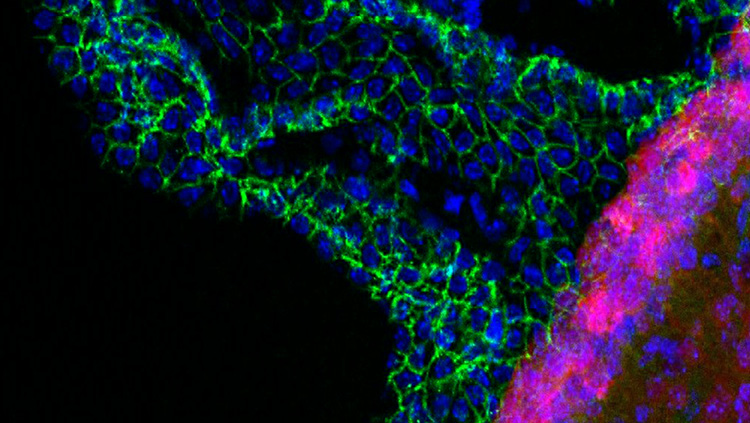 Webinar Scientific ResearchThis webinar is exclusive for SfN members and FENS members. Please log in or link your FENs membership for access. All living organisms are able to implement adaptation mechanisms that allow them to survive even in the most extreme conditions. Cerebral ischemia represents an extreme condition in which CNS cells are called upon to automate adaptations that ensure survival. This concept is exemplified and perfectly reproduced in the tolerance induced by the phenomena of ischemic conditioning. Ischemic conditioning is used to group together a few different stressors or interventions able to confer resistance to a deleterious brain event as an adaptive biological process. Ischemic conditioning through the exposure to a sub-threshold insult as above mentioned, can confer neuroprotection both if conditioning stimuli is applied before, as preconditioning stimulus, or if it is delivered after the harmful ischemia, as occurs in postconditioning. Over the years, several molecular pathways have been proposed as plausible mechanisms to explain the adaptive phenomena induced by hypoxia. This webinar will discuss mechanisms involved in post-ischemic brain adaptation. The knowledge of these mechanisms may provide information to bring light on those molecular pathways involved in brain protection. In this webinar, speakers will cover points including: Post-ischemic brain remodeling and plasticity, evaluating pathomechanisms contributing to secondary brain injury and searching strategies that promote neurological recovery in the post-acute stroke phase. What the function of peripheral events in inducing brain tolerance to stroke. The plethora of factors that can influence the tolerance phenomenon occurring during pre- and post-conditioning Why it is important to escape a neuron-centric view and to consider the role of other cell types, including small vessels, in the mechanism of brain adaptation.Jun 28, 2021
 -
 Webinar Scientific ResearchThis webinar is exclusive for SfN members. Please log in for access. Join this interactive session as Khalid Elsaafien and Eric Krause discuss their paper, “Identification of Novel Cross-Talk between the Neuroendocrine and Autonomic Stress Axes Controlling Blood Pressure” with JNeurosci Editor-in-Chief Marina Picciotto. Attendees can submit questions at registration and live during the webinar. Below is the significance statement of Identification of Novel Cross-Talk between the Neuroendocrine and Autonomic Stress Axes Controlling Blood Pressure, published on May 26, 2021, in JNeurosci and authored by Khalid Elsaafien, Matthew K. Kirchner, Mazher Mohammed, Sophia A. Eikenberry, Chloe West, Karen A. Scott, Annette D. de Kloet, Javier E. Stern, and Eric G. Krause. The survival of an organism is dependent on meeting the energetic demands imposed by stressors. This critical function is accomplished by the CNS's ability to orchestrate simultaneous activities of neurosecretory and autonomic axes. Here, we unveil a novel signaling mechanism within the paraventricular nucleus of the hypothalamus that links excitation of neurons producing corticotropin-releasing-hormone with excitation of neurons controlling sympathetic nervous system activity and blood pressure. The implication is that chronic stress exposure may promote cardiometabolic disease by dysregulating the interneuronal cross-talk revealed by our experiments.Jun 27, 2021
 -
 Annual Meeting Video Career PathsCareers in translational drug discovery offer exciting opportunities to apply your biomedical research training to the development of much-needed treatments for disease. While pursuing a career in drug discovery in the past has meant exiting the academic setting to join the pharmaceutical industry, this is no longer the case. Translational drug discovery efforts are occurring in a variety of settings including those in academia and the government. This Neuroscience 2017 event provides an overview of career opportunities in the pharmaceutical industry, academic drug discovery centers, and NIH Intramural Research Programs and showcases examples of how basic and innovative biology can be turned into a drug discovery program in a variety of research settings that will lead to new medicines for patients who need them.Jun 23, 2021
 -
 Article AdvocacyHow can researchers advocate effectively, especially at the local level?Jun 22, 2021
 -
 Article TrainingVictoria Prince is the dean for graduate affairs in the biological sciences division at the University of Chicago. As a co-PI on her university’s Broadening Experience in Science Training (BEST) Award, Prince works to ensure that trainees’ are well-equipped to pursue various career paths. Here, she discusses how.Jun 15, 2021
 -
 Journal ArticlePerception is shaped by both the physical properties of stimuli and their contextual presentation, often leading to systematic biases such as the central tendency effect, where perceptual judgments shift toward the average of the stimulus set. This study explored the central tendency bias in vibrotactile perception, an area that has received limited attention while also replicating its well-documented occurrence in color perception to validate previous findings. Using a within-subject design, participants (5 males, 15 females) completed color and vibrotactile discrimination tasks, each consisting of three blocks, which comprised systematically shifted stimulus sets. In an established virtual reality color task, stimuli ranged from yellow–green to blue–green, while in the vibrotactile task, stimuli varied in vibration intensity around a baseline distribution. As predicted, the point of subjective equality shifted toward the mean of the stimulus sets in both tasks, confirming the presence of a central tenden...Oct 1, 2025
 -
 Journal ArticleDespite various histological, electrophysiological, and imaging studies, the topographic organization of saccade-related activity in the posterior parietal cortex (PPC) has been notoriously difficult to characterize. In part, this is because areas of interest in PPC are often embedded deep in sulci in macaques and humans. Understanding the extent of topographic organization in PPC can provide insights into the computation contributions of PPC. The lissencephalic cortex of the common marmoset offers a unique opportunity to investigate fine-scale topographic organization in PPC. Recordings were obtained from the PPC of two male marmosets performing a visually guided center-out saccade task with 8 or 36 peripheral targets using multichannel electrode arrays with 100 μm spacing. By plotting the pattern of saccade direction tuning preferences across all penetrations and cortical depths, we uncovered topographic organizational features within the PPC. Like other primates, multiunits in marmoset PPC tend to prefe...Oct 1, 2025
 -
 Journal ArticleRecent investigations have revealed that selective attention to lateralized speech increases ipsilateral tonic electromyographic activity in the vestigial human auriculomotor system. However, it has yet to be determined whether this modulation depends upon predictive cues that are inherent in continuous speech or whether it is a general concomitant of selective attention to sounds in the auditory periphery. The present study addressed this question by replacing speech with randomized, unpredictable sequences of brief tonal stimuli in a dichotic listening task that necessitated a sustained anticipatory focus of attention. Participants (8 female, 23 male) were presented with sequences of brief tone bursts in one ear and frequency-modulated “chirps” in the other ear and were instructed to focus on sounds in one ear and report attenuated deviant stimuli in that ear. Posterior auricular muscle (PAM) activity was recorded behind both ears, and non-rectified stimulus-locked responses were assessed to ensure the r...Oct 1, 2025
 -
 Journal ArticleThe parabrachial (PB) nucleus participates in taste processing and integration with other senses. PB neurons that express the Calca gene support sensory-integrative responses, albeit only limited data have addressed their influence on taste. Here we investigated how chemogenetic dampening of PB- Calca neurons affected mouse orosensory preferences for diverse taste stimuli in brief-access fluid exposure tests, which capture oral sensory/tongue control of licking behavior. Intracranial delivery of Cre-dependent viruses in female and male Calca Cre/+ mice induced expression of the inhibitory designer receptor hM4Di:mCherry (hM4Di mice) or fluorophore mCherry alone (mCherry control mice) in PB- Calca neurons. Several weeks later, hM4Di and mCherry mice entered brief-access tests where they could lick solutions during discrete, seconds-long trials. Stimuli included concentration series of the behaviorally avoided bitter taste stimuli quinine and cycloheximide, the appetitive sugar sucrose, and mildly cool water...Oct 1, 2025




