



Filter
-
(133)
-
(733)
-
(4)
-
(1)
-
(47832)
-
(91)
-
(25)
-
(14)
-
(433)
-
(7)
-
(181)
-
(8)
-
(33)
-
(17)
-
(7)
-
(9)
-
(9)
-
(5)
-
(21)
-
(8)
-
(12)
-
(9)
-
(3)
-
(10)
-
(10)
-
(56)
-
(45)
-
(12)
-
(3)
-
(7)
-
(6)
-
(5)
-
(8)
-
(7)
-
(11)
-
(58)
-
(13)
-
(30)
-
(8)
-
(5)
-
(10)
-
(5)
-
(14)
-
(4)
621 - 630
of 52753 results
-
 Journal ArticleThe ability to inhibit and adapt our behavior in response to changing stimuli is a critical component of everyday life. Individuals with Parkinson’s disease (PD) may struggle to inhibit behavior, particularly in the presence of dopaminergic therapy, which can result in impulsive behavior. Impulse control disorders are often operationalized in the laboratory using motor inhibition tasks. However, deficits of motor inhibition tasks are not always observed in PD, perhaps because of the nature of the motor inhibition that is engaged in typical tasks (e.g., suppression of incipient movement such as a button press). We employed a novel continuous movement stop task to investigate planned and unplanned motor inhibition during ongoing movement. EEG was recorded during task performance from individuals with PD (OFF and ON dopaminergic medication) and age-matched healthy controls (HC). Participants were of any sex. We found that the time it took for participants to stop a continuous movement was impaired (i.e., long...Oct 10, 2025
 -
 Article DiversityA coordinated international effort will be central to effectively promoting diversity in science. The ALBA Network aims to promote equality and diversity in the brain sciences by sharing best practices and providing better visibility and networking opportunities to scientists from underrepresented groupsJul 22, 2021
 -
Article CommunityA coordinated international effort will be central to effectively promoting diversity in science. The ALBA Network aims to promote equality and diversity in the brain sciences by sharing best practices and providing better visibility and networking opportunities to scientists from underrepresented groupsJul 22, 2021
-
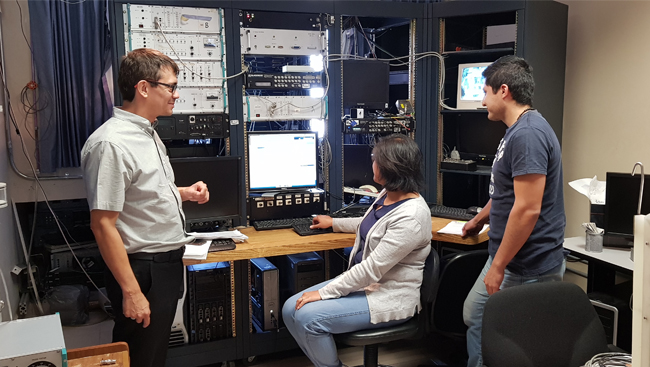 Article Professional DevelopmentI see neuroscience starting to thrive in Mexico. Here’s some history to show what’s contributed to that. Mexican neuroscience started in the 1940s and was led by two neuroscientists: Arturo Rosenblueth and Raúl Hernández Peón. Rosenblueth worked at Harvard University but eventually returned to Mexico and started the Center for Research and Advanced Studies of the National Polytechnic Institute (Cinvestav). It’s similar to Princeton’s Institute for Advanced Study and centered mainly around neuroscience, mathematics, and physics. He was a big promoter of basic science and had high academic standards, which led his group to make significant strides for the field. Hernández Peón had a similar background. He began working at the University of California, Los Angeles, but returned to the National University of Mexico, where he formed a successful research team. These two researchers formed large groups that are still alive in Mexican neuroscience today.Jul 21, 2021
 -
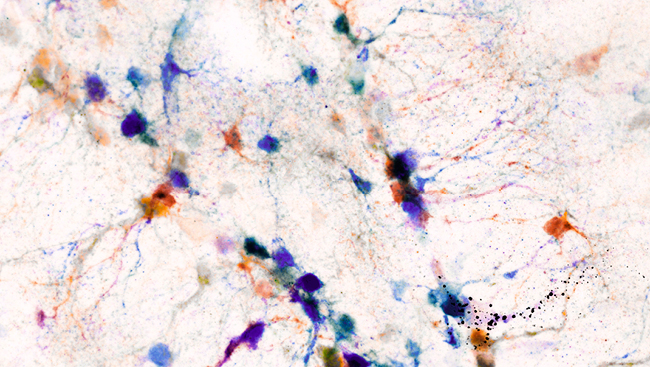 Article Scientific ResearchMaterial below summarizes the article Characteristics of Waveform Shape in Parkinson’s Disease Detected with Scalp Electroencephalography, published on May 20, 2019, in eNeuro and authored by Nicko Jackson, Scott R. Cole, Bradley Voytek, and Nicole C. Swann. Study Question We used a novel approach for analyzing neural signals (“brain waves”) to detect signatures of Parkinson’s disease from brain recordings acquired from the scalp (taken using electroencephalography, or EEG). This novel approach quantifies asymmetries in the shape of the brain waves. For example, is the peak sharper (or “pointier”) than the trough? How This Research Advances What We Know Currently, Parkinson’s disease (PD) is mainly diagnosed and monitored using clinical rating scales. These measures are subjective and can be imprecise. Thus, an objective measure of PD is needed. Electrical brain recordings represent one possible objective measure of PD. Previous research has shown that PD is marked by overly synchronized brain activity. In humans, this phenomenon has predominantly been demonstrated with recordings from the basal ganglia acquired during neurosurgery. In these studies, conventional measures of synchronized brain activity, like the power of oscillatory activity, relate to PD symptoms.Jul 20, 2021
 -
Journal ArticleStudying locomotor activity in animal models is crucial for understanding physiological, behavioral, and pathological processes. This study aimed to develop an artificial intelligence-based tracking system called Goblotrop, designed to localize rodents within their laboratory environment. The Goblotrop system uses two infrared cameras to record videos of rodents in their home cages. A neural network analyzes these videos to determine the rodent’s position at each time point. By tracking changes in position over time, the system provides detailed insights into rodent behavior, including speed, mobility, and climbing activity. To evaluate the system’s reliability, we utilized a starvation-induced hyperactivity model, employed as a female mouse model for anorexia nervosa. This model is characterized by pronounced hyperactivity, typically assessed using electronically monitored running wheels. Both the Goblotrop system and running wheel measurements demonstrated that starvation increases food-anticipatory acti...Oct 8, 2025
-
Journal ArticleAlthough clinical and experimental evidence highlight the role of thalamus in voluntary movement production, the involvement of thalamus in complex motor tasks such as speech production remains to be elucidated. The present study examined neural activity within bilateral thalamus in 13 participants (7 female) with essential tremor undergoing awake deep brain stimulation implantation surgery, using three speech tasks of varied complexity (vowel vocalization, a diadochokinetic task [DDK] and sentence repetition). Low frequency neural activity (delta/theta band) activity was significantly increased during sentence and DDK compared to vowel vocalization in the bilateral motor thalamus, and to a lesser extent increased for sentence repetition compared to DDK. Moreover, there was prominent pre-speech beta band activity, with a greater decrease in the power of beta activity for sentence compared to DDK and vowel vocalization. The greater low frequency activity in more complex speech tasks may reflect the allocati...Oct 8, 2025
-
Journal ArticleThirst is a strongly motivated internal state that is represented in central brain circuits that are only partially understood. Water seeking is a discrete step of the thirst behavioral sequence that is amenable to uncovering the mechanisms for motivational properties such as goal-oriented behavior, value encoding, and behavioral competition. In Drosophila water seeking is regulated by the NPY-like neuropeptide NPF, however the circuitry for NPF-dependent water seeking is unknown. To uncover the downstream circuitry, we identified the NPF receptor NPFR and the neurons it is expressed in as being acutely critical for thirsty water seeking in males. Refinement of the NPFR pattern uncovered a role for a single neuron, the L1-l, in promoting thirsty water seeking. The L1-l neuron increases its activity in thirsty flies and is involved in the regulation of dopaminergic neurons in long-term memory formation. Thus, NPFR and its ligand NPF, already known for its role in feeding behavior, are also important for a s...Oct 8, 2025
-
Journal ArticleSleep-wake states bi-directionally interact with epilepsy and seizures, but the mechanisms are unknown. A barrier to comprehensive characterization and the study of mechanisms has been the difficulty of annotating large chronic recording datasets. To overcome this barrier, we sought to develop an automated method of classifying sleep-wake states, seizures, and the post-ictal state in mice ranging from controls to mice with severe epilepsy with accompanying background EEG abnormalities. We utilized a large dataset of recordings, including EMG, EEG, and hippocampal local field potentials, from control and intra-amygdala kainic acid-treated mice. We found that an existing sleep-wake classifier performed poorly, even after retraining. A support vector machine, relying on typically used scoring parameters, also performed below our benchmark. We then trained and evaluated several multi-layer neural network architectures and found that a bidirectional long short-term memory-based model performed best. This ‘Sleep...Oct 8, 2025
-
Journal ArticleLoss of function Frazzled/DCC mutants disrupt synaptogenesis in the Giant Fiber (GF) System of Drosophila . We observe weaker physiology in loss-of-function (LOF) male and female specimens, characterized by longer latencies and reduced response frequencies between the GFs and the motor neurons. These physiological phenotypes are linked to a loss of gap junctions in the GFs, specifically the loss of the shaking-B(neural+16) isoform of innexin in the presynaptic terminal. We present evidence of Frazzled's role in gap junction regulation by utilizing the UAS-GAL4 system in Drosophila to rescue mutant phenotypes. Expression of various UAS-Frazzled constructs in a Frazzled LOF background was used to dissect the role of different parts of the Frazzled receptor in the assembly of electrical synapses. Expressing Frazzled’s intracellular domain in Frazzled LOF mutants rescued axon pathfinding and synaptogenesis. This is supported by the complementary result that Frazzled fails to rescue synaptic function when the t...Oct 8, 2025




