



Filter
-
(133)
-
(733)
-
(4)
-
(1)
-
(47832)
-
(91)
-
(25)
-
(14)
-
(433)
-
(7)
-
(181)
-
(8)
-
(33)
-
(17)
-
(7)
-
(9)
-
(9)
-
(5)
-
(21)
-
(8)
-
(12)
-
(9)
-
(3)
-
(10)
-
(10)
-
(56)
-
(45)
-
(12)
-
(3)
-
(7)
-
(6)
-
(5)
-
(8)
-
(7)
-
(11)
-
(58)
-
(13)
-
(30)
-
(8)
-
(5)
-
(10)
-
(5)
-
(14)
-
(4)
611 - 620
of 52753 results
-
 Peter Dallos is the John Evans Professor of Neuroscience Emeritus in the department of neurobiology at Northwestern University and was the founding chair of the department of neurobiology at Northwestern University.Sep 16, 2021
 -
 Article Professional DevelopmentVirtual interview weekends were a necessity brought on by COVID-19. Now, with virtual work persisting across multiple industries, remote interviews may stick around post-pandemic. Use these 10 tips to prepare for your virtual interview weekend.Sep 2, 2021
 -
 Webinar Scientific ResearchJoin this interactive session as Dr. Leila Reddy discusses her paper, “Human Hippocampal Neurons Track Moments in a Sequence of Events” with JNeurosci Editor-in-Chief Marina Picciotto. Attendees can submit questions at registration and live during the webinar. Below is the significance statement of the paper published on August 4, 2021, in JNeurosci and authored by Leila Reddy, Benedikt Zoefel, Jessy K. Possel, Judith Peters, Doris E. Dijksterhuis, Marlene Poncet, Elisabeth C. W. van Straaten, Johannes C. Baayen, Sander Idema, and Matthew W. Self. Episodic memory refers to our ability to remember the what, where, and when of a past experience. Representing time is an important component of this form of memory. Here, we show that neurons in the human hippocampus represent temporal information. This temporal signature was observed both when participants were actively engaged in a memory task, as well as during 10-s-long gaps when they were asked to wait before performing the task. Furthermore, the activity of the population of hippocampal cells allowed for decoding one temporal epoch from another. These results suggest a robust representation of time in the human hippocampus.Aug 31, 2021
 -
 Article Professional DevelopmentThere is a famous quote that says, “Luck is what happens when preparation meets opportunity.” I have always tried to follow through on this advice.Aug 31, 2021
 -
 Webinar Scientific ResearchThis webinar is exclusive for SfN members. Please log in for access. Join this interactive session as Weronika Potok and Nicole Wenderoth discuss their paper, “Transcranial Random Noise Stimulation Acutely Lowers the Response Threshold of Human Motor Circuits” with JNeurosci Editor-in-Chief Marina Picciotto. Attendees can submit questions at registration and live during the webinar. Below is the significance statement of Transcranial Random Noise Stimulation Acutely Lowers the Response Threshold of Human Motor Circuits, published on April 28, 2021, in JNeurosci and authored by Weronika Potok, Marc Bächinger, Onno van der Groen, Andreea Loredana Cretu, and Nicole Wenderoth. A hallmark feature of stochastic resonance (SR) is that signal processing can benefit from added noise. This has mainly been demonstrated at the single-cell level in vitro where the neural response to weak input signals can be enhanced by simultaneously applying random noise. Our finding that transcranial random noise stimulation (tRNS) acutely increases the excitability of corticomotor circuits extends the principle of noise benefits to the neural population level in human cortex. Our finding is in line with the notion that tRNS might affect cortical processing via the SR phenomenon. It suggests that enhancing the response of cortical populations to an external stimulus might be one neurophysiological mechanism mediating performance improvements when tRNS is applied to sensory cortex during perception tasks.Aug 31, 2021
 -
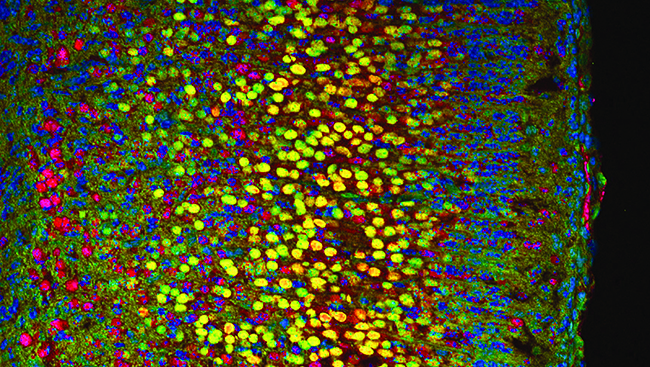 Article TrainingAdvances in science depend on research that generates reliable and reproducible results. Over the past decade, however, a surprising number of reports have cited failures to replicate critical findings, some of which could serve as the foundation for future human therapies. Lack of reproducibility has motivated funding agencies, journals, and institutions to re-examine research practices in order to improve scientific rigor — and positive steps have been taken. For example, funding agencies now include scientific rigor as a review criterion for grant proposals. Publishers have brought back Materials and Methods sections, requiring authors to be thorough and informative and to specify requirements for blinding and statistical analyses. Additionally, institutions and professional societies, including SfN, have developed dedicated training on the technicalities of conducting rigorous research.Aug 25, 2021
 -
 Journal ArticleLuminance matching in cognitive pupillometry is not enough: The curious case of orientation | eNeuroAbrupt onsets reflexively shift covert spatial attention. Recent work demonstrated that trial-to-trial information about the probability of a peripheral onset modulated the magnitude of the attentional cueing effect (low-probability > high-probability). Although onsets were physically identical, pupil responses could have been modulated by information about the probability of the onset’s appearance. Specifically, anticipatory constrictions may have preceded high-probability onsets. Here, we tested this hypothesis using centrally-presented, luminance-matched onset-probability signals. For half the participants, vertical signaled high probability (0.8) of onset appearance (a small, white, peripheral circle), while horizontal signaled low probability (0.2). Contingencies were reversed for the other half. Participants fixated the onset-probability signal for 2,000 milliseconds before the onset was briefly presented or omitted, in line with the signaled probability. To maintain engagement, participants complete...Oct 15, 2025
 -
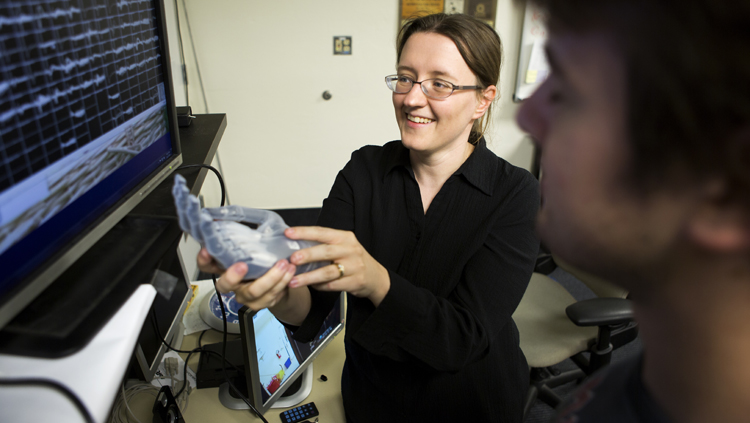 Article Career PathsThis resource was featured in the NeuroJobs Career Center. Visit today to search the world’s largest source of neuroscience opportunities. Cynthia Chestek brings an electrical engineering approach to discover how to allow movement of multiple fingers simultaneously following paralysis or amputation, using a brain-machine interface. In this interview she recounts the moment she knew she'd pursue a career in neuroscience, describes the rewards of that career, and looks to the future of neural interface technology, including neural networks. She also offers advice to women in engineering for a successful graduate education and career. This article is part of Neuronline's interview series "Entrepreneurial Women Combining Neuroscience, Engineering, and Tech," which highlights the career paths and scientific accomplishments of female leaders and role models who are creatively bridging disciplines to improve lives.Aug 4, 2021
 -
 Webinar TrainingIn this webinar, three experts on career development and mentoring will offer advice for mentoring postdocs through career transitions. Speakers will discuss the value of establishing a strong mentor-protégé relationship, the steps to successfully selecting a career path, and the importance of identifying and developing transferable skills in the laboratory. Faculty will understand implementable steps for supporting trainees who are charting various career paths. Postdocs attending Session 1 will learn what they can do to maximize relationships with their mentors and understand how to structure mentoring relationships with future protégés.Aug 3, 2021
 -
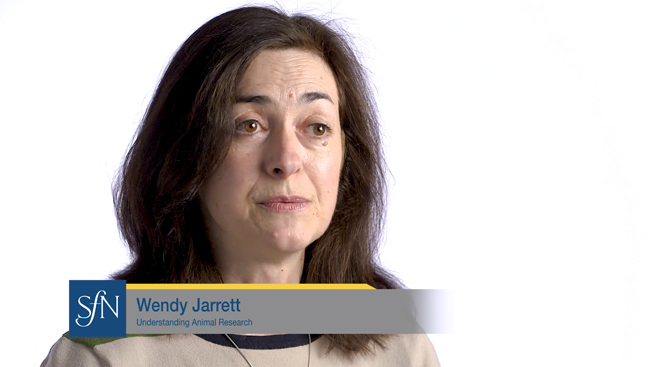 Video AdvocacyCommunicating openly with scientists and nonscientists can help inform and shift perspectives on animal research. In this video, learn how to help correct misunderstandings, strategies for explaining how your work with animals contributes to treatments for brain diseases and disorders, and ways you can collaborate with your institution to increase engagement with your research. Scientists can improve understanding of animal research in a variety of ways, including: • Sharing resources including images, videos, and virtual lab tours from Understanding Animal Research. • Participating as an individual or with your institution in Biomedical Research Awareness Day, held by Americans for Medical Progress. • Signing the Concordat on Openness on Animal Research, a set of commitments for life science organizations based in the United Kingdom to enhance their animal research communications.Jul 27, 2021




