



Filter
-
(133)
-
(733)
-
(4)
-
(1)
-
(47832)
-
(91)
-
(25)
-
(14)
-
(433)
-
(7)
-
(181)
-
(8)
-
(33)
-
(17)
-
(7)
-
(9)
-
(9)
-
(5)
-
(21)
-
(8)
-
(12)
-
(9)
-
(3)
-
(10)
-
(10)
-
(56)
-
(45)
-
(12)
-
(3)
-
(7)
-
(6)
-
(5)
-
(8)
-
(7)
-
(11)
-
(58)
-
(13)
-
(30)
-
(8)
-
(5)
-
(10)
-
(5)
-
(14)
-
(4)
581 - 590
of 52753 results
-
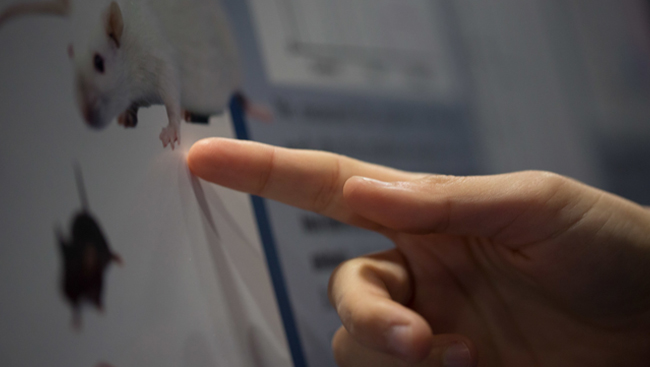 Webinar AdvocacyWorking with animals in your research comes with additional oversight, regulation, and the inherent risk of opposition. The Society for Neuroscience has many resources available to prepare for, defend against, and recover from animal rights activist efforts. The panel features researchers who have faced personal attacks and association leaders for biomedical research who will discuss how to best combat attacksanimal re, and generate institutional support, on animal research across biomedical sciences. The goal of the panel is to engage researchers and invited experts in the field to share their personal stories about being victims of attacks from animal rights activist groups due to conducting animal research and the best ways to combat these attacks and generate institutional support in order to prevent them from happening again. It is expected that attendees will learn the impact these attacks have had on their fellow researchers and the best course of action their institutions can take to protect them from further harm. Attack on biomedical researchers by animal rights activist groups have been on the rise due to their use of animals (including non-human primates) in their research. These attacks, some of which have affected SfN members, have ranged from threatening messages to attacks at personal residences leading researchers to halt their studies. It is not only critical that these researchers under attack receive support from the scientific community and relevant organizations, but also receive support from their affiliated institutions in order to prevent these attacks from happening again. It is crucial the public understands the facts surrounding the ethical use of animals in research and the value of using animals to conduct potentially life-saving research.Dec 8, 2021
 -
 Journal ArticleIn natural, free viewing settings, visual perception is driven by a series of saccades and fixations. Perceptual mechanisms are typically studied through averaged fixation related potentials generated from simultaneous eye-tracking and EEG recordings. Lambda responses following fixation onsets signal the arrival of new visual input to the primary visual cortex. In our study, we investigate the use and preprocessing parameter dependence of Independent Component Analysis (ICA) in separating the lambda response from other neural sources. In our experiment, ten subjects (2 males and 8 females) viewed 80 art paintings in natural, free-viewing settings, during which EEG data were recorded. Our results show that unique lambda response components can be detected reliably and individual lambda waves can be extracted in a single trial manner, without signal averaging. ICA decomposition is most sensitive to high-pass filtering producing best results with a minimum 1 Hz filtering. We also propose a method that automat...Nov 7, 2025
 -
 Article Professional DevelopmentAttending graduate school as an underrepresented trainee can present a number of challenges. From unique backgrounds to culture shock, to literally not speaking the same language, a number of barriers can come into play when trying to build relationships. A strong mentor/mentee relationship is particularly important for trainees, but underrepresented trainees may have difficulty because of those barriers. I was able to find mentors and build these relationships, but I needed to understand a few things first in order to make that possible. In my experience, underrepresented trainees who are hoping to build better relationships with their mentors should: Be willing to communicate your unique needs. Build your mentor village. Understand the boundaries of each mentor/mentee relationship while accepting the lack of a “perfect mentor.”Nov 30, 2021
 -
Journal ArticleThe Progressive Ratio (PR) schedule is a popular test of motivation. Despite its popularity, the PR task hinges on a low-dimensional behavioral readout—breakpoint, or the maximum work requirement subjects are willing to complete before abandoning the task. Here, we show that with a simple modification, the PR task can be transformed into an optimization problem reminiscent of the patch-leaving foraging scenario, which has been analyzed extensively by behavioral ecologists, psychologists, and neuroscientists. In the Progressive Ratio with Reset (PRR) task, male and female rats performed the PR task on one lever, but could press a second lever to reset the current ratio requirement back to its lowest value at the cost of enduring a reset delay, during which both levers were retracted. Rats used the reset lever adaptively on the PRR task, and their ratio reset decisions were sensitive to the cost of the reset delay. We derived an approach for computing the optimal bout length—the number of rewards to earn bef...Nov 3, 2025
-
 Journal ArticleArfGAP, with dual PH domain-containing protein 1/Centaurin-α1 (ADAP1/CentA1), is a brain-enriched and highly conserved Arf6 GTPase-activating and Ras-anchoring protein. CentA1 is involved in dendritic outgrowth and arborization, synaptogenesis, and axonal polarization by regulating the actin cytoskeleton dynamics. CentA1 upregulation and association with amyloid plaques in the human Alzheimer's disease (AD) brain suggest the role of this protein in AD progression. To understand the role of CentA1 in neurodegeneration, we crossbred CentA1 knock-out (KO) mice with the J20 mouse model of AD. We evaluated AD-associated behavioral and neuropathological hallmarks and gene expression profiles in J20 and J20 crossed with CentA1 KO (J20xKO) male mice to determine the impact of eliminating CentA1 expression on AD-related phenotypes. Spatial memory assessed by the Morris water maze test showed significant impairment in J20 mice, which was rescued in J20xKO mice. Moreover, neuropathological hallmarks of AD, such as am...Nov 1, 2025
 -
 Journal ArticleStructural changes in dendritic spines underlie long-term potentiation (LTP). While CaMKII has been considered as the primary driver of these changes, we show that transient, localized activation of Rac1 alone is sufficient to induce structural LTP in hippocampal slices prepared from rat pups of either sex. Using photoactivatable Rac1 (PA-Rac1), we demonstrated that Rac1 activation triggers spine enlargement and actin polymerization. This PA-Rac1-induced plasticity was blocked by Rac1 and Pak1 inhibitors but not by a CaMKII inhibitor. Our results identify Rac1 as an upstream of persistent signaling that stabilizes actin-based spine structural changes critical for synaptic memory encoding.Nov 1, 2025
 -
 Journal ArticleIn natural, free-viewing settings, visual perception is driven by a series of saccades and fixations. Perceptual mechanisms are typically studied through averaged fixation-related potentials generated from simultaneous eye-tracking and EEG recordings. Lambda responses following fixation onsets signal the arrival of new visual input to the primary visual cortex. In our study, we investigate the use and preprocessing parameter dependence of independent component analysis (ICA) in separating the lambda response from other neural sources. In our experiment, 10 subjects (2 males and 8 females) viewed 80 art paintings in natural, free-viewing settings, during which EEG data were recorded. Our results show that unique lambda response components can be detected reliably and individual lambda waves can be extracted in a single-trial manner, without signal averaging. ICA decomposition is most sensitive to high-pass filtering producing best results with a minimum 1 Hz filtering. We also propose a method that automati...Nov 1, 2025
 -
 Journal ArticleListening effort reflects the cognitive and motivational resources allocated to speech comprehension, particularly under challenging conditions. Visual cues are known to enhance speech perception, potentially by reducing the cognitive demands of the task. However, the neurophysiological mechanisms underlying this facilitation, especially in terms of effort-related changes, remain unclear. In this study, we combined pupillometry and electroencephalography (EEG) to investigate how visual speech cues modulate cognitive effort during speech recognition. Twenty-two participants (seven females) performed a speech-in-noise task under three modalities: (1) auditory-only, (2) audiovisual, and (3) visual-only. Task difficulty was manipulated via signal-to-noise ratio (SNR) in the first two modalities. Firstly, we found an inverted U-shape relationship between pupil dilation and frontal midline theta with SNR for audiovisual and auditory-only speech, consistent with prior models of effort allocation. Secondly, we obs...Nov 1, 2025
 -
 Journal ArticleIdentifying neural signatures of slow-wave sleep (SWS) is important for a number of reasons including diagnosing potential sleep disorders and examining its role in memory consolidation ( [Diekelmann and Born, 2010][1]; [Klinzing et al., 2019][2]; [Brodt et al., 2023][3]). Studies of sleep in the common marmoset ( Callithrix jacchus ) have revealed similarities to humans and other nonhuman primates, including distinct sleep stages ( [Crofts et al., 2001][4]) and diurnal sleep patterns ( [Hoffmann et al., 2012][5]). Advances in applying wireless technology for recording neural activity during natural, unrestrained behaviors ( [Walker et al., 2021][6]) position the marmoset as an excellent model for studying sleep-related neural activity associated with learning. Here, we identify putative SWS epochs based on the spatially correlated activity of local field potentials (LFPs) recorded from a multielectrode planar array implanted in the sensorimotor cortex of two marmosets (one female and one male). The averag...Nov 1, 2025
 -
 Journal ArticleAttachment theory offers an important clinical framework for understanding and treating negative effects of early life adversity. Attachment styles emerge during critical periods of development in response to caregivers' ability to consistently meet their offspring’s needs. Attachment styles are classified as secure or insecure (anxious, avoidant, or disorganized), with rates of insecure attachment rising in high-risk populations and correlating with a plethora of negative health outcomes throughout life. Despite its importance, little is known about the neural basis of attachment. Work in rats has demonstrated that limited bedding and nesting (LB) impairs maternal care and produces abnormal maternal attachment linked to increased pup corticosterone. However, the effects of LB on attachment-like behavior have not been investigated in mice where additional genetic and molecular tools are available. Furthermore, no group has utilized home-cage monitoring to link abnormal maternal care with deficits in attach...Nov 1, 2025




