



Filter
-
(133)
-
(733)
-
(4)
-
(1)
-
(47832)
-
(91)
-
(25)
-
(14)
-
(433)
-
(7)
-
(181)
-
(8)
-
(33)
-
(17)
-
(7)
-
(9)
-
(9)
-
(5)
-
(21)
-
(8)
-
(12)
-
(9)
-
(3)
-
(10)
-
(10)
-
(56)
-
(45)
-
(12)
-
(3)
-
(7)
-
(6)
-
(5)
-
(8)
-
(7)
-
(11)
-
(58)
-
(13)
-
(30)
-
(8)
-
(5)
-
(10)
-
(5)
-
(14)
-
(4)
571 - 580
of 52753 results
-
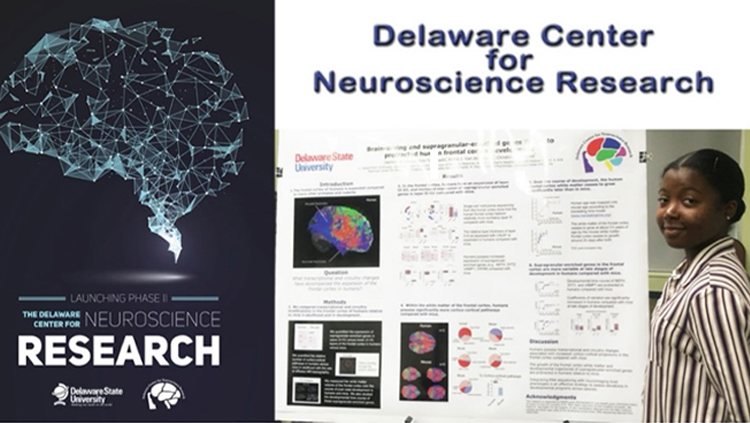 Article CommunityWhen Melissa Harrington started as an assistant professor at Delaware State University, a Historically Black institution, she had a keen appreciation of the potential for Historically Black Colleges and Universities (HBCUs) to enhance diversity in biomedical sciences. In her time at DSU, Dr. Harrington, has led the creation and growth of many programs designed to encourage underrepresented students to participate in research and support their academic success, but more can and should be done to increase opportunities for diverse students to participate in science. In this article, Drs. Melissa Harrington and Christine Charvet explain the challenges of and potential solutions for enhancing diversity in STEM fields.Feb 1, 2022
 -
 Journal ArticleDopamine release in the nucleus accumbens (NAc) is classically linked to associative learning, signaling relationships between predictive cues and outcomes. Yet, dopamine is also strongly modulated by novelty, a non-associative factor that has received comparatively little attention. Here, we used optical dopamine sensors in awake, behaving male and female mice to define how novelty alters the temporal dynamics of dopamine release during aversive learning. We manipulated novelty in three ways: (1) omitting expected footshocks, (2) introducing novel neutral cues concurrently with shock-predictive stimuli, and (3) presenting novel stimuli in an unpaired fashion within a context. Across all conditions, manipulations robustly increased dopamine release and in some cases altered the directionality of cue-evoked dopamine responses. Notably, these effects extended beyond the immediate stimulus window, altering subsequent responses to both conditioned cues and footshocks. Together, these findings demonstrate that ...Nov 20, 2025
 -
Journal ArticleDecoding algorithms provide a powerful tool for understanding the firing patterns that underlie cognitive processes such as motor control, learning, and recall. When implemented in the context of a real-time system, decoders also make it possible to deliver feedback based on the representational content of ongoing neural activity. That in turn allows experimenters to test hypotheses about the role of that content in driving downstream activity patterns and behaviors. While multiple real-time systems have been developed, they are typically implemented with a compiled programming language, making them more difficult for users to quickly adapt for new experiments. Here we present a software system written in the widely-used Python programming language to facilitate rapid experimentation. Our solution implements the state-space based clusterless decoding algorithm for an online, real-time environment. The parallelized application processes neural data with temporal resolution of 6 ms and median computational l...Nov 20, 2025
-
 SfN Journals: In Conversation features authors and editors discussing new research, thought-provoking opinions, and expert reviews published in JNeurosci and eNeuro.Jan 27, 2022
 -
 Article Scientific ResearchI have always been astonished by how quickly we learn things, and how long we remember them. For example, after seeing an exciting movie, in which individual scenes flash by quickly, we can go home to tell our family and friends lots of details about it. I call this problem the stability-plasticity dilemma. How do we learn things quickly but remember them for a long time? Why does a fast-learning rate not force a fast-forgetting rate? Answering this question illustrates the power of neural models.Jan 25, 2022
 -
Journal ArticleThe medial habenula (MHb) and its main projection target, the interpeduncular nucleus (IPN), play an important role in mood/affect, anxiety, and the aversive experience associated with nicotine withdrawal. Given that MHb axons release glutamate onto IPN neurons, we investigated the expression and functional responses of ionotropic glutamate receptors (iGluR) in neurons of the rostral IPN (IPR) in male rats. After confirming mRNA expression of Gria1 and Grin1 iGluR subunits in IPR, we employed glutamate uncaging coupled with 2-photon imaging and patch clamp electrophysiology. IPR dendrites, which often contained spine-like protrusions suggestive of synaptic contacts, featured a variety of response profiles following localized glutamate uncaging. Pharmacology experiments confirmed functional α-Amino-3-hydroxy-5-methyl-4-isoxazolepropionic acid (AMPA) and N-methyl-D-aspartate (NMDA) iGluR responses in IPR neuronal somata. Rats were trained to self-administer nicotine or saline during 10 fixed ratio 1 (FR1) se...Nov 18, 2025
-
Journal ArticleNicotinic Modulation of Fast-spiking Neurons in Rat Somatosensory Cortex Across Development | eNeuroSignaling at nicotinic acetylcholine receptors (nAChRs) is vital for normal development of cerebral cortical circuits. These developing circuits are also shaped by fast-spiking (FS) inhibitory cortical neurons. While nicotinic dysfunction in FS neurons is implicated in a number of psychiatric and neurodevelopmental disorders, FS neurons are thought to not have nicotinic responses in adults. Here, we establish a timeline of FS neuron response to nicotine pre- and postsynaptically in primary somatosensory cortex in male and female rats. We found that nicotine increases the frequency of spontaneous synaptic inputs to FS neurons during the second postnatal week, and this effect persisted through development. In contrast, FS neurons in S1 had no postsynaptic responses to nicotine from as early as they can be reliably identified. This was not attributable to receptor desensitization, and we further revealed that FS neurons express abundant mRNA for several nAChR subunits, beginning early in development. To deter...Nov 17, 2025
-
Journal ArticleThe triglyceride-glucose (TyG) index, a convenient marker of insulin resistance, is associated with stroke. This study determined the association between the triglyceride-glucose waist-to-hip ratio (TyG-WHR) and stroke. Data from the China Health and Retirement Longitudinal Study (CHARLS) were utilized from baseline in 2011 to the wave six follow-up in 2020. 17,606 participants were screened and the CHARLS cohort was assembled using a multistage probability sampling technique. Participants were comprehensively assessed through standardized questionnaires with face-to-face interviews. Cox proportional hazards regression models were applied to investigate the relationship between the TyG-WHR and the risk of stroke. To identify potential non-linear relationships, Cox proportional hazards regression with smooth curve fitting was used. A total of 4911 patients with 2,338 males (47.6%) and 2,573 females (52.4%) were included in this analysis. A significant association between the TyG-WHR and the risk of stroke w...Nov 17, 2025
-
Journal ArticleStructural changes in dendritic spines underlie long-term potentiation (LTP). While CaMKII has been considered as the primary driver of these changes, we show that transient, localized activation of Rac1 alone is sufficient to induce structural LTP in hippocampal slices prepared from rat pups of either sex. Using photoactivatable Rac1 (PA-Rac1), we demonstrated that Rac1 activation triggers spine enlargement and actin polymerization. This PA-Rac1-induced plasticity was blocked by Rac1 and Pak1 inhibitors but not by a CaMKII inhibitor. Our results identify Rac1 as an upstream of persistent signaling that stabilizes actin-based spine structural changes critical for synaptic memory encoding. Significance Statement The molecular mechanisms that trigger persistent structural long-term potentiation (sLTP) at synapses remain incompletely understood. This study demonstrated that localized activation of Rac1, a small GTPase regulating actin dynamics, is sufficient to induce and maintain sLTP in hippocampal neurons...Nov 17, 2025
-
Journal ArticleArfGAP, with dual PH domain-containing protein 1/Centaurin-α1 (ADAP1/CentA1), is a brain-enriched and highly conserved Arf6 GTPase-activating and Ras-anchoring protein. CentA1 is involved in dendritic outgrowth and arborization, synaptogenesis, and axonal polarization by regulating the actin cytoskeleton dynamics. CentA1 upregulation and association with amyloid plaques in the human Alzheimer’s disease (AD) brain suggest a role for this protein in AD progression. To understand the role of CentA1 in neurodegeneration, we crossbred CentA1 KO mice with the J20 mouse model of AD. We evaluated AD-associated behavioral and neuropathological hallmarks and gene expression profiles in J20 and J20 crossed with CentA1 KO (J20xKO) male mice to determine the impact of eliminating CentA1 expression on AD-related phenotypes. Spatial memory assessed by the Morris Water Maze test showed significant impairment in J20 mice, which was rescued in J20xKO mice. Moreover, neuropathological hallmarks of AD, such as amyloid plaque ...Nov 17, 2025




