



Filter
-
(133)
-
(733)
-
(4)
-
(1)
-
(47837)
-
(91)
-
(25)
-
(14)
-
(433)
-
(7)
-
(183)
-
(8)
-
(33)
-
(17)
-
(7)
-
(9)
-
(9)
-
(5)
-
(21)
-
(8)
-
(12)
-
(9)
-
(3)
-
(10)
-
(10)
-
(56)
-
(45)
-
(12)
-
(3)
-
(7)
-
(6)
-
(5)
-
(8)
-
(7)
-
(11)
-
(58)
-
(13)
-
(30)
-
(8)
-
(5)
-
(10)
-
(5)
-
(15)
-
(4)
2151 - 2160
of 52762 results
-
 Journal ArticleSensory processing disruptions are a core symptom of autism spectrum disorder (ASD) and other neurological disorders. The acoustic startle response and prepulse inhibition (PPI) are common metrics used to assess disruptions in sensory processing and sensorimotor gating in clinical studies and animal models. However, often there are inconsistent findings on ASD-related PPI deficits across different studies. Here, we used a novel method for assessing changes in startle and PPI in rodents, using the Cntnap2 knockout (KO) rat model for neurodevelopmental disorder/ASD that has consistently shown PPI disruptions in past studies. We discovered that not only sex and prepulse intensity but also the intensity of the startle stimulus, profoundly impacts whether PPI deficits are evident in the Cntnap2 KO rat or not. We show that rats do not universally exhibit a PPI deficit, instead impaired PPI is contingent on specific testing conditions. Notably, at lower startle stimulus intensities, Cntnap2 KO rats not only demon...Aug 19, 2024
 -
Journal ArticleMusicians can have better abilities to understand speech in adverse conditions such as background noise than non-musicians. However, the neural mechanisms behind such enhanced behavioral performances remain largely unclear. Studies have found that the subcortical frequency-following response to the fundamental frequency of speech and its higher harmonics (speech-FFR) may be involved since it is larger in people with musical training than in those without. Recent research has shown that the speech-FFR consists of a cortical contribution in addition to the subcortical sources. Both the subcortical and the cortical contribution are modulated by selective attention to one of two competing speakers. However, it is unknown whether the strength of the cortical contribution to the speech-FFR, or its attention modulation, is influenced by musical training. Here we investigate these issues through magnetoencephalographic (MEG) recordings of 52 subjects (18 musicians, 25 non-musicians, and 9 neutral participants) lis...Aug 19, 2024
-
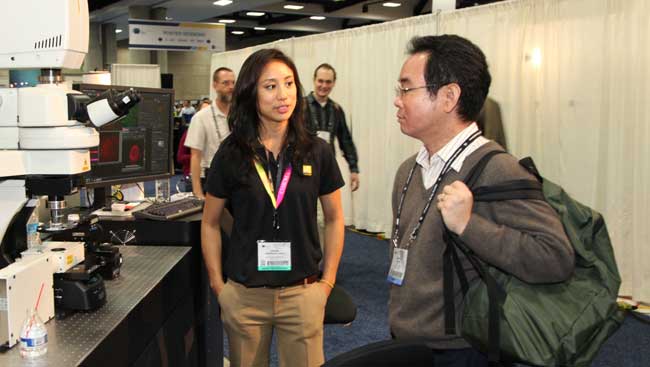 Webinar Professional DevelopmentThis resource was featured in the NeuroJobs Career Center. Visit today to search the world’s largest source of neuroscience opportunities. Networking is easier than you think with these practical tips from scientists successfully working outside of academia. Hear their personal stories, advice, and insider secrets about networking you can use to help advance your career.Oct 31, 2014
 -
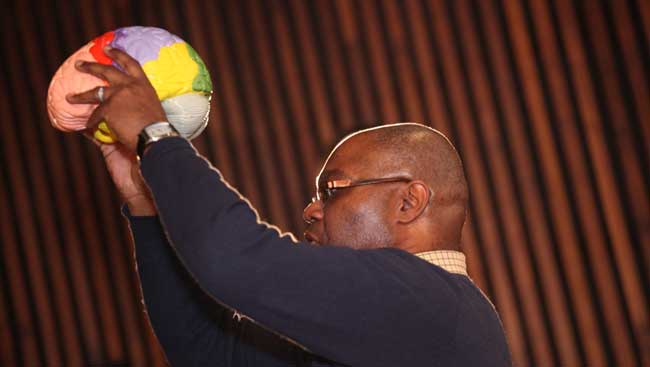 Webinar OutreachPublic outreach can expand your professional perspective, make you a stronger communicator, and strengthen public support for science. There are many ways to get involved. In this webinar, experienced neuroscientists share ways to find outreach activities that connect to your personal strengths and interests and offer you a chance to educate the public about neuroscience.Oct 9, 2014
 -
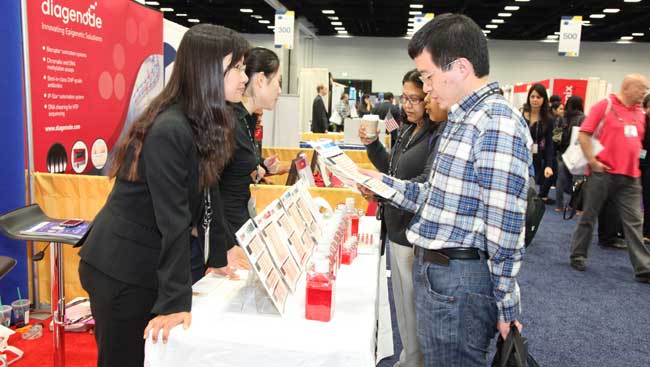 Webinar Professional DevelopmentThis resource was featured in the NeuroJobs Career Center. Visit today to search the world’s largest source of neuroscience opportunities. Six seconds. That’s all it takes for a reviewer to put your resume or CV in the “keep” or “discard” pile. So to be a successful candidate, you need to make a strong impression. Watch this webinar to learn the strategies that will best showcase your value on a CV or resume and earn you that coveted position.Oct 3, 2014
 -
Journal ArticleThe medial prefrontal cortex (mPFC) plays a pivotal role in regulating working memory, executive function, and self-regulatory behaviours. Dysfunction in mPFC circuits is a characteristic feature of several neuropsychiatric disorders including schizophrenia, depression, and post-traumatic stress disorder. Chronic stress (CS) is widely recognized as a major triggering factor for the onset of these disorders. Although evidence suggests synaptic dysfunction in mPFC circuits following CS exposure, it remains unclear how different neuronal populations in the infralimbic (IL) and prelimbic (PL) cortices are affected in terms of synaptic inhibition-excitation balance (I/E ratio). Here, using neuroproteomics analysis and whole-cell patch-clamp recordings in pyramidal neurons and parvalbumin interneurons (PV) within the PL and IL cortices, we examined the synaptic changes after 21 days of chronic unpredictable stress, in male mice. Our results reveal distinct impacts of CS on PL- and IL-pyramidal neurons, resulting...Aug 15, 2024
-
Journal ArticleVolatile anesthetics are currently believed to cause unconsciousness by acting on one or more molecular targets including neural ion channels, receptors, mitochondria, synaptic proteins, and cytoskeletal proteins. Anesthetic gases including isoflurane bind to cytoskeletal microtubules (MTs) and dampen their quantum optical effects, potentially contributing to causing unconsciousness. This possibility is supported by the finding that taxane chemotherapy consisting of microtubule-stabilizing drugs reduces the effectiveness of anesthesia during surgery in human cancer patients. In order to experimentally assess the contribution of MTs as functionally relevant targets of volatile anesthetics, we measured latencies to loss of righting reflex (LORR) under 4% isoflurane in male rats injected subcutaneously with vehicle or 0.75 mg/kg of the brain-penetrant microtubule-stabilizing drug epothilone B (epoB). EpoB-treated rats took an average of 69 seconds longer to become unconscious as measured by latency to LORR. T...Aug 15, 2024
-
Journal ArticleThe accurate estimation of limb state is necessary for movement planning and execution. While state estimation requires both feedforward and feedback information, we focus here on the latter. Prior literature has shown that integrating visual and proprioceptive feedback improves estimates of static limb position. However, differences in visual and proprioceptive feedback delays suggest that multisensory integration could be disadvantageous when the limb is moving. We formalized this hypothesis by modeling feedback-based state estimation using the longstanding maximum likelihood estimation model of multisensory integration, which we updated to account for sensory delays. Our model predicted that the benefit of multisensory integration was largely lost when the limb was passively moving. We tested this hypothesis in a series of experiments in human subjects that compared the degree of interference created by discrepant visual or proprioceptive feedback when estimating limb position either statically at the e...Aug 15, 2024
-
Journal ArticleLong-term aluminum (Al) exposure increases the risk of mild cognitive impairment (MCI). The aim of present study was to investigate the neural mechanisms of Al-induced MCI. In our study, a total of 52 individuals with occupational Al exposure > 10 years were enrolled and divided into two groups: MCI (Al-MCI) and healthy controls (Al-HC). Plasma Al concentrations and Montreal Cognitive Assessment (MoCA) score were collected for all participants. And diffusion tensor imaging and resting-state functional magnetic resonance imaging were used to examine changes of white matter (WM) and functional connectivity (FC). There was a negative correlation between MoCA score and plasma Al concentration. Compared with the Al-HC, fractional anisotropy value for the right fornix (cres)/stria terminalis (FX/ST) was higher in the Al-MCI. Furthermore, there was a difference in FC between participants with and without MCI under Al exposure. We defined the regions with differing FC as a “pathway”, specifically the connectivity ...Aug 14, 2024
-
Journal ArticlePeak-alpha frequency varies across individuals and mental states, but it also forms a negative gradient from posterior to anterior regions in association with increases in cortical thickness and connectivity, reflecting a cortical hierarchy in temporal integration. Tracking the spatial standard deviation of peak-alpha frequency in scalp EEG, we observed that a posterior-to-anterior gradient dynamically formed and dissolved. Periods of high spatial standard deviation yielded robustly negative posterior-to-anterior gradients—the “gradient state”—while periods of low spatial standard deviation yielded globally converged peak-alpha frequency—the “uniform state.” The state variations were characterized by a combination of slow (0.3 Hz-0.5 Hz) oscillations and random-walk-like fluctuations. They were relatively independently correlated with peak-alpha frequency variations in anterior regions and peak-alpha power variations in central regions driven by posterior regions (together accounting for ∼50% of the state ...Aug 14, 2024




