



Filter
-
(133)
-
(733)
-
(4)
-
(1)
-
(47837)
-
(91)
-
(25)
-
(14)
-
(433)
-
(7)
-
(182)
-
(8)
-
(33)
-
(17)
-
(7)
-
(9)
-
(9)
-
(5)
-
(21)
-
(8)
-
(12)
-
(9)
-
(3)
-
(10)
-
(10)
-
(56)
-
(45)
-
(12)
-
(3)
-
(7)
-
(6)
-
(5)
-
(8)
-
(7)
-
(11)
-
(58)
-
(13)
-
(30)
-
(8)
-
(5)
-
(10)
-
(5)
-
(15)
-
(4)
2091 - 2100
of 52760 results
-
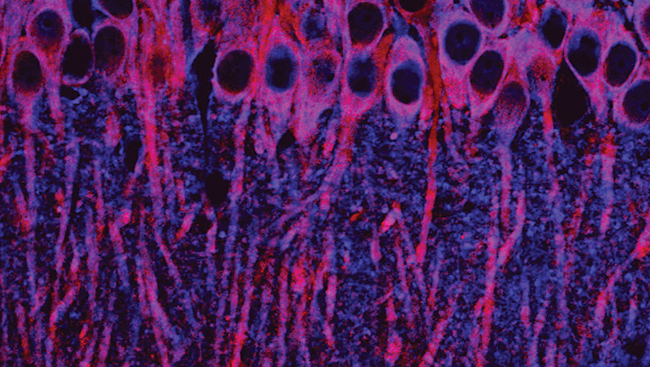 Article Career PathsWhile a successful career in academia can be a very set path, a career in science writing has the breadth of options to fit a wider range of lifestyles.Apr 24, 2015
 -
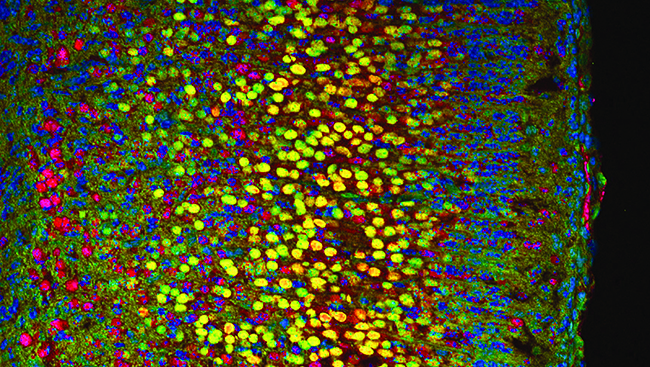 Article Scientific ResearchDoctors know that helping patients means being aware of ongoing research in the field and understanding how different therapies fit in to a patient's individual treatment plan.Apr 24, 2015
 -
 Article Professional DevelopmentOnce you’ve finished writing and editing your NIH grant application, there’s still a vital piece left to prepare: the cover letter.Apr 24, 2015
 -
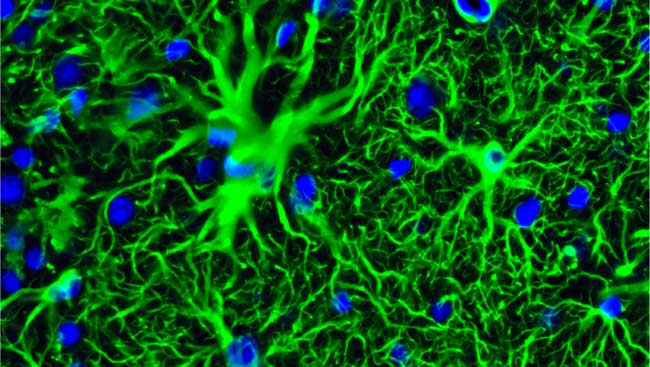 Article DiversityYou hold attitudes and stereotypes that you didn’t know you had — and that you don’t outwardly believe to be true — but nevertheless influence how you view people and make decisions.Apr 24, 2015
 -
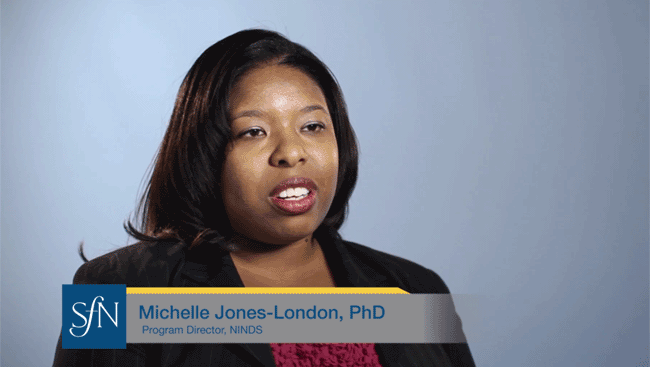 Video Career PathsExplore how to use your science degree to do outreach and program management in government. Michelle Jones-London discusses her career at the NIH, including how to get started, what brought her to the field, and how a typical day is never typical.Apr 24, 2015
 -
 Video Annual Meeting Professional DevelopmentJulio Ramirez discusses how mentoring undergraduate students gives you the opportunity to inspire your students at important times in their lives. But there are also unique challenges during this formative time. These videos outline what you need to consider as a mentor, and how to get started.Apr 24, 2015
 -
 Video Career PathsThere are a lot of career options in the science publishing field outside of editing. Katja Brose discusses her experience being the editor of a primary research journal, Neuron, as well as the variety of choices in the publishing field other than being an editor.Apr 24, 2015
 -
 Journal ArticleCa2+-binding proteins (CaBPs; CaBP1-5) are a subfamily of neuronal Ca2+ sensors with high homology to calmodulin. Notably, CaBP4, which is exclusively expressed in rod and cone photoreceptors, is crucial for maintaining normal retinal functions. However, the functional roles of CaBP1, CaBP2, and CaBP5 in the retina remain elusive, primarily due to limited understanding of their expression patterns within inner retinal neurons. In this study, we conducted a comprehensive transcript analysis using single-cell RNA sequencing datasets to investigate the gene expression profiles of CaBPs in mouse and human retinal neurons. Our findings revealed notable similarities in the overall expression patterns of CaBPs across both species. Specifically, nearly all amacrine cell, ganglion cell, and horizontal cell types exclusively expressed CaBP1. In contrast, the majority of bipolar cell types, including rod bipolar (RB) cells, expressed distinct combinations of CaBP1, CaBP2, and CaBP5, rather than a single CaBP as previ...Sep 11, 2024
 -
Journal ArticleSocial recognition is an essential part of social function and often promotes specific social behaviors based on prior experience. Social and defensive behaviors in particular often emerge with prior experiences of familiarity or novelty/stress, respectively. This is also commonly seen in rodents towards same-strain and inter-strain conspecifics. Medial amygdala (MeA) activity guides social choice based on age and sex recognition and is sensitive to social experiences. However, little is known about whether the MeA exhibits differential responses based on strain or how this is impacted by experience. Social stress impacts posterior MeA (MeAp) function and can shift measures of social engagement. However, it is unclear how stress impacts MeAp activity and contributes to altered social behavior. The primary goal of this study in adult male Sprague Dawley rats was to determine whether prior stress experience with a different strain (Long Evans) rat impacts MeAp responses to same-strain and different-strain co...Sep 11, 2024
-
Journal ArticleConscious reportability of visual input is associated with a bimodal neural response in primary visual cortex (V1): an early-latency response coupled to stimulus features and a late-latency response coupled to stimulus report or detection. This late wave of activity, central to major theories of consciousness, is thought to be driven by prefrontal cortex (PFC), responsible for “igniting” it. Here we analyzed two electrophysiological studies in mice performing different stimulus detection tasks, and characterize neural activity profiles in three key cortical regions: V1, posterior parietal cortex (PPC) and PFC. We then developed a minimal network model, constrained by known connectivity between these regions, reproducing the spatio-temporal propagation of visual- and report-related activity. Remarkably, while PFC was indeed necessary to generate report-related activity in V1, this occurred only through the mediation of PPC. PPC, and not PFC, had the final veto in enabling the report-related late wave of V1 ...Sep 11, 2024




