



Filter
-
(133)
-
(733)
-
(4)
-
(1)
-
(47833)
-
(91)
-
(25)
-
(14)
-
(433)
-
(7)
-
(182)
-
(8)
-
(33)
-
(17)
-
(7)
-
(9)
-
(9)
-
(5)
-
(21)
-
(8)
-
(12)
-
(9)
-
(3)
-
(10)
-
(10)
-
(56)
-
(45)
-
(12)
-
(3)
-
(7)
-
(6)
-
(5)
-
(8)
-
(7)
-
(11)
-
(58)
-
(13)
-
(30)
-
(8)
-
(5)
-
(10)
-
(5)
-
(15)
-
(4)
2021 - 2030
of 52756 results
-
 Journal ArticleIschemic stroke (IS) poses a serious threat to patient survival. The inhibition of ferroptosis can effectively alleviate ischemia-reperfusion (I/R) injury, suggesting potential targets in the ferroptosis pathway for the treatment of ischemic stroke. In this study, MCAO/R mice and OGD/R-induced HT22 cell were constructed. It was found that Baicalein decreased ROS, MDA, and Fe2+ levels, upregulated GSH levels, and enhanced the expression of ferroptosis-related proteins (GPX4 and SLC7A11), downregulated the expression of pro-apoptotic proteins (Bax, cytochrome c, and cleaved caspase-3), and upregulated the expression of an anti-apoptotic protein (Bcl-2), ameliorating cerebral I/R injury. In animal and cell models, SIRT6 is downregulated, and FOXA2 expression and acetylation levels are abnormally upregulated. SIRT6 inhibited FOXA2 expression and acetylation. Baicalein promoted FOXA2 deacetylation by upregulating SIRT6 expression. FOXA2 transcriptionally inhibits SLC7A11 expression. In Conclusion, Baicalein inh...Sep 19, 2024
 -
Journal ArticleDespite decades of preclinical investigation, there remains limited understanding of the etiology and biological underpinnings of anxiety disorders. Sensitivity to potential threat is characteristic of anxiety-like behavior in humans and rodents, but traditional rodent behavioral tasks aimed to assess threat responsiveness lack translational value, especially with regards to emotionally valenced stimuli. Therefore, development of novel preclinical approaches to serve as analogues to patient assessments is needed. In humans, the fearful face task is widely used to test responsiveness to socially communicated threat signals. In rats, ultrasonic vocalizations (USVs) are analogous social cues associated with positive or negative affective states that can elicit behavioral changes in the receiver. It is therefore likely that when rats hear aversive alarm call USVs (22kHz) they evoke translatable changes in brain activity comparable to the fearful face task. We used functional magnetic resonance imaging in male ...Sep 19, 2024
-
Journal ArticleHuman and mouse dorsal root ganglia (hDRG and mDRG) neurons are important tools in understanding the molecular and electrophysiological mechanisms that underlie nociception and drive pain behaviors. One of the simplest differences in firing phenotypes is that neurons are single-firing (exhibit only one action potential) or multi-firing (exhibit 2 or more action potentials). To determine if single- and multi-firing hDRG neurons exhibit differences in intrinsic properties, firing phenotypes, and AP waveform properties, and if these properties could be used to predict multi-firing, we measured 22 electrophysiological properties by whole-cell patch-clamp electrophysiology of 94 hDRG neurons from 6 male and 4 female donors. We then analyzed the data using several machine learning models to determine if these properties could be used to predict multi-firing. We used 1000 iterations of Monte Carlo Cross Validation to split the data into different train and test sets and tested the Logistic Regression, k-Nearest N...Sep 19, 2024
-
 Video Scientific ResearchPeter Uhlhaas from the University of Glasgow, UK, talks about neural synchrony in schizophrenia at the FENS-SfN Summer School on Neurodevelopmental Psychiatric Disorders, which took place June 22-28, 2014, in Bertinoro, Italy.Jun 12, 2015
 -
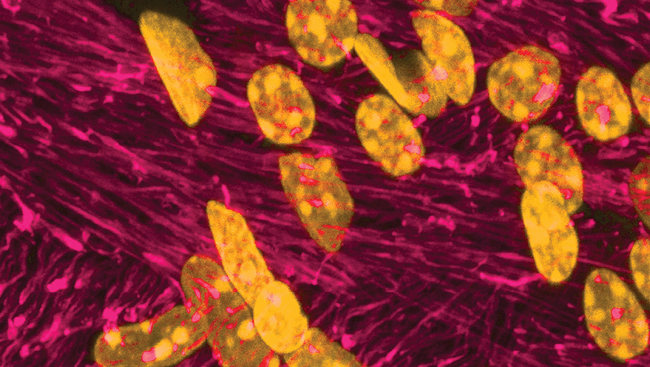 Article Annual Meeting Scientific ResearchOftentimes when imaging the brain, a wider view is sacrificed for finer detail, or vice versa. Although the ideal imaging technique could resolve both signals propagating within single neurons and signals sent across a whole network of hundreds of neurons, the two views present different challenges.Jun 10, 2015
 -
 Article Professional DevelopmentAfter you have established a mentoring team, it is important to maintain your mentoring relationships in a professional manner. Through your attitude and actions, you can show that you are responsible, and through your work as a graduate student, you can develop and demonstrate your abilities as an independent scholar and researcher.Jun 10, 2015
 -
 Article Scientific ResearchHigh-quality science and high standards of animal care go hand in hand. In order to achieve good science, it’s essential that we have healthy animals. If our animals are sick, hungry, malnourished, housed poorly, or depressed, we’ll see the impact on our work.Jun 10, 2015
 -
 Article Professional DevelopmentSo, you want to study neuroscience in graduate school. Acknowledging that you are ready to further your education is the first big step. Now you must choose the few programs you want to apply to out of hundreds available.Jun 4, 2015
 -
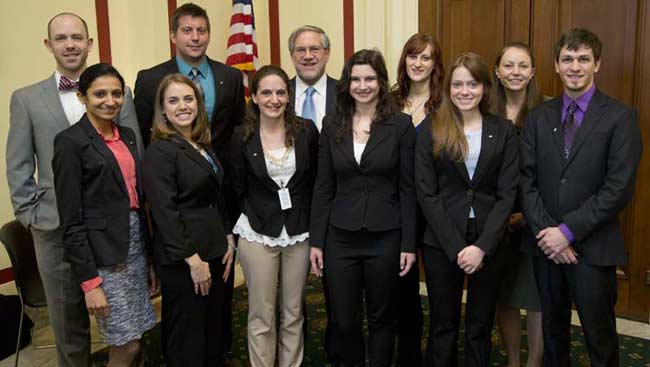 Article AdvocacyAs graduate students and postdoctoral fellows working in the lab, we are acutely aware that federal funding for basic science has decreased over the years. Is there anything we can do about it? As I found out as an SfN Early Career Policy Fellow participating in SfN’s Capitol Hill Day, there is.Jun 3, 2015
 -
 TrainingAs the knowledge base in neuroscience continues to expand, educators need timely resources to engage their students.Jun 3, 2015




