



Filter
-
(133)
-
(733)
-
(4)
-
(1)
-
(47833)
-
(91)
-
(25)
-
(14)
-
(433)
-
(7)
-
(182)
-
(8)
-
(33)
-
(17)
-
(7)
-
(9)
-
(9)
-
(5)
-
(21)
-
(8)
-
(12)
-
(9)
-
(3)
-
(10)
-
(10)
-
(56)
-
(45)
-
(12)
-
(3)
-
(7)
-
(6)
-
(5)
-
(8)
-
(7)
-
(11)
-
(58)
-
(13)
-
(30)
-
(8)
-
(5)
-
(10)
-
(5)
-
(15)
-
(4)
1841 - 1850
of 52756 results
-
 Journal ArticleRelationships among membrane currents allow central pattern generator (CPG) neurons to reliably drive motor programs. We hypothesize that continually active CPG neurons utilize activity-dependent feedback to correlate expression of ion channel genes to balance essential membrane currents. However, episodically activated neurons experience absences of activity-dependent feedback and, thus, presumably employ other strategies to coregulate the balance of ionic currents necessary to generate appropriate output after periods of quiescence. To investigate this, we compared continually active pyloric dilator (PD) neurons with episodically active lateral gastric (LG) CPG neurons of the stomatogastric ganglion (STG) in male Cancer borealis crabs. After experimentally activating LG for 8 h, we measured three potassium currents and abundances of their corresponding channel mRNAs. We found that ionic current relationships were correlated in LG's silent state, but ion channel mRNA relationships were correlated in the a...Nov 1, 2024
 -
 Journal ArticleAge-related brain changes affect sleep and are reflected in properties of sleep slow-waves, however, the precise mechanisms behind these changes are still not completely understood. Here, we adapt a previously established whole-brain model relating structural connectivity changes to resting state dynamics, and extend it to a slow-wave sleep brain state. In particular, starting from a representative connectome at the beginning of the aging trajectory, we have gradually reduced the inter-hemispheric connections, and simulated sleep-like slow-wave activity. We show that the main empirically observed trends, namely a decrease in duration and increase in variability of the slow waves are captured by the model. Furthermore, comparing the simulated EEG activity to the source signals, we suggest that the empirically observed decrease in amplitude of the slow waves is caused by the decrease in synchrony between brain regions.Nov 1, 2024
 -
 Journal ArticleThis study aims to elucidate the methodology and compare the accuracy of different blood biomarkers for diagnosing ischemic stroke (IS). We reviewed 29 articles retrieved from PubMed, MEDLINE, Web of Science, and CINAHL Plus with Full Text. Among these, 23 articles involving 3,494 participants were suitable for meta-analysis. The pooled area under the curve (AUC) of all studies for meta-analysis was 0.89. The pooled sensitivity and specificity were 0.76 (0.74–0.78) and 0.84 (0.83–0.86), respectively. Blood biomarkers from noninpatient settings demonstrated better diagnostic performance than those in inpatient settings (AUC 0.91 vs 0.88). Smaller sample sizes (<100) showed better performance than larger ones (≥100; AUC 0.92 vs 0.86). Blood biomarkers from acute IS (AIS) patients showed higher diagnostic values than those from IS and other stroke types (AUC 0.91 vs 0.87). The diagnostic performance of multiple blood biomarkers was superior to that of a single biomarker (AUC 0.91 vs 0.88). The diagnostic valu...Nov 1, 2024
 -
 Video Career PathsLaura Terry is a management consultant with McKinsey & Co. Terry talks about the path her career has taken since her PhD program, and what her daily responsibilities are as a consultant.Apr 5, 2016
 -
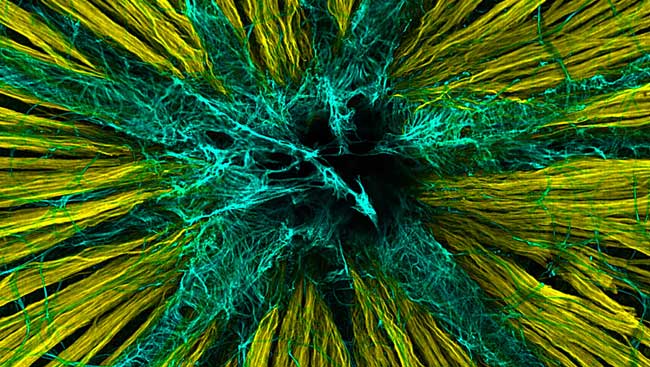 Article Scientific ResearchAs neuroscientists, we try to understand how billions of neurons work together to perform either simple daily tasks, such as coordinated walking, or more complex ones, such as learning and memory.Mar 31, 2016
 -
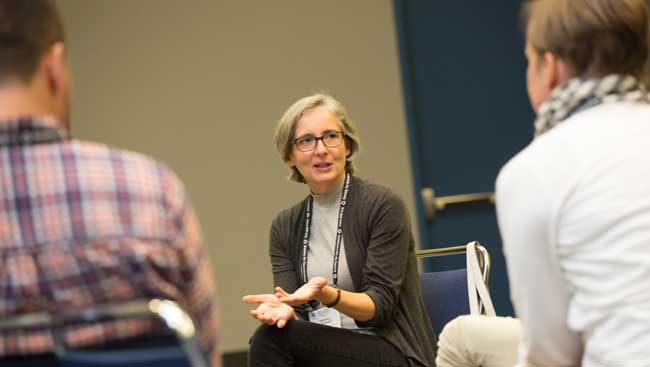 Article DiversitySusan Amara and Sheena Josselyn share the advice and perspective they've gained from years of experience in this Q&A.Mar 29, 2016
 -
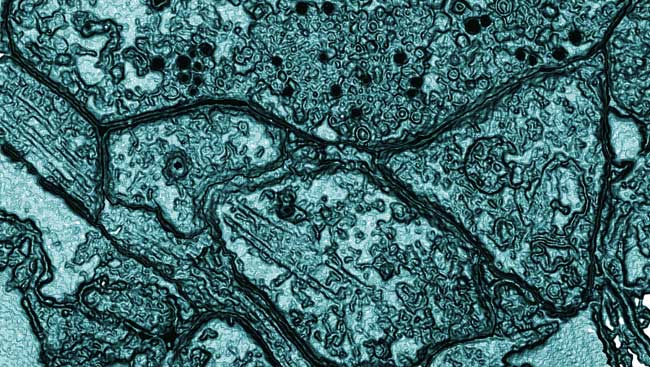 Article Scientific ResearchThe K-complex represents one of the largest events recorded in the human cortex. It occurs during non-REM sleep as an isolated downstate, which may arise spontaneously or be evoked in response to a sensory stimulus. In this study, we sought to characterize the basic but essential spatial and temporal dynamics of the K-complex across the human cortex using bipolar stereoencephalographic (SEEG) recordings.Mar 24, 2016
 -
 Article DiversitySheena Josselyn shares her approach to bringing up implicit or explicit biases with friends and colleagues in this Q&A.Mar 17, 2016
 -
Video Career PathsAndrea Bauman-Carnegie is the director of administrative operations for the Center for Clinical and Translational Science at the University of Illinois at Chicago. She talks about her career path from her PhD program at Vanderbilt University.Mar 17, 2016
-
Journal ArticleThe neural network, including the interstitial nucleus of Cajal (INC), functions as an oculomotor neural integrator involved in the control of vertical gaze holding. Impairment of the vestibulocerebellum (VC), including the flocculus (FL), has been shown to affect vertical gaze holding, indicating that the INC cooperates with the VC in controlling this function. However, a network between the INC and VC has not been identified. In this study, we aimed to obtain anatomical evidence of a neural pathway from the INC to the VC (the INC-VC pathway) in rats. Injection of dextran-conjugated Alexa 488 or adeno-associated virus 2-retro (AAV2retro) expressing GFP into the FL or another VC region (uvula/nodulus) did not reveal any retrogradely labeled neurons in the INC, suggesting that INC neurons do not project directly to the VC. Rabies virus-based transsynaptic tracing experiments revealed that the INC-VC pathway is mediated via synaptic connections with the prepositus hypoglossi nucleus (PHN) and medial vestibul...Oct 28, 2024




