



Filter
-
(133)
-
(733)
-
(4)
-
(1)
-
(47833)
-
(91)
-
(25)
-
(14)
-
(433)
-
(7)
-
(182)
-
(8)
-
(33)
-
(17)
-
(7)
-
(9)
-
(9)
-
(5)
-
(21)
-
(8)
-
(12)
-
(9)
-
(3)
-
(10)
-
(10)
-
(56)
-
(45)
-
(12)
-
(3)
-
(7)
-
(6)
-
(5)
-
(8)
-
(7)
-
(11)
-
(58)
-
(13)
-
(30)
-
(8)
-
(5)
-
(10)
-
(5)
-
(15)
-
(4)
1811 - 1820
of 52756 results
-
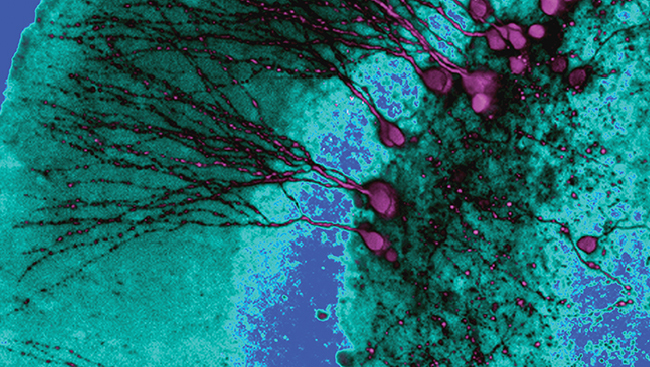 Webinar Scientific ResearchProper data handling standards, including appropriate use of statistical tests are integral to rigorous and reproducible neuroscience research. Training in quantitative neuroscience is a specific area of emphasis for the BRAIN Initiative, and rigorous statistical analysis methods are included in the recent Proposed Principals and Guidelines for Reporting Preclinical Research endorsed by NIH and multiple scientific associations, journals, and societies. This webinar — the third in SfN’s Promoting Awareness and Knowledge to Enhance Scientific Rigor in Neuroscience series — will cover best practices in post-experimental data analysis.Apr 22, 2016
 -
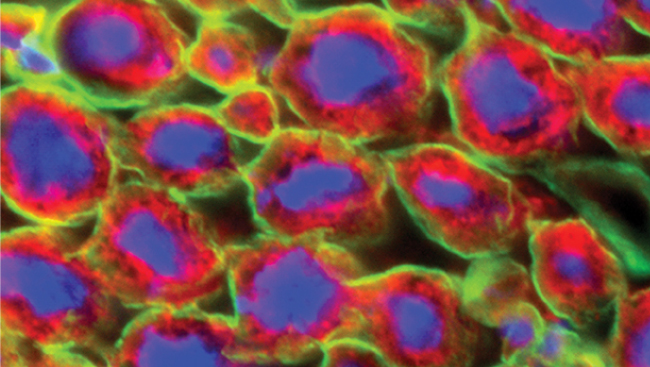 Article Scientific ResearchCircadian rhythms are altered by the aging process in humans and many other organisms.Apr 21, 2016
 -
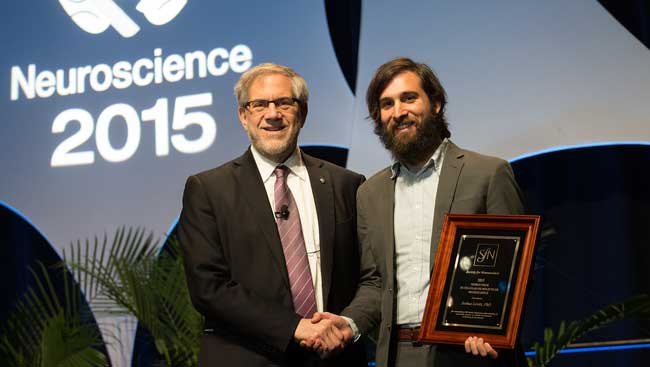 Article Professional DevelopmentJoshua Levitz has developed new approaches to study G protein-coupled receptors, a type of receptor found in cell membranes. He created a method to manipulate the activity of these receptors with synthetic chemical photo-switches.Apr 19, 2016
 -
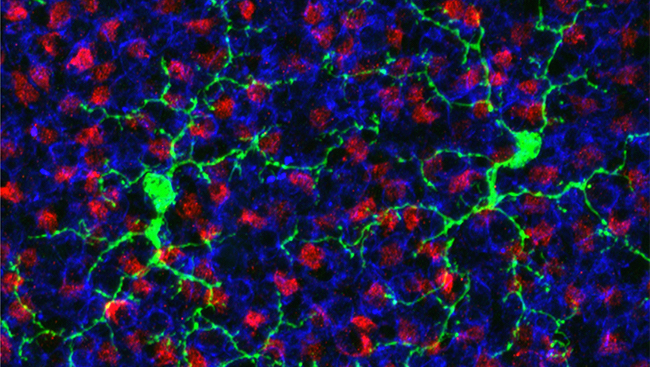 Article Scientific ResearchIn everyday life, emotional scenes captivate us, and we remember them more readily than ordinary scenes and events. Pathways that convey sensory signals reach neurons in the thalamus, which then convey the signals to the cerebral cortex, the brain’s outer rim.Apr 14, 2016
 -
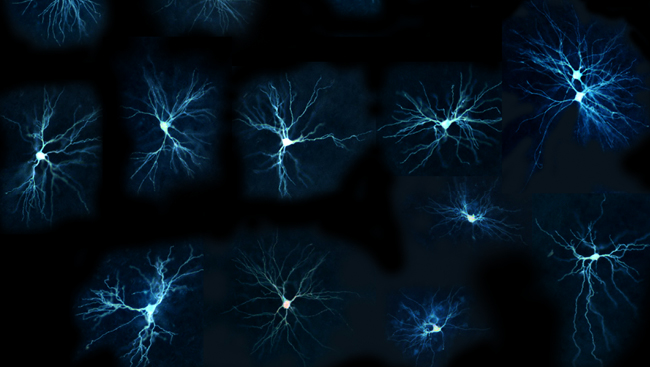 Article Professional DevelopmentIn its Gray Matters report, the United States Presidential Commission for the Study of Bioethical Issues underscored the importance of integrating ethics and neuroscience early and throughout the research endeavor.Apr 14, 2016
 -
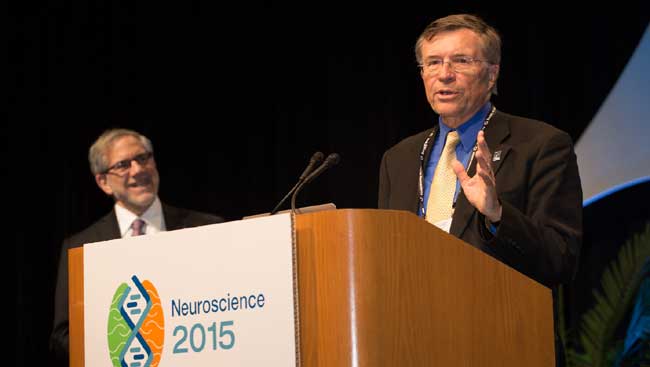 Article Professional DevelopmentTerrence Sejnowski of the Salk Institute for Biological Studies is a pioneer of computational and theoretical neuroscience. He developed artificial neural network models and learning models for birdsong and neuroeconomics. He also helped develop the algorithm for independent component analysis. For these and other accomplishments, Sejnowski received the Swartz Prize for Theoretical and Computational Neuroscience in 2015. Here he reflects on his career and where the field is headed.Apr 12, 2016
 -
 Article Professional DevelopmentAfter submitting your graduate school applications, the next step is the interview, which may happen in-person, by phone, or via video conference. The interview process enables both the graduate program to assess prospective candidates and candidates to learn more about prospective research communities.Apr 7, 2016
 -
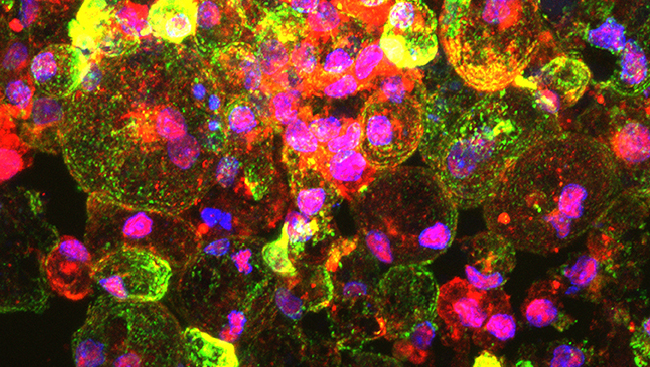 Article Scientific ResearchPeople with schizophrenia often persist in their beliefs and strategies even when evidence suggests they are wrong.Apr 7, 2016
 -
 Journal ArticleIn the article “Learning to Choose: Behavioral Dynamics Underlying the Initial Acquisition of Decision-Making,” by Samantha R. White, Michael W. Preston, Kyra Swanson, and Mark Laubach …Nov 1, 2024
 -
 Journal ArticleThe neural network, including the interstitial nucleus of Cajal (INC), functions as an oculomotor neural integrator involved in the control of vertical gaze holding. Impairment of the vestibulocerebellum (VC), including the flocculus (FL), has been shown to affect vertical gaze holding, indicating that the INC cooperates with the VC in controlling this function. However, a network between the INC and VC has not been identified. In this study, we aimed to obtain anatomical evidence of a neural pathway from the INC to the VC (the INC-VC pathway) in rats. Injection of dextran-conjugated Alexa Fluor 488 or adeno-associated virus 2-retro (AAV2retro) expressing GFP into the FL or another VC region (uvula/nodulus) did not reveal any retrogradely labeled neurons in the INC, suggesting that INC neurons do not project directly to the VC. Rabies virus-based transsynaptic tracing experiments revealed that the INC-VC pathway is mediated via synaptic connections with the prepositus hypoglossi nucleus (PHN) and medial ve...Nov 1, 2024




