



Filter
-
(133)
-
(733)
-
(4)
-
(1)
-
(47833)
-
(91)
-
(25)
-
(14)
-
(433)
-
(7)
-
(182)
-
(8)
-
(33)
-
(17)
-
(7)
-
(9)
-
(9)
-
(5)
-
(21)
-
(8)
-
(12)
-
(9)
-
(3)
-
(10)
-
(10)
-
(56)
-
(45)
-
(12)
-
(3)
-
(7)
-
(6)
-
(5)
-
(8)
-
(7)
-
(11)
-
(58)
-
(13)
-
(30)
-
(8)
-
(5)
-
(10)
-
(5)
-
(15)
-
(4)
1601 - 1610
of 52756 results
-
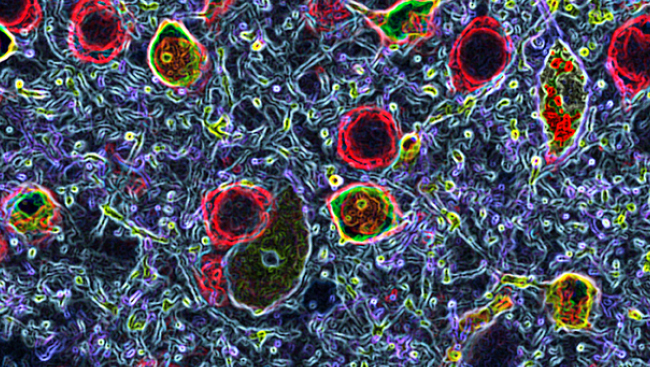 Article Scientific ResearchThe problem of following a speaker’s voice in the presence of others, the Cocktail Party Problem (CPP), remains a focus of intensive research in a diverse range of fields, including neuroscience, computer science, and speech recognition, more than 50 years after it was named.Apr 6, 2017
 -
 Article Scientific ResearchIn the nervous system, each neuron subtype develops unique dendritic architecture that widely differs in the number of branches and the 3D orientation.Apr 6, 2017
 -
 Webinar TrainingHow can neuroscience training programs adapt to evolving tools, technologies, career opportunities, and challenges to best prepare trainees for the future? This webcast will explore strategies to help you tackle this question for graduate and postdoctoral neuroscience training programs at your institutions.Apr 3, 2017
 -
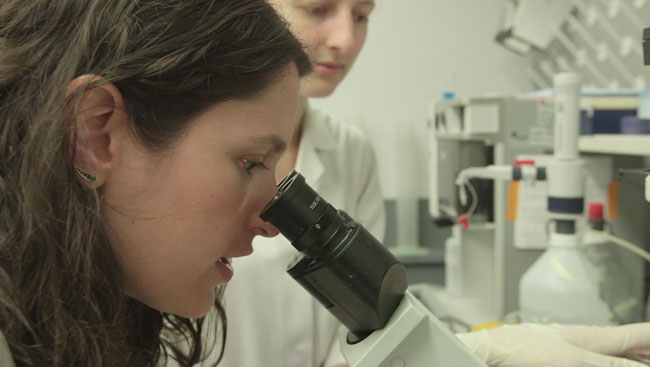 Video TrainingThe neuroscience field is evolving with new tools, technologies, and research techniques. So what will best prepare the next generation of neuroscientists to use these advances and launch their careers?Apr 3, 2017
 -
 Journal ArticleIt is widely believed that axons in the central nervous system of adult mammals do not regrow following injury. This failure is thought, at least in part, to underlie the limited recovery of function following injury to the brain or spinal cord. Some studies of fixed tissue have suggested that, counter to dogma, norepinephrine (NE) axons regrow following brain injury. Here, we have used in vivo two-photon microscopy in layer 1 of the primary somatosensory cortex in transgenic mice harboring a fluorophore selectively expressed in NE neurons. This protocol allowed us to explore the dynamic nature of NE axons following injury with the selective NE axon toxin N-(2-chloroethyl)-N-ethyl-2-bromobenzylamine (DSP4). Following DSP4, NE axons were massively depleted and then slowly and partially recovered their density over a period of weeks. This regrowth was dominated by new axons entering the imaged volume. There was almost no contribution from local sprouting from spared NE axons. Regrown axons did not appear to ...Dec 26, 2024
 -
 Article OutreachDiscovery Day at Drexel University attracts hundreds of students and faculty each year. At this event, students have the unique opportunity to practice presenting their research in a comfortable setting, and faculty, alumni, and other attendees provide support, guidance, and judging for the competition.Mar 30, 2017
 -
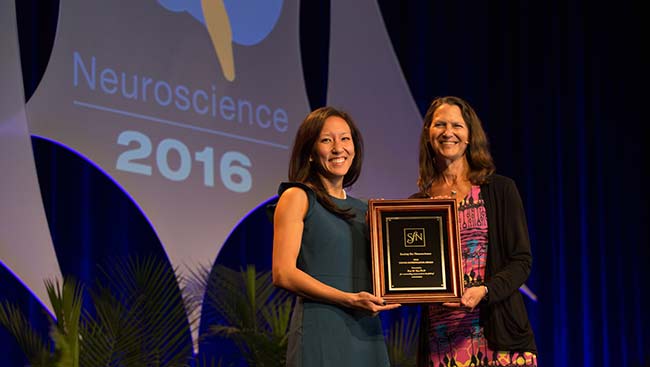 Article Professional DevelopmentKay Tye reflects on her hopes for her field of research and career, and discusses the importance of advocating for yourself.Mar 30, 2017
 -
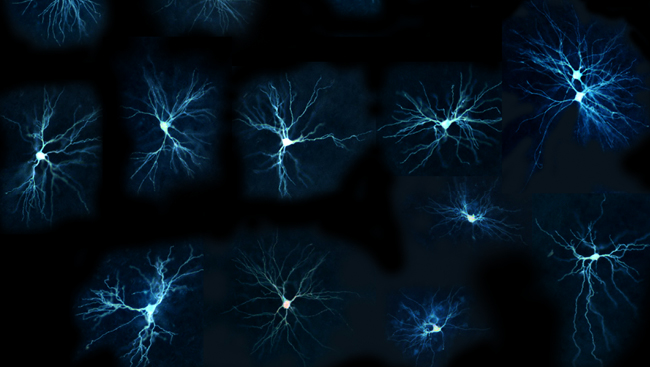 Video Annual Meeting Scientific ResearchRecent advances in technologies for preparing and analyzing cells and for sequencing nucleic acids are quickly making it possible to study the nervous system in information-rich, highly multi-dimensional ways.Mar 28, 2017
 -
 Article Scientific ResearchAs a journal reviewer, your job is to evaluate manuscripts for scientific rigor, details of the work, figures and data, and effective formatting.Mar 28, 2017
 -
 Article DiversityExchanging perspectives with female scientists across the field — regardless of level, research focus, or career path — can be beneficial in helping you navigate your own opportunities and challenges.Mar 23, 2017




