



Filter
-
(133)
-
(733)
-
(4)
-
(1)
-
(47833)
-
(91)
-
(25)
-
(14)
-
(433)
-
(7)
-
(182)
-
(8)
-
(33)
-
(17)
-
(7)
-
(9)
-
(9)
-
(5)
-
(21)
-
(8)
-
(12)
-
(9)
-
(3)
-
(10)
-
(10)
-
(56)
-
(45)
-
(12)
-
(3)
-
(7)
-
(6)
-
(5)
-
(8)
-
(7)
-
(11)
-
(58)
-
(13)
-
(30)
-
(8)
-
(5)
-
(10)
-
(5)
-
(15)
-
(4)
1131 - 1140
of 52756 results
-
 Journal ArticleDistinct frontal regions make dissociable contributions to rule-guided decision-making, including the ability to learn and exploit associations between abstract rules and reward value, maintain those rules in memory, and evaluate choice outcomes. Value-based learning can be quantified using reinforcement learning (RL) models predicting optimal trial-wise choices and estimating learning rates, which can then be related to the intact functioning of specific brain areas by combining a modeling approach with lesion-behavioral data. We applied a three-parameter feedback-dependent RL model to behavioral data obtained from macaques with circumscribed lesions to the principal sulcus (PS), anterior cingulate cortex (ACC), orbitofrontal cortex (OFC), superior dorsolateral prefrontal cortex (sdlPFC), and frontopolar cortex (FPC) performing a Wisconsin card sorting task (WCST) analog. Our modeling-based approach identified distinct lesion effects on component cognitive mechanisms contributing to WCST performance. OFC ...May 1, 2025
 -
 Journal ArticleChildhood epilepsy is a common and devastating condition, for which many children still do not have adequate treatment. Some children with drug-resistant epilepsy require surgical excision of epileptogenic brain tissue for seizure control, affording the opportunity to study this tissue ex vivo to interrogate human epileptic neurons for potentially hyperexcitable perturbations in intrinsic electrophysiological properties. In this study, we characterized the diversity of layer L2/3 (L2/3) pyramidal neurons (PNs) in ex vivo brain slices from pediatric patients with epilepsy. We found a remarkable diversity in the firing properties of epileptic L2/3 PNs: five distinct subpopulations were identified. Additionally, we investigated whether the etiology of epilepsy influenced the intrinsic neuronal properties of L2/3 PNs when comparing tissue from patients with epilepsy due to malformations of cortical development (MCDs), other forms of epilepsy (OEs), or with deep-seated tumors. When comparing epileptic with cont...May 1, 2025
 -
 Journal ArticleDespite its central role in the proper functioning of the motor system, sensation has been less studied than motor outputs in sensorimotor adaptation paradigms. This is likely due to the difficulty of measuring sensation non-invasively: while motor outputs have easily observable consequences, sensation is inherently an internal variable of the motor system. In this study, we investigated how well participants can sense relevant sensory stimuli that induce locomotor adaptation. We addressed this question with a split-belt treadmill, which moves the legs at different speeds. We used a two-alternative forced-choice paradigm with multiple repetitions of various speed differences considering the probabilistic nature of perceptual responses. We found that the participants correctly identified a speed difference of 49.7 mm/s in 75% of the trials when walking at 1.05 m/s (i.e., 4.7% Weber Fraction). To gain insight into the perceptual process in walking, we applied a drift-diffusion model (DDM) relating the partic...May 1, 2025
 -
 Journal ArticleResearch that combines advanced technological devices with complex behavioral tasks has enabled investigations into the neural mechanisms underlying brain and behavioral states. Freely moving rodent experiments often require a tether—a wired connection between an implanted device and an external power supply or data acquisition system. Traditionally, these experiments have used passive commutators to manage tethers, but such setups are often inadequate for reducing twisting and mechanical strain during behavioral tasks. Existing motorized commutators have extended the range of motion for these experiments but generally rely on stepper motors that produce auditory noise, potentially interfering with behavior. To address these limitations, we developed the Motor Assisted Commutator to Harness Electronics in Tethered Experiments (MACHETE), a motor-assisted commutator featuring a low-noise brushless motor. MACHETE dynamically adjusts tethers based on mouse movement, reducing torque and mechanical strain, and m...May 1, 2025
 -
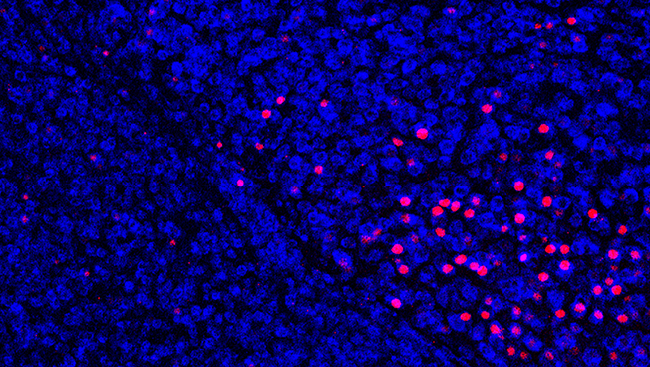 Article Scientific ResearchYou know that eating is vital for your survival, but have you ever thought about how your brain controls how much you eat, when you eat, and what you eat? This is not a trivial question because two-thirds of Americans are either overweight or obese, and overeating is a major cause of this epidemic.Apr 18, 2019
 -
 Webinar Professional DevelopmentThis webinar will show you the broad landscape of European neuroscience networks. Following an introduction to networks and their role in neuroscience, you’ll hear presentations focusing on specific types of networks, with concrete examples. You’ll listen to testimonials from scientists at different career stages on how they’ve benefited from being part of a network. You’ll also have the chance to ask panelists your questions during a live Q&A.Apr 17, 2019
 -
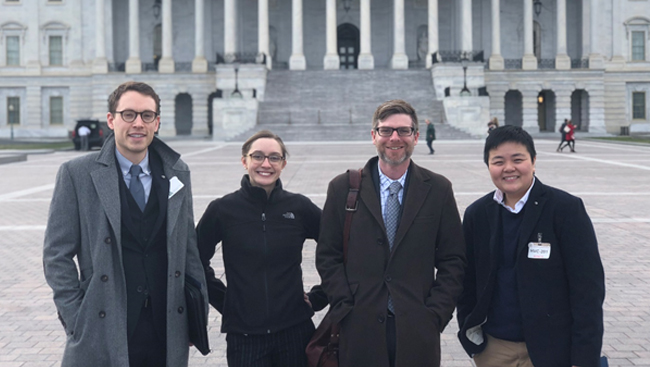 Article AdvocacyJoe Luchsinger started conducting science advocacy because he was passionate about an issue that affected scientists. Now, he regularly hosts lab tours and shares how others can talk with their local policymakers. Read his story and listen to part of his presentation at the Neuroscience 2018 Advocacy Reception, “Engaging Local Policymakers: Strategies for Scientists,” to start making a difference in science policy no matter your level of advocacy experience.Apr 16, 2019
 -
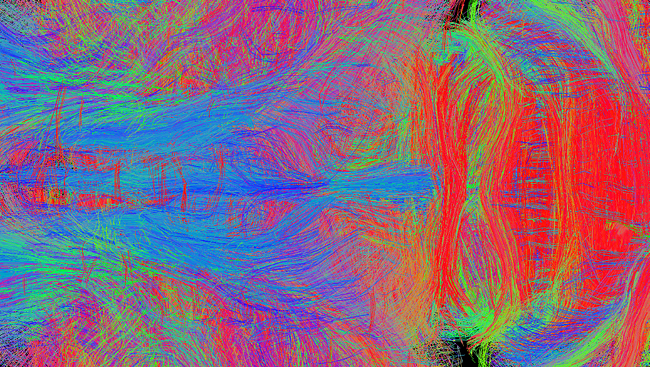 Podcast Scientific ResearchIn this Meet the Expert, Chenghua Gu discusses new tools and methods her lab is using to study the blood brain barrier in vivo — particularly the relationship between neurons and endothelial cells. The blood brain barrier functions as the gatekeeper of the CNS and the barrier that prevents most drugs from passing from the bloodstream into the CNS. The Gu Lab seeks to investigate the fundamental cellular and molecular mechanisms that govern the formation and regulation of the blood brain barrier, as well as how neural and vascular systems work together to ensure proper brain function. Increased understanding of the mechanisms and functional aspects of neurovascular interactions has potential to enable bidirectional manipulation of the blood brain barrier.Apr 9, 2019
 -
Journal ArticleIn the Syngap+/- model of SYNGAP1-related intellectual disability (SRID), excessive neuronal protein synthesis is linked to deficits in synaptic plasticity. Here, we use Translating Ribosome Affinity Purification and RNA-seq (TRAP-seq) to identify mistranslating mRNAs in Syngap+/- CA1 pyramidal neurons that exhibit occluded long-term potentiation (LTP). We find the translation environment is significantly altered in a manner that is distinct from the Fmr1-/y model of Fragile X Syndrome (FXS), another monogenic model of autism and intellectual disability (ID). The Syngap+/- translatome is enriched for regulators of DNA repair, and mimics changes induced with chemical LTP (cLTP) in WT. This includes a striking upregulation in the translation of mRNAs with a longer length (>2kb) coding sequence (CDS). In contrast, long CDS transcripts are downregulated with induction of Gp1 metabotropic glutamate receptor induced long-term depression (mGluR-LTD) in WT, and in the Fmr1-/y model that exhibits occluded mGluR-LTD...Apr 28, 2025
-
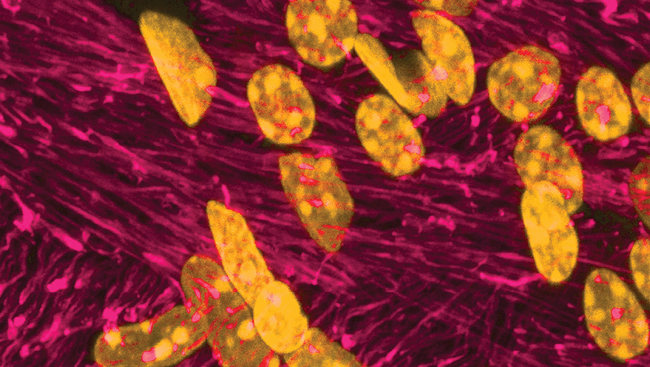 Article Scientific ResearchAll nervous systems adapt to changes in the environment and the internal state of the animal. Such flexibility is essential to producing behaviors in different contexts. Much of this plasticity arises through the actions of neuromodulators, which actively reshape the activity and output of neuronal circuits by modifying neuronal excitability and synaptic transmission, typically by activating distinct G protein-coupled receptor-mediated pathways. Prominent examples include modulatory actions mediating distinct brain or behavioral states, such as the function of serotonin in regulating mood, or the sleep-wake cycles mediated by monoamines and peptides, such as orexin. Although it is tempting to equate the actions of individual neuromodulators with specific behaviors or even brain states, neural circuits are not exposed to neuromodulators one at a time.Apr 4, 2019




