



Filter
-
(133)
-
(733)
-
(4)
-
(1)
-
(47833)
-
(91)
-
(25)
-
(14)
-
(433)
-
(7)
-
(182)
-
(8)
-
(33)
-
(17)
-
(7)
-
(9)
-
(9)
-
(5)
-
(21)
-
(8)
-
(12)
-
(9)
-
(3)
-
(10)
-
(10)
-
(56)
-
(45)
-
(12)
-
(3)
-
(7)
-
(6)
-
(5)
-
(8)
-
(7)
-
(11)
-
(58)
-
(13)
-
(30)
-
(8)
-
(5)
-
(10)
-
(5)
-
(15)
-
(4)
1071 - 1080
of 52756 results
-
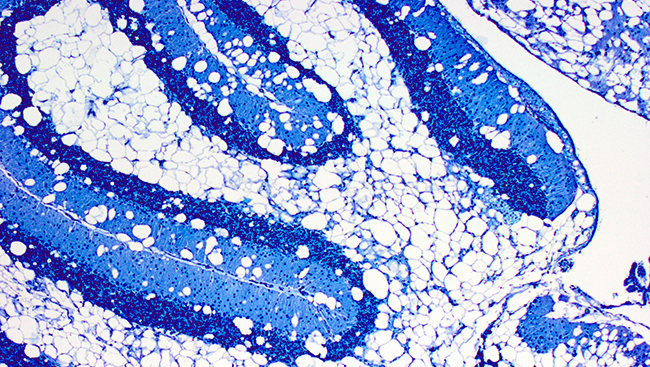 Article Scientific ResearchWhen you hit your toe against the corner of your bed, you feel a sharp pain that may make you scream or swear. In the same way, you may become startled and scream when a barking dog suddenly jumps up from behind a fence next to you. Vocalizing when exposed to the stimulation of a frightening event is highly conserved throughout the animal kingdom. For instance, when a rat faces a danger, like an encounter with a predator or an aggressive conspecific, it vocalizes in the audible range and in the ultrasonic range (22kHz). These ultrasonic vocalizations reflect a negative emotional state and belong to the rat’s fear response repertoire. Fear behavior depends on interactions between the medial prefrontal cortex (mPFC) and the basolateral amygdala (BLA), and involves synchronized activity in theta and gamma oscillatory activities in these brain areas.Jul 25, 2019
 -
 Podcast Scientific ResearchNew neurons are continuously generated throughout life in the dentate gyrus. In her lab at the University of Alabama at Birmingham, Linda Overstreet-Wadiche studies the physiology of newly generated and existing cells in the dentate gyrus. More specifically, she investigates how various cell types, including newly generated neurons and GABAergic interneurons, contribute to the function of this unique brain region, as well as how neuronal connections are established and extinguished. In this Meet the Expert, she shares considerations that influenced some of the most important decisions she made early in her career, like which grad school to attend, labs to do her rotations in, and PIs with whom to do her postdoctoral training. In addition, she recounts factors — including life events and novel findings — that went into the choices that would shape the trajectory of her research program.Jul 23, 2019
 -
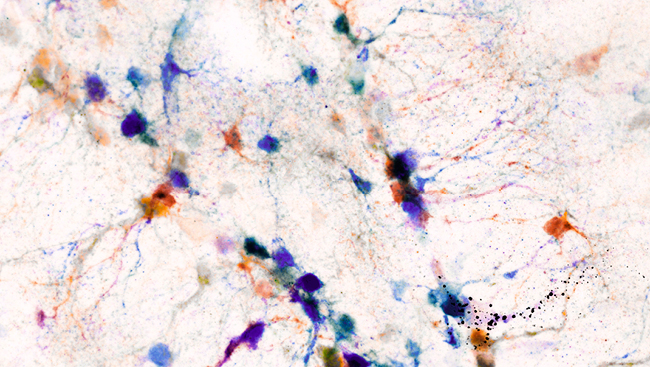 Article Scientific ResearchMaterial below summarizes the article Convergent Inputs from the Hippocampus and Thalamus to the Nucleus Accumbens Regulate Dopamine Neuron Activity, published on December 12, 2018, in JNeurosci and authored by Stephanie M. Perez and Daniel J. Lodge. One of the main types of symptoms experienced by people with schizophrenia are positive symptoms, which include hallucinations, delusions, and paranoia. This psychosis is thought to be mediated by aberrant dopamine signaling, but the cause of this aberrant signaling has not been conclusively demonstrated. We previously investigated the afferent regulation of the dopamine system and identified a glutamatergic pathway from the ventral hippocampus to the nucleus accumbens (NAc) crucial to the regulation of dopamine neurons in the ventral tegmental area (VTA). Given that individuals with schizophrenia exhibit hyperactivity in hippocampal subfields that is correlated with the severity of positive symptoms, it is likely the dopamine dysfunction in schizophrenia is driven by aberrant ventral hippocampal activity. Consistent with this hypothesis, recent postmortem studies revealed glutamatergic abnormalities in the NAc, specifically in expression of vesicular glutamate transporter 2 (vGlut2). Because the hippocampus expresses vGlut2 at relatively low levels, we began to explore areas with high levels of vGlut2 expression such as the thalamus, a structure composed of many subnuclei that has previously been implicated in schizophrenia. Of importance to our work is the paraventricular nucleus of the thalamus (PVT), which has been shown to provide a dense glutamatergic projection to the NAc.Jul 18, 2019
 -
 Article OutreachI never saw myself running a nonprofit for mental health — it wasn’t an ambition of mine. All my life I pursued traditional science and medicine: the lab, the clinic, the white coat. During my work at the Psychiatric Research Institute in Little Rock, Arkansas, however, I became interested in mental health advocacy when I learned how heavily environment impacts mental state — almost as much as brain chemistry or neural wiring. In my clinical and research training I’d heard stories of abuse, disparity, and disadvantage that made it clear if I wanted to improve mental health, I couldn’t ignore the role of community. I recognized the necessity of stepping out of the lab and connecting with others to make a bigger impact than any one person can have alone. One day a friend posted that it was Mental Illness Awareness Day. It was my first time hearing of it. As a future psychiatrist and as a neuroscientist, I couldn't believe I was working in the psychiatric hub of Arkansas and had no idea this initiative existed. I thought about the impact increased mental health awareness could have on the community at large and knew I had to figure out how to get this information out there.Jul 17, 2019
 -
 Annual Meeting Video Professional DevelopmentNetworking is more than just approaching someone whose career you admire and exchanging business cards. Establishing your network should start with your peers, or even trainees. They can serve as a support system as you navigate similar career stages, and they may even end up in an institution or company of interest to you in the future. Rae Nishi, the chair of SfN’s Professional Development Committee, shares that overall the key to success is being nice and following up. “The relationships that you form right now should be at the level of making friends with people, being nice, and being able to sustain those relationships.” Watch this interactive panel from SfN’s annual meeting to learn more approaches to building professional relationships.Jul 16, 2019
 -
 Journal ArticleThe rodent brain contains 70,000,000+ neurons interconnected via complex axonal circuits with varying architectures. Neural pathologies are often associated with anatomical changes in these axonal projections and synaptic connections. Notably, axonal density variations of local and long-range projections increase or decrease as a function of the strengthening or weakening, respectively, of the information flow between brain regions. Traditionally, histological quantification of axonal inputs relied on assessing the fluorescence intensity in the brain region-of-interest. Despite yielding valuable insights, this conventional method is notably susceptible to background fluorescence, post-acquisition adjustments, and inter-researcher variability. Additionally, it fails to account for the non-uniform innervation across brain regions, thus overlooking critical data such as innervation percentages and axonal distribution patterns. In response to these challenges, we introduce AxoDen, an open-source semi-automated...May 16, 2025
 -
 Article OutreachOffering kids opportunities to engage with science early on sets them up to appreciate their brains and think about neuroscience careers as they mature. In this article, Mark Williams, Anina Rich, Regine Zopf (from Macquarie University, in Sydney), and Alexandra Woolgar (from the University of Cambridge, in the United Kingdom) share three activities they used to demonstrate neuroscience concepts to kindergarteners and how they made an impact. What happens in the brain when we see, hear, feel, taste, and smell? How should we take care of our brains so we can continue to vividly experience the world around us? These are some of the questions we asked students during Neuroscience for Kindy Kids, a day of interactive activities to teach approximately 180 kindergarteners about attention, multisensory interaction, and adaptation in the brain. Throughout the day, we had class groups of 20–23 students rotate through 30-minute activities. The point of these activities was to get young children to think about the brain and appreciate the complexity of everyday experiences. Knowing more about the brain promotes curiosity and increases the likelihood of making good choices, such as wearing a helmet when riding a bicycle or scooter.Jul 10, 2019
 -
 Podcast Scientific ResearchStem cell-derived motor neurons provide a unique opportunity to study molecular processes controlling specification of neuronal identity and to probe pathological processes leading to neurodegeneration in patients with amyotrophic lateral sclerosis. Hynek Wichterle, whose lab models and studies the development of the nervous system in vitro, will cover: - What it means to become a defined neuronal cell type in the central nervous system. - Findings that neuronal genes are controlled by distributed enhancers rather than super-enhancers. - Approaches to modeling neurodegenerative diseases including amyotrophic lateral sclerosis, a degenerative disease of spinal motor neurons.Jul 9, 2019
 -
Journal ArticleSleep consists of two alternating states—rapid eye movement (REM) and non-REM (NREM) sleep. Neurons adjust their firing activity based on brain state, but how this modulation varies across neurons and brain regions remains poorly understood. This study analyzed previously acquired 17-h continuous recordings of single-unit activity and local field potentials in the ventral hippocampal CA1 region, prelimbic cortex layer 5, and basolateral nucleus of the amygdala of fear-conditioned rats. The findings indicate that more than half of the neurons fired faster during REM sleep than during NREM sleep, although a notable subset of neurons exhibited the opposite preference, firing preferentially during NREM sleep. During sleep, the firing activity of both REM- and NREM-preferring neurons decreased. However, fast network oscillations, including hippocampal sharp-wave ripples (SWRs), amygdalar high-frequency oscillations, cortical ripples, and cortical spindles, differentially modulated REM- versus NREM-preferring ne...May 15, 2025
-
Journal ArticleFrom lamprey to monkeys, the organization of the descending control of locomotion is conserved across vertebrates. Reticulospinal neurons ( RSNs ) form a bottleneck for descending commands, receiving innervation from diencephalic and mesencephalic locomotor centres and providing locomotor drive to spinal motor circuits. Given their optical accessibility in early development, larval zebrafish offer a unique opportunity to study reticulospinal circuitry. In fish, RSNs are few, highly stereotyped, uniquely identifiable, large neurons spanning from the midbrain to the medulla. Classically labelled by tracer dye injections into the spinal cord, recent advances in genetic tools have facilitated the targeted expression of transgenes in diverse brainstem neurons of larval zebrafish. Here, we provide a comparative characterization of four existing and three newly established transgenic lines in larval zebrafish. We determine which identified neurons are consistently labelled and offer projection-specific genetic ac...May 15, 2025




