



Filter
-
(133)
-
(733)
-
(4)
-
(1)
-
(47833)
-
(91)
-
(25)
-
(14)
-
(433)
-
(7)
-
(182)
-
(8)
-
(33)
-
(17)
-
(7)
-
(9)
-
(9)
-
(5)
-
(21)
-
(8)
-
(12)
-
(9)
-
(3)
-
(10)
-
(10)
-
(56)
-
(45)
-
(12)
-
(3)
-
(7)
-
(6)
-
(5)
-
(8)
-
(7)
-
(11)
-
(58)
-
(13)
-
(30)
-
(8)
-
(5)
-
(10)
-
(5)
-
(15)
-
(4)
1041 - 1050
of 52756 results
-
 Journal ArticleSpinal cord injury (SCI) results in the loss of sensory and motor functions due to the inability of mature central nervous system (CNS) neurons to regenerate. Developing robust neural regrowth strategies will be critical for re-establishing corticospinal motor neuron circuits and restoring control over voluntary movement. However, the complex nature of SCI necessitates a multifaceted approach to address several key barriers to regeneration: enhancing the limited intrinsic growth ability of injured adult neurons, mitigating the growth inhibitory signals of the injured spinal cord, and providing a growth-permissive substrate. The intrinsic capacity for axons to regenerate declines precipitously in early postnatal development. There are numerous changes in transcriptional control, epigenetic regulation, cell signaling, and metabolism with CNS maturation (Zheng and Tuszynski, 2023). One well defined change is a decline in growth-promoting phosphatidylinositol 3-kinase (PI3K) signaling as phosphatase and tensi...Jun 1, 2025
 -
 Journal ArticleEarly life stress (ELS) increases susceptibility to cognitive and socioemotional dysfunction by disrupting the neurobiological systems that regulate these behaviors. Animal models provide a valuable tool for investigating the underlying mechanisms, enabling precise manipulation of stress exposure during development. The limited bedding and nesting (LBN) model, which induces maternal stress by restricting access to bedding and nesting materials in rodents, has been instrumental in advancing our understanding of chronic ELS. While this paradigm has been widely adopted, variations in apparatus designs and subtle differences in methodologies could impact consistency across studies. Here, we provide standardized guidelines for a cost-effective open–source mouse LBN apparatus design, which could further enhance the model's utility while supporting pup survival. We additionally present our findings observed during the duration of the LBN paradigm, which spans from postnatal day (PND) 2 to 10, for both dams and pu...Jun 1, 2025
 -
 Journal ArticleNeurons in the paraventricular nucleus of the thalamus (PVT) integrate visceral and limbic inputs and project to multiple brain regions to bias behavior toward aversive or defensive states. This study examines MOR signaling in anterior PVT neurons in brain slices from untreated and morphine-treated animals. Imaging in a MOR-Cre reporter rat revealed extensive expression in aPVT cells, and the application of [Met]5− enkephalin (ME) induced outward currents which were abolished by the MOR-selective antagonist CTAP. A saturating concentration of ME resulted in desensitization that was blocked by compound 101, indicating a phosphorylation-dependent process. The opioid sensitivity of amygdala-, nucleus accumbens-, and prefrontal cortex-projecting neurons was then examined. Neurons that projected to the amygdala were more sensitive to ME than cortical- and accumbal-projecting cells. Following chronic treatment, tolerance to morphine was found in neurons projecting to the amygdala and nucleus accumbens with a tre...Jun 1, 2025
 -
 Journal ArticleRod and cone photoreceptor cells selectively contact different compartments of axon-bearing retinal horizontal cells in the mammalian retina. Cones synapse exclusively on the soma whereas rods synapse exclusively on a large axon terminal compartment. The possibility that rod signals can travel down the axon from terminal to soma has been proposed as a means of producing spectrally opponent interactions between rods and cones, but there is conflicting data about whether this actually occurs. The spectral overlap between rods and cones in mouse makes it difficult to stimulate rod and cone pigments separately. We therefore used optogenetic techniques to analyze photoreceptor inputs into horizontal somas by selectively expressing channelrhodopsin in rods and/or cones. Optogenetic stimulation of rods and cones both evoked large fast inward currents in horizontal cell somas. Cone-driven responses were abolished by eliminating synaptic release in a cone-specific knock-out of the exocytotic calcium sensor, synapto...Jun 1, 2025
 -
 Journal ArticleModels of experience-dependent neuroplasticity predict that the acquisition and extensive use of a new skill trigger a nonlinear trajectory of neurostructural modifications, where initial expansion of relevant brain areas subsequently (once the skill is acquired) gives way to volumetric renormalization. Such predictions also apply in the domain of language during learning and/or simultaneous management of two (or more) linguistic systems. In a sample of 69 young adult Russian–English bilinguals, we tested the hypothesis that individual differences in bilingual engagement nonlinearly correlate with normalized volume of the hippocampus—a key learning-related brain region particularly amenable to experience-dependent plasticity. Results revealed an inverted U-shape association between second language engagement and left hippocampal gray matter volume. The present results replicate and expand the findings from aging populations, showing a nonlinear pattern of structural hippocampal plasticity in healthy young ...Jun 1, 2025
 -
 Journal ArticleLifelong premature ejaculation (LPE) is associated with abnormal brain function, as evidenced by functional MRI (fMRI) studies. This study investigates the stability of brain network architectures in resting-state conditions following perturbation by erotic tasks in individuals with LPE. We assessed the resting-state fMRI in the task-free and task-modulated dataset in the 28 right-hand LPE and 17 age-matched normal controls (NCs). The dynamic functional connectome based on the phase-locking algorithm and ROI-wise gradient mapping was compared. The stability of dynamic functional gradient mapping was measure by linear mixed effects across the two datasets in the LPE and NCs. In both groups, the brain functional gradient exhibited a clear transition from unimodal to transmodal in the principal gradient. Additionally, there was a segregation of primary networks observed in the secondary gradient, either before or after the task. In LPE patients, we observed increased stability in the bilateral dorsal prefront...Jun 1, 2025
 -
 Journal ArticlePerceptual localization of brief, high-contrast perisaccadic visual probes is grossly erroneous. While this phenomenon has been extensively studied in humans, more needs to be learned about its underlying neural mechanisms. This ideally requires running similar behavioral paradigms in animals. However, during neurophysiology, neurons encountered in the relevant sensory and sensory–motor brain areas for visual mislocalization can have arbitrary, noncardinal response field locations. This necessitates using mislocalization paradigms that can work with any saccade direction. Here, we first established such a paradigm in three male rhesus macaque monkeys. In every trial, the monkeys generated a saccade toward an eccentric target. Once a saccade onset was detected, we presented a brief flash at one of three possible locations ahead of the saccade target location. After an experimentally imposed delay, we removed the saccade target, and the monkeys were then required to generate a memory-guided saccade toward th...Jun 1, 2025
 -
 Video DiversityWhat can neuroscientists do to promote greater representation of women in the field, across the career spectrum? In this video, SfN past presidents examine how individuals, institutions, and the scientific community at large can catalyze cultural change that allows all scientists to contribute fully. “As a society, we can come together and recognize that there are common issues that are preventing young women, in particular, from achieving their goals and following their passion. As a society, I think we have a great opportunity to look and see where those common features are that a single institution might not,” says SfN President Diane Lipscombe. This video is one of three in the SfN Presidents on Gender Diversity in Neuroscience interview series, part of an ongoing effort to increase all forms of diversity in neuroscience. Watch the other videos in this series, on the importance of gender parity and advice for the next generation of women.Oct 4, 2019
 -
 Video DiversityIn this video, SfN past presidents share their advice for rising female neuroscientists. SfN President Diane Lipscombe offers three guiding principles for women early in their careers: First, “Believe in yourself. Don't listen to other people's views about what they think you are capable of. You know what you're capable of.” Second, “Find those people who are going to support you. Search them out. Build a peer group of people around you, people who are going to listen to you, who are going to believe in you and who are going to help.” Third, “Work hard. There's huge satisfaction in working incredibly hard and then seeing the things that you've achieved as a scientist.” This video is one of three in the SfN Presidents on Gender Diversity in Neuroscience interview series, part of an ongoing effort to increase all forms of diversity in neuroscience. Watch the other videos in this series, on the importance of gender parity and building a scientific culture that supports women.Oct 4, 2019
 -
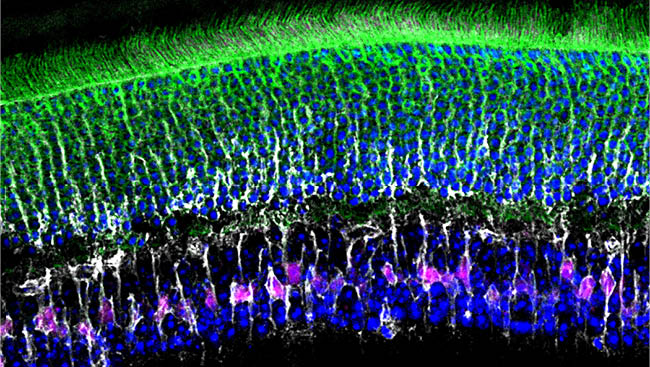 Article Scientific ResearchThe mammalian hippocampus is required for spatial memory. Teleosts have spatial memory, and it is stored in DL. What mechanisms do DL use to store such memories? Does the DL network store spatial memories in a manner consistent with theories derived from work on the mammalian hippocampus?Oct 4, 2019




