



Filter
-
(133)
-
(733)
-
(4)
-
(1)
-
(47830)
-
(91)
-
(25)
-
(14)
-
(433)
-
(7)
-
(181)
-
(8)
-
(33)
-
(17)
-
(7)
-
(9)
-
(9)
-
(5)
-
(21)
-
(8)
-
(12)
-
(9)
-
(3)
-
(10)
-
(10)
-
(56)
-
(45)
-
(12)
-
(3)
-
(7)
-
(6)
-
(5)
-
(8)
-
(7)
-
(11)
-
(58)
-
(13)
-
(30)
-
(8)
-
(5)
-
(10)
-
(5)
-
(14)
-
(4)
921 - 930
of 52751 results
-
 Article Professional DevelopmentOBI was created to change how brain research was done, and the challenge was palpable: getting world-class clinicians and researchers who are used to competing with each other to work together. More than just working together, though, we had to figure out how to get researchers to truly collaborate, by standardizing assessments and sharing data.Apr 16, 2020
 -
 Article Professional DevelopmentAs a postdoc, you’ve likely had several mentors you can point to who have shaped your career path. You may be at a point where you’re also starting to become a mentor.Apr 14, 2020
 -
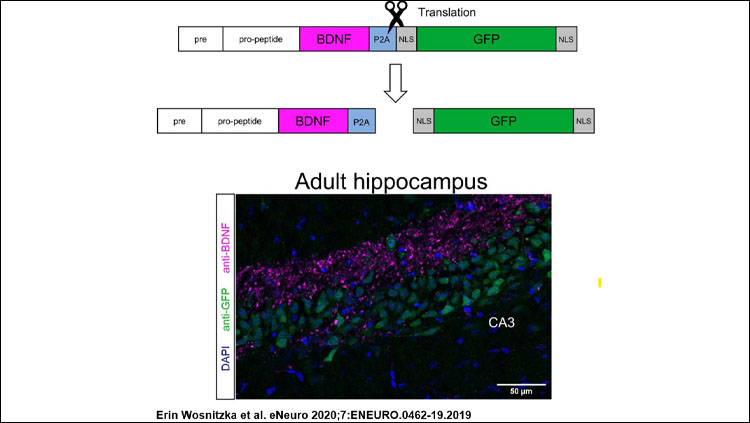 Article Scientific ResearchMaterial below summarizes the article A New Mouse Line Reporting the Translation of Brain-Derived Neurotrophic Factor Using Green Fluorescent Protein, published on December 27, 2019, in eNeuro and authored by Erin Wosnitzka, Xinsheng Nan, Jeff Nan, Pedro Chacón-Fernández, Lothar Kussmaul, Michael Schuler, Bastian Hengerer, and Yves-Alain Barde. Highlights: - The direct coupling of the secretory protein brain-derived neurotrophic factor (BDNF) with green fluorescent protein (GFP) interferes with its biosynthesis and secretion. - Translation can nonetheless be monitored using constructs translating BDNF and GFP as separate proteins. - To avoid the artefacts resulting from cDNA overexpression, the strategy also involves a substitution of the genomic protein coding sequence, as previously reported with the cytoplasmic protein BRAF.Apr 9, 2020
 -
 Article Career PathsOf all of the four-year colleges and universities in the U.S., relatively few are classified by the Carnegie Foundation as R1 (“very high research activity”) or R2 (“high research activity”) schools. While research universities tend to be larger and have more faculty, the small number of them means that most faculty job opportunities are actually at teaching-focused institutions. While each institution and department is unique, faculty who build their careers at primarily undergraduate institutions (PUIs), experience some common rewards and challenges, many of which I’ve observed first-hand. Here’s what a faculty career at an undergraduate institution can look like.Apr 8, 2020
 -
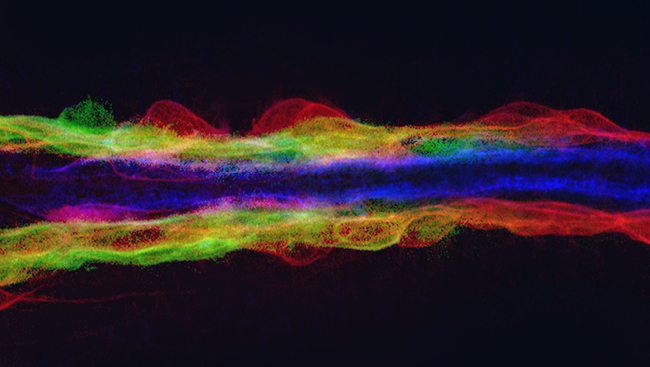 Webinar TrainingMalfunctioning of neuronal circuits and peripheral systems (e.g metabolism, immune or microbiota) underlie aspects of psychiatric disorders. One of the major challenges in neuroscience is understanding the mechanisms and temporal dynamics of such changes within discrete neuronal connections, or within precise peripheral players. Such understanding can reveal new therapeutic strategies and refine existing ones.Apr 6, 2020
 -
 Journal ArticleAdvances in in vivo Ca2+ imaging using miniature microscopes have enabled researchers to study single-neuron activity in freely-moving animals. Tools such as MiniAN and CalmAn have been developed to convert Ca 2+ v isual signals to n umerical data, collectively referred to as CalV2N. However, substantial challenges remain in analyzing the large datasets generated by CalV2N, particularly in integrating data streams, evaluating CalV2N output quality, and reliably and efficiently identifying Ca2+ transients. In this study, we introduce CalTrig, an open-source graphical user interface (GUI) tool designed to address these challenges at the post-CalV2N stage of data processing collected from C57BL/6J mice. CalTrig integrates multiple data streams, including Ca2+ imaging, neuronal footprints, Ca2+ traces, and behavioral tracking, and offers capabilities for evaluating the quality of CalV2N outputs. It enables synchronized visualization and efficient Ca2+ transient identification. We evaluated four machine learnin...Jul 2, 2025
 -
Journal ArticleDespite the vivid experience of homogeneous vision, our visual system is inherently endowed with highly inhomogeneous structures. Although the temporal characteristics of visual responses vary with eccentricity, the connection between this variation, the speed of visual processing, and its underlying neurophysiological mechanisms remains a topic of debate. Here, we performed simultaneous recordings of high-precision gaze positions and EEG activity to investigate how foveal and perifoveal stimulation impact reaction times (RTs) and visual evoked potentials (VEPs). Volunteers discriminated the position and orientation of a U-shaped figure with the aperture facing either upward or downward. Stimuli were presented briefly (50 ms) either in the foveola (0.33◦) or perifovea (6.5◦), to the right or left of the fixation point. Stimulus size in the perifovea condition was adjusted according to the cortical magnification factor (stimulus size: 0.2◦ and 0.75◦ for the foveola and perifovea condition, respectively). Wh...Jul 2, 2025
-
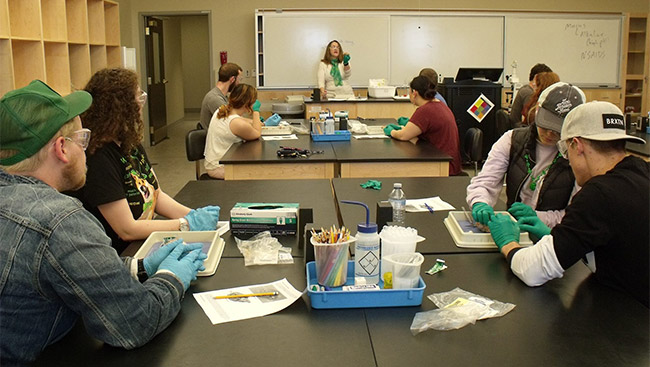 Article TrainingOnline courses are increasingly popular, especially for students who need a more flexible schedule due to work or family commitments.Apr 1, 2020
 -
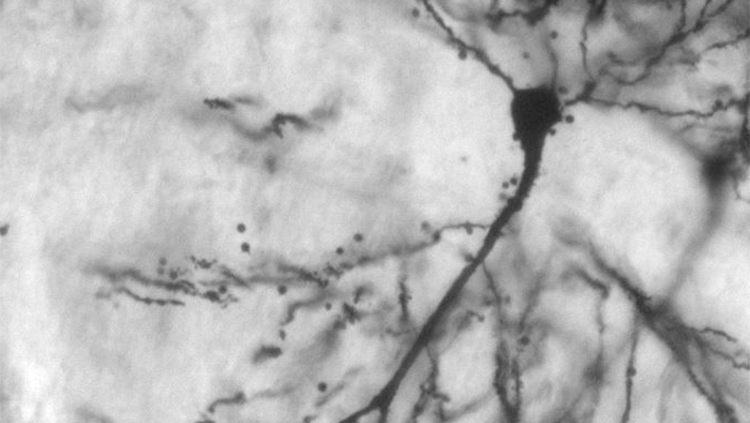 Article Career PathsVivian Mushahwar designs rehabilitation interventions for people with spinal cord injuries. Director of a state-of-the-art center for researchers from engineering, medicine, rehabilitation, computer science, and neuroscience, she's working to alleviate the effects of spinal cord injury through innovation and entrepreneurship. In this interview she walks through her career path in detail, shares how mentors have guided her, and offers advice for trainees on discovering your passion, choosing a faculty position, and navigating challenges as a woman in science. This article is part of Neuronline's interview series "Entrepreneurial Women Combining Neuroscience, Engineering, and Tech," which highlights the career paths and scientific accomplishments of female leaders and role models who are creatively bridging disciplines to improve lives.Mar 30, 2020
 -
 Journal ArticleIn the mammalian visual system, three functionally distinct parallel processing streams extend from the retina to the visual thalamus and then to the visual cortex: magnocellular (M), parvocellular (P), and koniocellular (K). Tree shrews ( Tupaia belangeri ), a preprimate species, provide an advantageous model to study the K pathway in isolation because, while M and P pathways remain mixed in Lamina 1 (L1), L2, L4, and L5 of the lateral geniculate nucleus (LGN), L3 and L6 receive strictly K-input from the contralateral eye. Additionally, K-input laminae selectively receive glutamatergic axons from the superior colliculus. To reveal how cellular and synaptic properties of K geniculate laminae may differ from M/P laminae and how tectal input may shape the K relay to the cortex, we studied the morphology and connectivity of retinal and tectal terminals in pathway-specific laminae. While confirming that K laminae relay cells contain calbindin, we also found its expression in GABAergic cells across all laminae....Jul 1, 2025




