



Filter
-
(133)
-
(733)
-
(4)
-
(1)
-
(47830)
-
(91)
-
(25)
-
(14)
-
(433)
-
(7)
-
(181)
-
(8)
-
(33)
-
(17)
-
(7)
-
(9)
-
(9)
-
(5)
-
(21)
-
(8)
-
(12)
-
(9)
-
(3)
-
(10)
-
(10)
-
(56)
-
(45)
-
(12)
-
(3)
-
(7)
-
(6)
-
(5)
-
(8)
-
(7)
-
(11)
-
(58)
-
(13)
-
(30)
-
(8)
-
(5)
-
(10)
-
(5)
-
(14)
-
(4)
541 - 550
of 52751 results
-
 Video Scientific ResearchNeuronline is a benefit of SfN membership. Renew your membership now to make sure you don’t lose access.May 4, 2022
 -
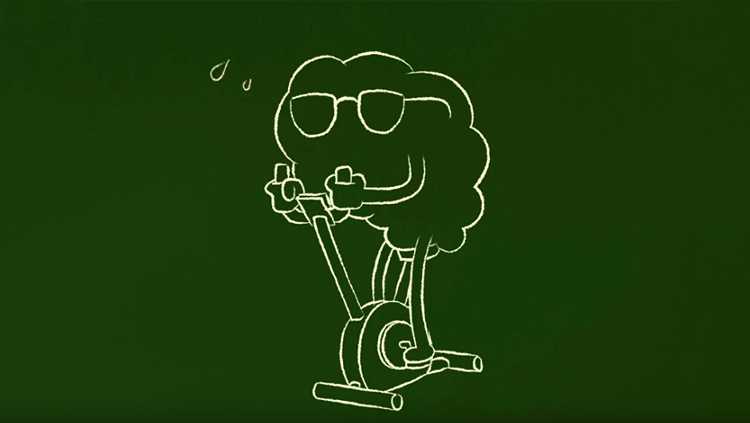 Webinar Scientific ResearchDespite evidence showing that physical activity is one of the most important modifiable lifestyle factors that supports good brain health throughout life and improves quality of life in old age, sedentary behavior is on the rise. This is In this webinar, we will discuss different mechanisms by which exercise positively influences brain health and function across the lifespan, from modulation of inflammation to regulation of adult neurogenesisApr 28, 2022
 -
.png) Podcast Scientific ResearchKhalid Elsaafien and Eric Krause discuss their paper, “Identification of Novel Cross-Talk between the Neuroendocrine and Autonomic Stress Axes Controlling Blood Pressure” with JNeurosci Editor-in-Chief Marina Picciotto.Apr 19, 2022
Podcast Scientific ResearchKhalid Elsaafien and Eric Krause discuss their paper, “Identification of Novel Cross-Talk between the Neuroendocrine and Autonomic Stress Axes Controlling Blood Pressure” with JNeurosci Editor-in-Chief Marina Picciotto.Apr 19, 2022 -
 Webinar AdvocacyNeuronline is a benefit of SfN membership. Renew your membership now to make sure you don’t lose access.Apr 18, 2022
 -
 Journal ArticleMice offer a wealth of opportunities for investigating brain circuits regulating multiple behaviors, largely due to their genetic tractability. Social behaviors are translationally relevant, considering both mice and humans are highly social mammals, and human social behavior disruptions are key symptoms of myriad neuropsychiatric disorders. Stresses related to social experiences are particularly influential in the severity and maintenance of neuropsychiatric disorders like anxiety disorders, and trauma and stressor-related disorders. Yet, induction and study of social stress in mice has disproportionately focused on males, influenced heavily by their inherent territorial nature. Social target-instigated stress (i.e., defeat), while ethologically relevant, is quite variable and predominantly specific to males, making rigorous and sex-inclusive studies challenging. In pursuit of a controllable, consistent, high throughput, and sex-inclusive method for social stress elicitation, we modified a paradigm to tra...Dec 4, 2025
 -
Journal ArticleRepetitive mild traumatic brain injury (rmTBI) is a major contributor to long-term neurological dysfunction, yet many preclinical models lack precise control and quantification of biomechanical forces across impacts. We developed a reproducible, closed-skull mouse model of rmTBI using a custom-built weight-drop apparatus featuring a solenoid-based rebound arrest system, integrated high-speed videography, and accelerometry to track head kinematics during impact. Adult male and female mice received either a single impact or nine daily impacts. Linear and angular acceleration data were analyzed alongside behavioral and histological outcomes. Our apparatus delivered consistent impact and velocity forces with minimal inter-subject variability. Additionally, the animals experienced consistent linear and angular acceleration as measured using high-speed video capture. These impacts did not cause skull fracture or acute vascular hemorrhage, but impacted animals had increased return of righting reflex (RoRR) time, ...Dec 4, 2025
-
Journal ArticleAccurate electrode implantation in the subthalamic nucleus (STN) of rats is essential for high-quality electrophysiological and neuromodulation studies but remains technically challenging due to the small size and deep location of the STN. Traditional stereotactic methods, relying on bregma or averaged bregma-interaural based coordinates, often result in misplacement of electrode. Here, we introduce a combined anatomical and functional approach—bregma-interaural and electrophysiology-guided technique (BITE)— designed to enhance targeting accuracy for STN electrode implantation in male Sprague-Dawley rats. In this method, anterior-posterior (AP), medial-lateral (ML), and dorsal-ventral (DV) coordinates are initially determined using the average of bregma and interaural references. Electrode depth (DV axis) is fine-tuned based on real-time detection of characteristic STN neuronal firing patterns. If STN featured activity is not observed on the first implantation, additional adjustments in the AP and ML axes ...Dec 2, 2025
-
Journal ArticleNeural signals necessary for gaze holding are produced in the excitatory networks of oculomotor neural integrators including the prepositus hypoglossi nucleus (PHN) and the interstitial nucleus of Cajal (INC). Our previous studies have shown that the activation of the networks can be evaluated by sustained excitatory postsynaptic current (EPSC) responses in vitro , in which a higher EPSC frequency after burst stimulation (100 Hz, 20 trains) than the frequency before the stimulation lasts for more than 1 s. Both the PHN and the INC receive serotonergic inputs mainly from the dorsal raphe nucleus, and serotonin (5-HT) induces depolarizing responses via 5-HT2 or 5-HT3 receptors and hyperpolarizing responses via 5-HT1A receptors in PHN and INC neurons. However, how 5-HT affects sustained EPSC responses remains unknown. In this study, we investigated the effects of 5-HT on sustained EPSC responses using whole-cell recordings in brainstem slices obtained from rats of either sex. Compared with the control treatme...Dec 2, 2025
-
Journal ArticleRecent work showed unexpectedly large, daily modulation of intracellular chloride concentration ([Cl-]in) in cortical pyramidal cells, with consequences for GABAergic function and network excitability (Alfonsa et al., 2023; Pracucci et al., 2023). One explanation for this [Cl-]in modulation is that it arises from variation in presynaptic drive. In that case, neuronal classes with similar synaptic inputs should show correlated changes in activity-dependent ionic redistribution. To examine this prediction, we performed in vivo, LSSm-ClopHensor imaging to measure [Cl-]in and pHin in populations of parvalbumin- (PV) and somatostatin-expressing (SST) interneurons in neocortical layer 2/3 of male and female adult mice. Imaging was performed at zeitgeber time (ZT) 5, and ZT17, when pyramidal cell [Cl-]in shows maximal divergence (Pracucci et al., 2023). Interestingly, PV interneurons also showed large physiological [Cl-]in modulation between these times, but out of phase with that in pyramidal cells, being raised...Dec 2, 2025
-
Journal ArticleAcross brain regions and species, the dynamics and balance of excitation and inhibition critically determine neuronal firing. The hippocampal dentate gyrus is a brain area thought to be strongly regulated by inhibition. In vivo, it exhibits remarkably sparse activity, a characteristic proposed to underlie computational tasks like pattern separation. Several populations of interneurons mediate strong feedforward as well as feedback inhibition onto granule cells. However, how the dynamics of inhibition controls granule cell activity in vivo is insufficiently studied. Using two-photon in vivo Ca2+ imaging in mice of either sex, we show that sensory stimulation activates only a small number of dentate gyrus granule cells, while inducing widespread inhibition across the remaining granule cell population. Dual-color imaging of both bulk medial perforant path activity and individual granule cell activity allowed us to probe input–output conversion in this pathway. To examine the interplay of MPP-evoked excitation...Dec 1, 2025




