



Filter
-
(133)
-
(733)
-
(4)
-
(1)
-
(47830)
-
(91)
-
(25)
-
(14)
-
(433)
-
(7)
-
(181)
-
(8)
-
(33)
-
(17)
-
(7)
-
(9)
-
(9)
-
(5)
-
(21)
-
(8)
-
(12)
-
(9)
-
(3)
-
(10)
-
(10)
-
(56)
-
(45)
-
(12)
-
(3)
-
(7)
-
(6)
-
(5)
-
(8)
-
(7)
-
(11)
-
(58)
-
(13)
-
(30)
-
(8)
-
(5)
-
(10)
-
(5)
-
(14)
-
(4)
301 - 310
of 52751 results
-
 Journal ArticleEnvironmental enrichment (EE) reduces vulnerability to multiple drugs of abuse, yet its impact on fentanyl use and relapse-like behavior remains unclear. Here, we tested whether long-term, non-social, object-based EE alters fentanyl self-administration, extinction, and stress-induced reinstatement in male and female rats. Rats were individually housed in either standard non-enriched (NE) conditions or in EE cages containing a rotating set of novel objects beginning at least three days prior to self-administration. EE did not impact acquisition of fentanyl self-administration but reduced fentanyl intake during maintenance of self-administration and reduced the persistence of drug-seeking in extinction. Following extinction, yohimbine robustly reinstated drug-seeking behavior in NE rats but reinstatement in EE rats was markedly attenuated, indicating reduced sensitivity to stress-induced relapse triggers. Circulating corticosterone levels were lower in EE rats across the experiment and were positively correl...Apr 13, 2026
 -
Journal ArticleOlfactory anhedonia and heightened aversion to unpleasant odors are well-documented features of depression in humans, yet the neural mechanisms linking chronic stress to altered olfactory perception remain poorly understood. We used the Unpredictable Chronic Mild Stress (UCMS) paradigm to examine how chronic stress affects olfactory avoidance behavior and glial cell morphology across multiple olfactory brain regions in male and female mice. UCMS-treated mice showed increased avoidance of aversive odorants in an odorized light/dark box assay, consistent with heightened aversive reactivity to odors following chronic stress. Using immunohistochemistry, we assessed microglial morphology and astrocyte density across six olfactory and limbic brain regions. Chronic stress produced region-specific glial remodeling: astrocyte counts were selectively elevated in the medial amygdala, and microglial process complexity was increased in the anterior olfactory nucleus and anterior piriform cortex. Microglial morphologica...Apr 10, 2026
-
 Webinar Video Scientific ResearchNeurosurgeons have unique access to the human brain. In just the last 10 years, neurosurgical techniques have advanced rapidly such that opportunities to study neural activity and neuromodulation in acute and chronic settings have multiplied. This session will discuss how a background in nonhuman primate neurophysiology has translated into work studying both pathological and normal human brain function across movement disorders, epilepsy, and intractable psychiatric disease.Sep 28, 2023
 -
 Webinar Video Scientific ResearchNeuromodulators influence communication across brain areas by shaping the activity of neurons as well as the strength and plasticity of their synapses, ultimately promoting behavioral switching. This session will review a research journey from ion channel neuromodulation via receptors located on anatomically different pathways and in distinct cellular compartments, to the temporal resolution of behaviorally relevant neuromodulatory signals.Sep 28, 2023
 -
 Webinar Video Scientific ResearchMany of the brain’s most intriguing mechanisms are difficult, if not impossible, to measure directly. For this reason, neuroscientists create artificial models of the brain, inspired by real biology, and study in tandem with carefully directed measurements. Computational neuroscience merges biology’s search for brain mechanisms with an engineering-like pursuit of realistic models. Using approaches from engineering and the physical sciences, alongside analysis of data collected from real brains, the field is poised to answer big questions about cognition and what goes wrong in disease.Sep 28, 2023
 -
 Video Professional DevelopmentJoin experienced SfN annual meeting attendees Janice Naegele and Veronica Galvin to learn tips for creating a Neuroscience 2023 experience tailored to your personal and professional goals.Sep 28, 2023
 -
 Webinar Video Scientific ResearchSpatial transcriptomics was the first method to provide unbiased whole transcriptome analysis with spatial information from tissue. Since its publication in 2016, the method has been used in multiple biological systems and represents the most widely used spatial transcriptomics platform (aka Visium). The method was featured in Nature Methods' "Method of the Year 2020." This presentation will cover the exciting expansion into new spatial modalities to explore tissue ecosystems.Sep 28, 2023
 -
 Webinar Video Scientific ResearchA previous circus performer from Buenos Aires, Argentina, Eugenia Chiappe, PhD, is interested in how animals move through space so effortlessly. Her lab at the Champalimaud Foundation in Portugal, studies the structure and function of visuomotor circuits in the fly brain controlling locomotion flexibly while maintaining stability, two conserved but poorly understood functional principles of motor systems across animal species.Sep 28, 2023
 -
 Webinar Video Scientific ResearchCommunication in all neural circuits is controlled by a remarkably similar, highly specialized site of cell-cell contact known as a synapse. The human brain contains trillions of these structures. Many open questions remain regarding how synapses are formed and lost, their nanoscale organization, and how defects in synaptic organization are linked to pathology and disease. This session will discuss a path toward defining basic molecular mechanisms that regulate synaptic development, organization, and function, as well as how this is advancing in unexpected directions.Sep 27, 2023
 -
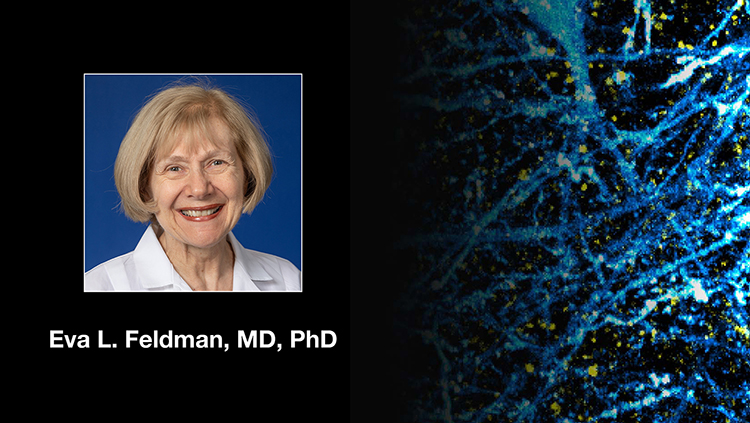 Video Webinar Scientific ResearchThis session features a clinician scientist whose career in neurology and neuroscience focuses on understanding the underlying causes of ALS and other neurodegenerative diseases, as well as the factors that determine disease susceptibility versus disease resilience. Clinical studies have linked ALS risk with select occupations, environmental pollution, polygenic risk, and changes in the immune system. The speaker’s goal, motivated by the new ALS cases diagnosed weekly, is to make ALS a preventable disease by modifying currently identified and future ALS risk factors.Sep 27, 2023




