



Filter
-
(133)
-
(733)
-
(4)
-
(1)
-
(47833)
-
(91)
-
(25)
-
(14)
-
(433)
-
(7)
-
(182)
-
(8)
-
(33)
-
(17)
-
(7)
-
(9)
-
(9)
-
(5)
-
(21)
-
(8)
-
(12)
-
(9)
-
(3)
-
(10)
-
(10)
-
(56)
-
(45)
-
(12)
-
(3)
-
(7)
-
(6)
-
(5)
-
(8)
-
(7)
-
(11)
-
(58)
-
(13)
-
(30)
-
(8)
-
(5)
-
(10)
-
(5)
-
(15)
-
(4)
1811 - 1820
of 52756 results
-
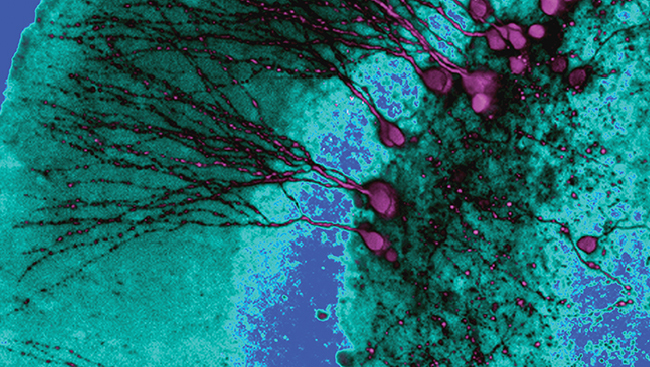 Webinar Scientific ResearchProper data handling standards, including appropriate use of statistical tests are integral to rigorous and reproducible neuroscience research. Training in quantitative neuroscience is a specific area of emphasis for the BRAIN Initiative, and rigorous statistical analysis methods are included in the recent Proposed Principals and Guidelines for Reporting Preclinical Research endorsed by NIH and multiple scientific associations, journals, and societies. This webinar — the third in SfN’s Promoting Awareness and Knowledge to Enhance Scientific Rigor in Neuroscience series — will cover best practices in post-experimental data analysis.Apr 22, 2016
 -
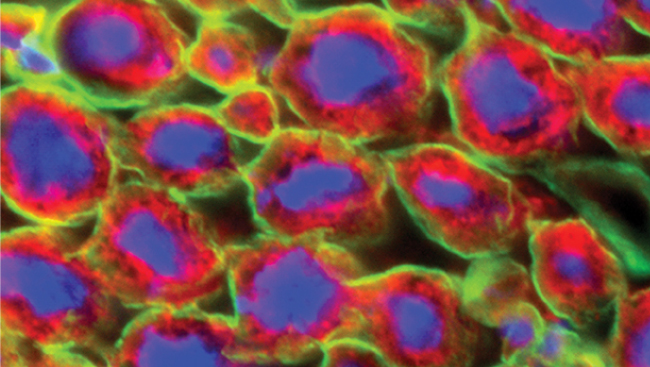 Article Scientific ResearchCircadian rhythms are altered by the aging process in humans and many other organisms.Apr 21, 2016
 -
 Journal ArticleNormal pressure hydrocephalus (NPH) is marked by enlarged cerebral ventricles with normal intracranial pressure, plus three stereotypical symptoms: gait impairment, cognitive dysfunction, and urinary frequency with urge incontinence. The neural circuit dysfunction responsible for each of these symptoms remains unknown, and an adult mouse model would expand opportunities to explore these mechanisms in preclinical experiments. Here, we describe the first mouse model of chronic, communicating hydrocephalus with normal intracranial pressure. Hydrocephalic male and female mice had unsteady gait and reduced maximum velocity. Despite performing well on a variety of behavioral tests, they exhibited subtle learning impairments. Hydrocephalic mice also developed urinary frequency, and many became incontinent. This mouse model, with symptoms resembling human NPH, can be combined with molecular-genetic tools in any mouse strain to explore the neural circuit mechanisms of these symptoms. Preclinical work using this hyd...Nov 1, 2024
 -
 Journal ArticleIn the article “Homeostatic Regulation of Spike Rate within Bursts in Two Distinct Preparations,” by Alishah Lakhani, Carlos Gonzalez-Islas, Zahraa Sabra, Nicholas Au …Nov 1, 2024
 -
 Journal ArticleThe study of ideological asymmetries in empathy has consistently yielded inconclusive findings. Yet, until recently these inconsistencies relied exclusively on self-reports, which are known to be prone to biases and inaccuracies when evaluating empathy levels. Very recently, we reported ideological asymmetries in cognitive-affective empathy while relying on neuroimaging for the first time to address this question. In the present investigation which sampled a large cohort of human individuals from two distant countries and neuroimaging sites, we re-examine this question, but this time from the perspective of empathy to physical pain. The results are unambiguous at the neural and behavioral levels and showcase no asymmetry. This finding raises a novel premise: the question of whether empathy is ideologically asymmetrical depends on the targeted component of empathy (e.g., physical pain vs cognitive-affective) and requires explicit but also unobtrusive techniques for the measure of empathy. Moreover, the find...Nov 1, 2024
 -
 Journal ArticleFear generalization is a hallmark of anxiety disorders. Experimentally, fear generalization can be difficult to dissociate from its counterpart, fear discrimination. Here, we use minimal threat learning procedures to reveal such a dissociation. We show that in Long–Evans rats, an auditory threat cue predicting footshock on 10% of trials produces a discriminated fear response that does not generalize to a neutral auditory cue. In contrast, even slightly higher footshock probabilities (30 and 20%) produce fear generalization. AAV-mediated, caspase-3 deletion of ventral pallidum neurons abolishes fear generalization and reduces threat cue responding during extinction. The ventral pallidum's contribution to fear generalization and extinction threat responding does not depend on inputs from the nucleus accumbens. The results demonstrate a minimal threat learning approach to dissociate fear discrimination from fear generalization and a novel role for the ventral pallidum in generalizing and expressing fear.Nov 1, 2024
 -
Journal ArticleSelective modifications in the expression or function of dendritic ion channels regulate the propagation of synaptic inputs and determine the intrinsic excitability of a neuron. Hyperpolarization-activated cyclic nucleotide–gated (HCN) channels open upon membrane hyperpolarization and conduct a depolarizing inward current ( I h). HCN channels are enriched in the dendrites of hippocampal pyramidal neurons where they regulate the integration of synaptic inputs. Synaptic plasticity can bidirectionally modify dendritic HCN channels in excitatory neurons depending on the strength of synaptic potentiation. In inhibitory neurons, however, the dendritic expression and modulation of HCN channels are largely unknown. In this study, we systematically compared the modulation of I h by synaptic potentiation in hippocampal CA1 pyramidal neurons and stratum radiatum (sRad) interneurons in mouse organotypic cultures. I h properties were similar in inhibitory and excitatory neurons and contributed to resting membrane poten...Nov 1, 2024
-
 Journal ArticleRelationships among membrane currents allow central pattern generator (CPG) neurons to reliably drive motor programs. We hypothesize that continually active CPG neurons utilize activity-dependent feedback to correlate expression of ion channel genes to balance essential membrane currents. However, episodically activated neurons experience absences of activity-dependent feedback and, thus, presumably employ other strategies to coregulate the balance of ionic currents necessary to generate appropriate output after periods of quiescence. To investigate this, we compared continually active pyloric dilator (PD) neurons with episodically active lateral gastric (LG) CPG neurons of the stomatogastric ganglion (STG) in male Cancer borealis crabs. After experimentally activating LG for 8 h, we measured three potassium currents and abundances of their corresponding channel mRNAs. We found that ionic current relationships were correlated in LG's silent state, but ion channel mRNA relationships were correlated in the a...Nov 1, 2024
 -
Journal ArticleThis study aims to elucidate the methodology and compare the accuracy of different blood biomarkers for diagnosing ischemic stroke (IS). We reviewed 29 articles retrieved from PubMed, MEDLINE, Web of Science, and CINAHL Plus with Full Text. Among these, 23 articles involving 3,494 participants were suitable for meta-analysis. The pooled area under the curve (AUC) of all studies for meta-analysis was 0.89. The pooled sensitivity and specificity were 0.76 (0.74–0.78) and 0.84 (0.83–0.86), respectively. Blood biomarkers from noninpatient settings demonstrated better diagnostic performance than those in inpatient settings (AUC 0.91 vs 0.88). Smaller sample sizes (<100) showed better performance than larger ones (≥100; AUC 0.92 vs 0.86). Blood biomarkers from acute IS (AIS) patients showed higher diagnostic values than those from IS and other stroke types (AUC 0.91 vs 0.87). The diagnostic performance of multiple blood biomarkers was superior to that of a single biomarker (AUC 0.91 vs 0.88). The diagnostic valu...Nov 1, 2024
-
 Journal ArticleAge-related brain changes affect sleep and are reflected in properties of sleep slow-waves, however, the precise mechanisms behind these changes are still not completely understood. Here, we adapt a previously established whole-brain model relating structural connectivity changes to resting state dynamics, and extend it to a slow-wave sleep brain state. In particular, starting from a representative connectome at the beginning of the aging trajectory, we have gradually reduced the inter-hemispheric connections, and simulated sleep-like slow-wave activity. We show that the main empirically observed trends, namely a decrease in duration and increase in variability of the slow waves are captured by the model. Furthermore, comparing the simulated EEG activity to the source signals, we suggest that the empirically observed decrease in amplitude of the slow waves is caused by the decrease in synchrony between brain regions.Nov 1, 2024




