



Filter
-
(133)
-
(733)
-
(4)
-
(1)
-
(47830)
-
(91)
-
(25)
-
(14)
-
(433)
-
(7)
-
(181)
-
(8)
-
(33)
-
(17)
-
(7)
-
(9)
-
(9)
-
(5)
-
(21)
-
(8)
-
(12)
-
(9)
-
(3)
-
(10)
-
(10)
-
(56)
-
(45)
-
(12)
-
(3)
-
(7)
-
(6)
-
(5)
-
(8)
-
(7)
-
(11)
-
(58)
-
(13)
-
(30)
-
(8)
-
(5)
-
(10)
-
(5)
-
(14)
-
(4)
681 - 690
of 52751 results
-
 Article DiversityThese days, I eat lunch in empty conference rooms. I run experiments without inquisitive undergraduate or high school mentees peeking over my shoulder. I pass masked colleagues in the hallways at a distance—just making out their faces before narrowly missing the opportunity to wave. I think most of us have experienced the unique emotions of isolation and loneliness at some point, at the very least throughout the COVID-19 pandemic. Throughout my life, I wondered what makes us feel and act on emotions like loneliness. As a middle schooler, during an outreach program’s Neuro Night, the answer was placed in my hands: the brain! It was a plastinated human one. I soon also discovered that I could study it as a scientist.Jun 1, 2021
 -
Article CommunityThese days, I eat lunch in empty conference rooms. I run experiments without inquisitive undergraduate or high school mentees peeking over my shoulder. I pass masked colleagues in the hallways at a distance—just making out their faces before narrowly missing the opportunity to wave. I think most of us have experienced the unique emotions of isolation and loneliness at some point, at the very least throughout the COVID-19 pandemic. Throughout my life, I wondered what makes us feel and act on emotions like loneliness. As a middle schooler, during an outreach program’s Neuro Night, the answer was placed in my hands: the brain! It was a plastinated human one. I soon also discovered that I could study it as a scientist.Jun 1, 2021
-
 Virtual Conference Scientific ResearchThis event took place on July 12, 2021 and is no longer available on-demand.Jun 1, 2021
 -
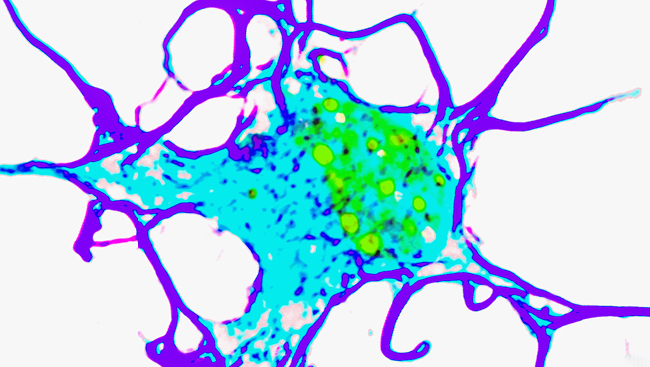 Article Scientific ResearchMaterial below summarizes the article Morphine-Induced Modulation of Endolysosomal Iron Mediates Upregulation of Ferritin Heavy Chain in Cortical Neurons, published on July 12, 2019, in eNeuro and authored by Bradley Nash, Kevin Tarn, Elena Irollo, Jared Luchetta, Lindsay Festa, Peter Halcrow, Gaurav Datta, Jonathan D. Geiger, and Olimpia Meucci. Highlights Morphine exposure increases free iron levels in neurons through the release of iron from intracellular storage sites called endolysosomes. Increased free iron in the cytosol causes neurons to produce additional ferritin heavy chain, a protein involved in iron storage that can also reduce neuronal connectivity by inhibiting a homeostatic process. This pathway may help to explain why opioid-using people infected with human immunodeficiency virus (HIV) are more likely to develop learning and memory problems and suggests that these problems may be treatable by targeting neuronal iron stores.May 27, 2021
 -
 Article Career PathsThe biotechnology industry works to find new treatments and create better technologies. With these goals in mind, the industry prefers to hire neuroscientists with a master’s degree.May 25, 2021
 -
 Webinar Scientific ResearchNeuron Replating, a Powerful and Versatile Approach to Study Early Aspects of Neuron DifferentiationThis webinar is exclusive for SfN members. Please log in for access. This webinar is exclusive for SfN members. Join or renew for access. SfN members have full access to JNeurosci through their membership. Activate your account to start reading. All eNeuro articles are available open access at eneuro.org. Join this interactive session as Felix Schneider discusses his recent paper, “Neuron Replating, a Powerful and Versatile Approach to Study Early Aspects of Neuron Differentiation” with eNeuro Editor-in-Chief Christophe Bernard. Attendees can submit questions at registration and live during the webinar. Below is the significance statement of Neuron Replating, a Powerful and Versatile Approach to Study Early Aspects of Neuron Differentiation, published on May 6, 2021, in eNeuro and authored by Felix Schneider, Thuy-An Duong, and Marco B. Rust Unraveling the molecular mechanisms that control neuron differentiation requires reporter gene expression or gene inactivation. In mouse primary hippocampal neurons, a widely used cellular system to study neuron differentiation, classical transfection methods are restricted to later stages of differentiation. Instead, electroporation allows genetic manipulation before seeding. However, time course of reporter gene expression or gene inactivation frequently hinders a full characterization of neuron differentiation, specifically of early stages. To circumvent this limitation, we combined electroporation-based genetic manipulation before initial seeding with a replating step after 2 d in vitro (DIV), which reset neurons into an undifferentiated stage. We show that replated neurons differentiated similar to non-replated neurons. We provide a detailed protocol that allows to comprehensively characterize the molecular mechanisms underlying neuron differentiation.May 24, 2021
 -
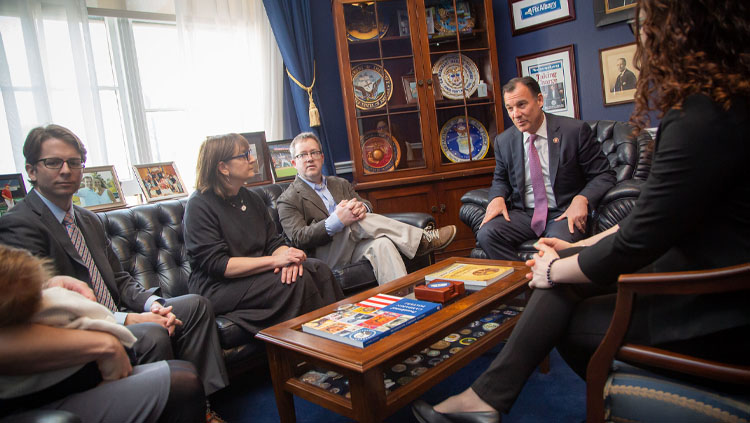 Webinar Career PathsThis webinar will expose participants to science policy career opportunities and the skills needed to be successful in these careers. Participants will hear from a panel of scientists who successfully secured science policy positions in higher education, consulting, and government. Panelists will share their transition stories and explain the importance of science communication and policy analysis skills when collaborating with non-scientists. Attendees will leave the workshop with an increased understanding of career options that connect science to society and the skillset common to success in these careers. After this webinar, participants will be able to: Identify science policy career opportunities in higher education, government, and consulting Describe how science communication and policy analysis skills can be used to impact society Explain how to leverage these skills to effectively work with federal, private, and nonprofit clients and collaborators Gain insight into career transition strategies and opportunitiesMay 24, 2021
 -
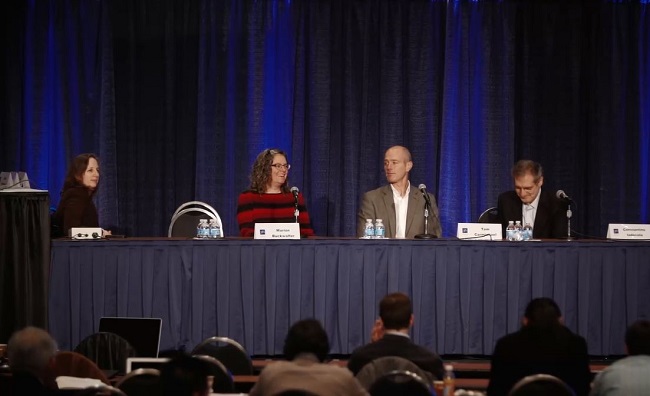 Video Scientific ResearchStroke is a leading cause of death and disability worldwide. From stem cells to brain-computer interfaces, novel functional neuroimaging techniques to new animal model approaches, stroke research is pushing the boundaries of neuroscience. The 2014 Neurobiology of Disease Workshop reviews stroke research concepts beyond the acute injury setting, exploring efforts to define and promote productive long-term recovery.May 20, 2021
 -
 Webinar Scientific ResearchThis webinar is exclusive for SfN members. Please log in for access. Join this interactive session as Matthew Colonnese discusses his recent eNeuro paper, “Input-Independent Homeostasis of Developing Thalamocortical Activity.” After the talk, eNeuro Editor-in-Chief Christophe Bernard will moderate the discussion and take questions from the audience. You can submit questions through registration and will have the opportunity to pose questions during the webinar through a Q&A box. Below is the significance statement of Input-Independent Homeostasis of Developing Thalamocortical Activity, published on May 4, 2021, in eNeuro and authored by Pouria Riyahi, Marnie A Phillips, and Matthew T Colonnese. Uncovering the mechanistic underpinnings of EEG development is critical to increasing the diagnostic potential of this cheap and portable methodology. An important component of this maturation is the acquisition of activity that is continuous, i.e. lacking silent periods. Here we used background activity in the visual cortex of developing unanesthetized mice to show that the primary sensory input plays little role in the development of continuity and normal firing rates, which instead appear to be regulated by mechanism internal to thalamus and cortex. These findings suggest that damage to driving thalamic inputs will be difficult to detect by EEG, and point to the importance of firing rate homeostasis in regulating even early development.May 20, 2021
 -
 Article Professional DevelopmentMcLean Bolton is a research group leader at the Max Planck Institute for Neuroscience, a research institute with over 80 campuses in Germany and one in the United States. They emphasize training and partner with universities around the world to give graduate students access to cutting-edge labs. Based on her experience, Bolton believes it’s most important for trainees to build expertise in wide-ranging techniques and gain exposure to how science is conducted internationally. Read the interview below to learn why and how. Why is it important for trainees to learn new techniques? To be a successful scientist, you have to understand a particular problem. To understand a particular research question, you have to use multiple techniques. You can't say, "I'm an electrophysiologist, so I'm going to think of a question to be able to use my technique.” Part of our approach at Max Planck is to give students exposure to multiple techniques that could address a scientific question.May 18, 2021




