



Filter
-
(133)
-
(733)
-
(4)
-
(1)
-
(47830)
-
(91)
-
(25)
-
(14)
-
(433)
-
(7)
-
(181)
-
(8)
-
(33)
-
(17)
-
(7)
-
(9)
-
(9)
-
(5)
-
(21)
-
(8)
-
(12)
-
(9)
-
(3)
-
(10)
-
(10)
-
(56)
-
(45)
-
(12)
-
(3)
-
(7)
-
(6)
-
(5)
-
(8)
-
(7)
-
(11)
-
(58)
-
(13)
-
(30)
-
(8)
-
(5)
-
(10)
-
(5)
-
(14)
-
(4)
631 - 640
of 52751 results
-
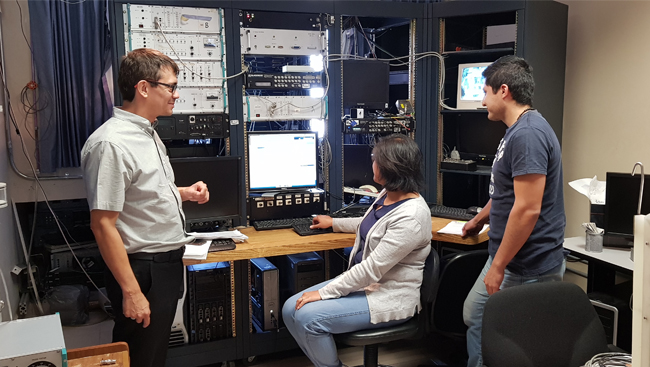 Article Professional DevelopmentI see neuroscience starting to thrive in Mexico. Here’s some history to show what’s contributed to that. Mexican neuroscience started in the 1940s and was led by two neuroscientists: Arturo Rosenblueth and Raúl Hernández Peón. Rosenblueth worked at Harvard University but eventually returned to Mexico and started the Center for Research and Advanced Studies of the National Polytechnic Institute (Cinvestav). It’s similar to Princeton’s Institute for Advanced Study and centered mainly around neuroscience, mathematics, and physics. He was a big promoter of basic science and had high academic standards, which led his group to make significant strides for the field. Hernández Peón had a similar background. He began working at the University of California, Los Angeles, but returned to the National University of Mexico, where he formed a successful research team. These two researchers formed large groups that are still alive in Mexican neuroscience today.Jul 21, 2021
 -
 Journal ArticleAlzheimer's disease (AD) has traditionally been associated with amyloid-β plaques, but growing evidence underscores the role of neuroinflammation in disease progression. The autoinflammatory hypothesis of AD suggests chronic immune dysfunction contributes to neuronal damage, making immune modulation a promising therapeutic strategy. Cannabidiol (CBD), a phytocannabinoid with anti-inflammatory properties, may offer therapeutic potential. This study investigates how CBD independently influences two key neuroinflammatory regulators in AD: the Indoleamine 2,3-dioxygenase (IDO) pathway and the cyclic GMP-AMP synthase (cGAS) pathway. Though mechanistically distinct, both shape CNS immune responses. Targeting these immune-metabolic axes provides a mechanistic alternative to amyloid- or tau-based approaches by addressing upstream drivers of neuroinflammation and immune dysregulation. Using the male 5XFAD transgenic AD mouse model, we administered CBD via inhalation and assessed IDO and cGAS expression using flow ...Oct 6, 2025
 -
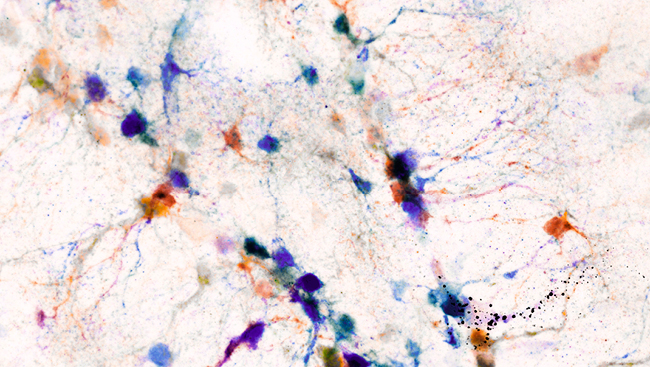 Article Scientific ResearchMaterial below summarizes the article Characteristics of Waveform Shape in Parkinson’s Disease Detected with Scalp Electroencephalography, published on May 20, 2019, in eNeuro and authored by Nicko Jackson, Scott R. Cole, Bradley Voytek, and Nicole C. Swann. Study Question We used a novel approach for analyzing neural signals (“brain waves”) to detect signatures of Parkinson’s disease from brain recordings acquired from the scalp (taken using electroencephalography, or EEG). This novel approach quantifies asymmetries in the shape of the brain waves. For example, is the peak sharper (or “pointier”) than the trough? How This Research Advances What We Know Currently, Parkinson’s disease (PD) is mainly diagnosed and monitored using clinical rating scales. These measures are subjective and can be imprecise. Thus, an objective measure of PD is needed. Electrical brain recordings represent one possible objective measure of PD. Previous research has shown that PD is marked by overly synchronized brain activity. In humans, this phenomenon has predominantly been demonstrated with recordings from the basal ganglia acquired during neurosurgery. In these studies, conventional measures of synchronized brain activity, like the power of oscillatory activity, relate to PD symptoms.Jul 20, 2021
 -
 Article AdvocacyAnimal research, even when scrupulously regulated and performed with the upmost care and kindness, remains an ongoing ethical conundrum for many, including myself. I am a lover of animals, big and small.Jul 15, 2021
 -
 Annual Meeting Video TrainingWe are at a unique time in history, when global large-scale projects are generating an unprecedented amount of data. Although much of this data is "open" and available—with analysis tools developed by a new generation of neuroinformaticians—some is still just beyond the reach of many neuroscientists. In this Short Course* from Neuroscience 2017, leaders in the neuroinformatics field highlight some of the most broadly accessible open datasets and help you embark on their independent scientific voyage of discovery. *This course includes demonstrations and tutorials using technical computing software (R-Studio, Python, Matlab).Jul 14, 2021
 -
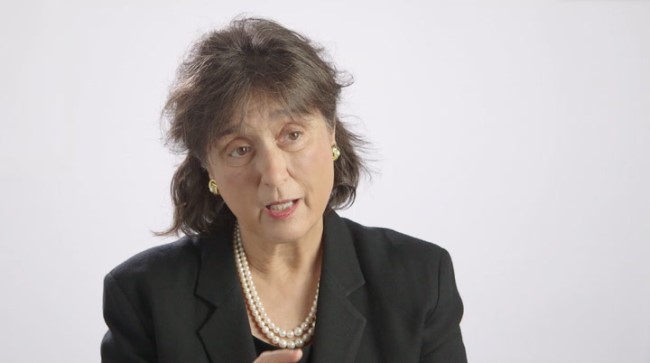 Video Career PathsRoberta Brinton, director of the University of Arizona Center for Innovation in Brain Science, and Bill Mobley, professor at the University of California San Diego School of Medicine, share an overview of translational research, including its key goals and challenges.Jul 13, 2021
 -
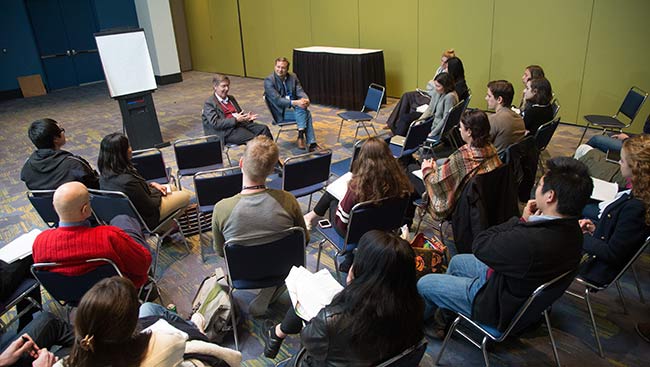 Article TrainingTo conduct an effective graduate program assessment, you need to have clear ideas on what your teaching goals are and what you're trying to assess.Jul 7, 2021
 -
 Article DiversityStarting grad school brought me from the most poverty-stricken county in the country to Portland, Oregon. And yet, much of the advice I’ve received about surviving in grad school assumes I have the same background as other students. That I have the same fears and priorities they do. I started talking to my mentors about my background and the challenges I faced. From those discussions, my mentors came to understand my needs are different than other students’.Jul 6, 2021
 -
Article CommunityStarting grad school brought me from the most poverty-stricken county in the country to Portland, Oregon. And yet, much of the advice I’ve received about surviving in grad school assumes I have the same background as other students. That I have the same fears and priorities they do. I started talking to my mentors about my background and the challenges I faced. From those discussions, my mentors came to understand my needs are different than other students’.Jul 6, 2021
-
 Webinar Scientific ResearchThis webinar is exclusive for SfN members and FENS members. Please log in or link your FENs membership for access. All living organisms are able to implement adaptation mechanisms that allow them to survive even in the most extreme conditions. Cerebral ischemia represents an extreme condition in which CNS cells are called upon to automate adaptations that ensure survival. This concept is exemplified and perfectly reproduced in the tolerance induced by the phenomena of ischemic conditioning. Ischemic conditioning is used to group together a few different stressors or interventions able to confer resistance to a deleterious brain event as an adaptive biological process. Ischemic conditioning through the exposure to a sub-threshold insult as above mentioned, can confer neuroprotection both if conditioning stimuli is applied before, as preconditioning stimulus, or if it is delivered after the harmful ischemia, as occurs in postconditioning. Over the years, several molecular pathways have been proposed as plausible mechanisms to explain the adaptive phenomena induced by hypoxia. This webinar will discuss mechanisms involved in post-ischemic brain adaptation. The knowledge of these mechanisms may provide information to bring light on those molecular pathways involved in brain protection. In this webinar, speakers will cover points including: Post-ischemic brain remodeling and plasticity, evaluating pathomechanisms contributing to secondary brain injury and searching strategies that promote neurological recovery in the post-acute stroke phase. What the function of peripheral events in inducing brain tolerance to stroke. The plethora of factors that can influence the tolerance phenomenon occurring during pre- and post-conditioning Why it is important to escape a neuron-centric view and to consider the role of other cell types, including small vessels, in the mechanism of brain adaptation.Jun 28, 2021




