



Filter
-
(133)
-
(734)
-
(4)
-
(1)
-
(47852)
-
(92)
-
(25)
-
(14)
-
(435)
-
(7)
-
(185)
-
(8)
-
(33)
-
(17)
-
(7)
-
(10)
-
(9)
-
(5)
-
(21)
-
(8)
-
(12)
-
(9)
-
(3)
-
(10)
-
(10)
-
(56)
-
(45)
-
(12)
-
(3)
-
(7)
-
(6)
-
(5)
-
(8)
-
(7)
-
(11)
-
(58)
-
(13)
-
(31)
-
(8)
-
(5)
-
(10)
-
(5)
-
(16)
-
(4)
5621 - 5630
of 52787 results
-
 Poster Training Series TrainingLearn how to produce and characterize three major glial cell types in the brain - oligodendrocytes, astrocytes, and microglia – and how to assemble co-cultures. After reviewing Module 3, participants at all career stages should be able to: - Outline basic methods that can be used to differentiate iPS cells into microglia and to validate the resulting phenotype. - Identify assays that can be used to study the function of microglia in vitro and the potential use of chimeric transplantation models to study human microglia function in vivo. - Describe growth factor-mediated human oligodendrocyte generation from iPS cells. - Explain how to troubleshoot common experimental challenges. - Explain the logic of directed differentiation of astrocytes from human pluripotent stem cells (hPSC’s). - Describe some uses of astrocytes for modeling neuron/glia interactions in mixed cultures.
 -
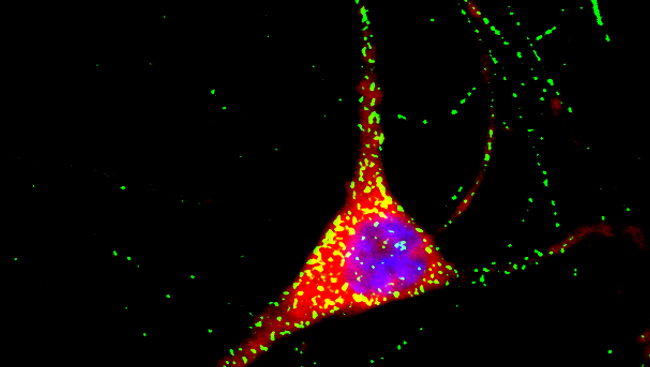 Poster Training Series TrainingLearn protocols for generating three-dimensional neural organoid cultures from stem cells and understand applications of these tissues to model brain development and neurological conditions. After reviewing Module 4, participants at all career stages should be able to: - Describe what the various three-dimensional systems are capable of. - Identify examples of human conditions that can be modeled using three-dimensional neural organoid systems. - Explain how to use single cell RNA sequencing and neural organoids to approach questions on brain development and disease. - Identify resources available to evaluate your own RNA sequencing applications.
 -
 Eden A. Dulka is currently a postdoctoral fellow in the lab of Dr. Jacob Mueller in the department of human genetics at the University of Michigan.




