



Filter
-
(133)
-
(733)
-
(4)
-
(1)
-
(47833)
-
(91)
-
(25)
-
(14)
-
(433)
-
(7)
-
(182)
-
(8)
-
(33)
-
(17)
-
(7)
-
(9)
-
(9)
-
(5)
-
(21)
-
(8)
-
(12)
-
(9)
-
(3)
-
(10)
-
(10)
-
(56)
-
(45)
-
(12)
-
(3)
-
(7)
-
(6)
-
(5)
-
(8)
-
(7)
-
(11)
-
(58)
-
(13)
-
(30)
-
(8)
-
(5)
-
(10)
-
(5)
-
(15)
-
(4)
1941 - 1950
of 52756 results
-
 Webinar Career PathsAre you interested in a career in science policy and curious about different paths to explore? Discover tips on ways you can pursue a science policy careers and the types of skills you may need.Sep 25, 2015
 -
 Article Annual Meeting DiversityJoin more than 300 of your colleagues to network and discuss the most pressing issues women in the field are facing at the Celebrating Women in Neuroscience (CWiN) Luncheon during Neuroscience 2015. Maria Neimark Geffen, assistant professor of otorhinolaryngology at the University of Pennsylvania Perelman School of Medicine, will deliver the keynote speech.Sep 24, 2015
 -
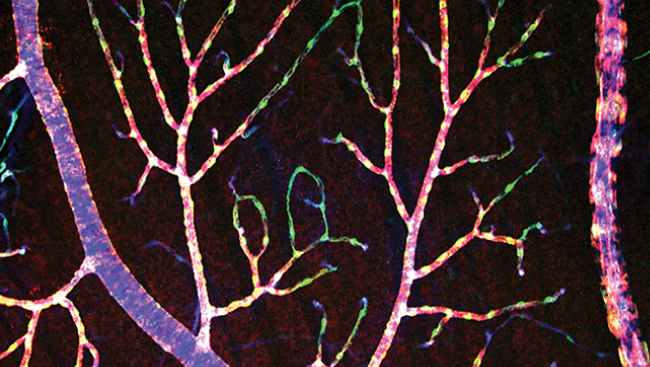 Article Scientific ResearchIn humans, several mutations in a particular calcium channel, the P/Q type, lead to neurological diseases, one of which manifests to ataxia. Ataxia is a disorder where an individual loses coordination or control of muscle movement. SCA6, or spinocerebellar ataxia type 6, is a movement disorder, which results in the loss of a special type of neuron in the cerebellum called Purkinje cells. These neurons process sensory information to coordinate movements. The disease has a late onset and develops in the second period of life. Patients are often wheelchair-bound, and no therapies are available.Sep 22, 2015
 -
 Journal ArticleEstrogens act through nuclear and membrane-initiated signaling. Estrogen receptor alpha (ERα) is critical for reproduction, but the relative contribution of its nuclear and membrane signaling to the central regulation of reproduction is unclear. To address this question, two complementary approaches were used: estetrol (E4) a natural estrogen acting as an agonist of nuclear ERs, but as an antagonist of their membrane fraction, and the C451A-ERα mouse lacking mERα. E4 dose- dependently blocks ovulation in female rats, but the central mechanism underlying this effect is unknown. To determine whether E4 acts centrally to control ovulation, its effect was tested on the positive feedback of estradiol (E2) on neural circuits underlying luteinizing hormone (LH) secretion. In ovariectomized females chronically exposed to a low dose of E2, estradiol benzoate (EB) alone or combined with progesterone (P) induced an increase in the number of kisspeptin (Kp) and gonadotropin-releasing hormone (GnRH) neurons coexpressin...Oct 1, 2024
 -
 Journal ArticleIt remains unknown whether the Chinese tree shrew, regarded as the closest sister of primate, has evolved a dorsolateral prefrontal cortex (dlPFC) comparable with primates that is characterized by a fourth layer (L4) enriched with granular cells and reciprocal connections with the mediodorsal nucleus (MD). Here, we reported that following AAV-hSyn-EGFP expression in the MD neurons, the fluorescence micro-optical sectioning tomography revealed their projection trajectories and targeted brain areas, such as the hippocampus, the corpus striatum, and the dlPFC. Cre-dependent transsynaptic viral tracing identified the MD projection terminals that targeted the L4 of the dlPFC, in which the presence of granular cells was confirmed via cytoarchitectural studies by using the Nissl, Golgi, and vGlut2 stainings. Additionally, the L5/6 of the dlPFC projected back to the MD. These results suggest that the tree shrew has evolved a primate-like dlPFC which can serve as an alternative for studying cognition-related functi...Oct 1, 2024
 -
 Journal ArticleAdvances in single-cell technologies have led to the discovery and characterization of new brain cell types, which in turn lead to a better understanding of the pathogenesis of Alzheimer's disease (AD). Here, we present a detailed analysis of single-nucleus (sn)RNA-seq data for three stages of AD from middle temporal gyrus and compare it with snRNA-seq data from the prefrontal cortices from individuals with alcohol use disorder (AUD). We observed a significant decrease in both inhibitory and excitatory neurons, in general agreement with previous reports. We observed several cell-type–specific gene expressions and pathway dysregulations that delineate AD stages. Endothelial and vascular leptomeningeal cells showed the greatest degree of gene expression changes. Cell-type–specific evidence of neurodegeneration was seen in multiple neuronal cell types particularly in somatostatin and Layer 5 extratelencephalic neurons, among others. Evidence of inflammatory responses was seen in non-neuronal cells, particular...Oct 1, 2024
 -
Journal ArticleThe formation and precise positioning of axons and dendrites are crucial for the development of neural circuits. Although juxtacrine signaling via cell–cell contact is known to influence these processes, the specific structures and mechanisms regulating neuronal process positioning within the central nervous system (CNS) remain to be fully identified. Our study investigates motoneuron 24 (MN24) in the Drosophila embryonic CNS, which is characterized by a complex yet stereotyped axon projection pattern, known as “axonal routing.” In this motoneuron, the primary dendritic branches project laterally toward the midline, specifically emerging at the sites where axons turn. We observed that Scp2-positive neurons contribute to the lateral fascicle structure in the ventral nerve cord (VNC) near MN24 dendrites. Notably, the knockout of the Down syndrome cell adhesion molecule ( Dscam1 ) results in the loss of dendrites and disruption of proper axonal routing in MN24, while not affecting the formation of the fascicl...Oct 1, 2024
-
 Journal ArticleTemporal lobe epilepsy (TLE) is the most common focal epilepsy in adults, and people with TLE exhibit higher rates of reproductive endocrine dysfunction. Hypothalamic gonadotropin-releasing hormone (GnRH) neurons regulate reproductive function in mammals by regulating gonadotropin secretion from the anterior pituitary. Previous research demonstrated GnRH neuron hyperexcitability in both sexes in the intrahippocampal kainic acid (IHKA) mouse model of TLE. Fast-inactivating A-type ( I A) and delayed rectifier K-type ( I K) K+ currents play critical roles in modulating neuronal excitability, including in GnRH neurons. Here, we tested the hypothesis that GnRH neuron hyperexcitability is associated with reduced I A and I K conductances. At 2 months after IHKA or control saline injection, when IHKA mice exhibit chronic epilepsy, we recorded GnRH neuron excitability, I A, and I K using whole-cell patch-clamp electrophysiology. GnRH neurons from both IHKA male and diestrus female GnRH-GFP mice exhibited hyperexcit...Oct 1, 2024
 -
 Journal ArticleAnimals have evolved innate responses to cues including social, food, and predator odors. In the natural environment, animals are faced with choices that involve balancing risk and reward where innate significance may be at odds with internal need. The ability to update the value of a cue through learning is essential for navigating changing and uncertain environments. However, the mechanisms involved in this modulation are not well defined in mammals. We have established a new olfactory assay that challenges a thirsty mouse to choose an aversive odor over an attractive odor in foraging for water, thus overriding their innate behavioral response to odor. Innately, mice prefer the attractive odor port over the aversive odor port. However, decreasing the probability of water at the attractive port leads mice to prefer the aversive port, reflecting a learned override of the innate response to the odors. The orbitofrontal cortex (OFC) is a fourth-order olfactory brain area, involved in flexible value associati...Oct 1, 2024
 -
 Journal ArticleIt is a common belief that memories, over time, become progressively independent of the hippocampus and are gradually stored in cortical areas. This view is mainly based on evidence showing that prefrontal cortex (PFC) manipulations impair the retrieval of remote memories, while hippocampal inhibition does not. More controversial is whether activity in the medial PFC is required immediately after learning to initiate consolidation. Another question concerns functional differences among PFC subregions in forming and storing remote memories. To address these issues, we directly contrasted the effects of loss-of-function manipulations of the anterior cingulate cortex (aCC) and the ventromedial PFC, which includes the infralimbic (IL) and prelimbic (PL) cortices, before testing and immediately after training on the ability of CD1 mice to recall the hidden platform location in the Morris water maze. We injected an AAV carrying the hM4Di receptor into the PL–IL or aCC. Interestingly, pretest administrations of c...Oct 1, 2024




