



Filter
-
(133)
-
(733)
-
(4)
-
(1)
-
(47833)
-
(91)
-
(25)
-
(14)
-
(433)
-
(7)
-
(182)
-
(8)
-
(33)
-
(17)
-
(7)
-
(9)
-
(9)
-
(5)
-
(21)
-
(8)
-
(12)
-
(9)
-
(3)
-
(10)
-
(10)
-
(56)
-
(45)
-
(12)
-
(3)
-
(7)
-
(6)
-
(5)
-
(8)
-
(7)
-
(11)
-
(58)
-
(13)
-
(30)
-
(8)
-
(5)
-
(10)
-
(5)
-
(15)
-
(4)
1811 - 1820
of 52756 results
-
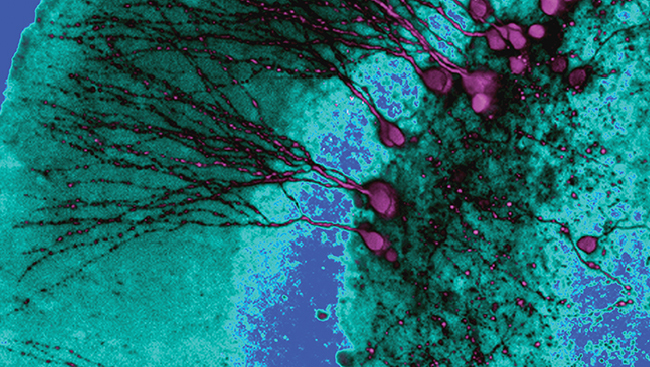 Webinar Scientific ResearchProper data handling standards, including appropriate use of statistical tests are integral to rigorous and reproducible neuroscience research. Training in quantitative neuroscience is a specific area of emphasis for the BRAIN Initiative, and rigorous statistical analysis methods are included in the recent Proposed Principals and Guidelines for Reporting Preclinical Research endorsed by NIH and multiple scientific associations, journals, and societies. This webinar — the third in SfN’s Promoting Awareness and Knowledge to Enhance Scientific Rigor in Neuroscience series — will cover best practices in post-experimental data analysis.Apr 22, 2016
 -
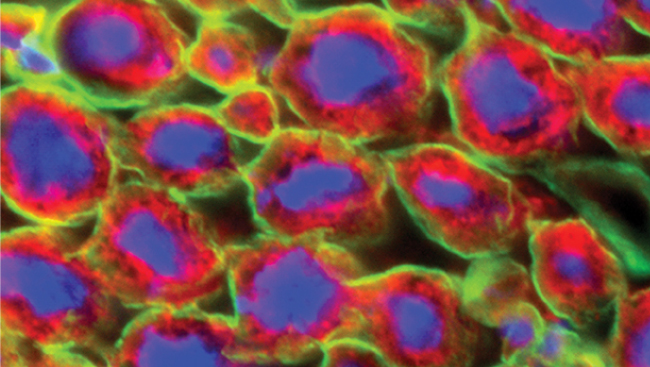 Article Scientific ResearchCircadian rhythms are altered by the aging process in humans and many other organisms.Apr 21, 2016
 -
 Article Professional DevelopmentJoshua Levitz has developed new approaches to study G protein-coupled receptors, a type of receptor found in cell membranes. He created a method to manipulate the activity of these receptors with synthetic chemical photo-switches.Apr 19, 2016
 -
 Journal ArticleAggression and mating of male mice are strongly associated with Esr1-expressing neurons in the bed nucleus of the stria terminalis (BNSTpr) and hypothalamus in the vomeronasal pathway. By projecting to the downstream hypothalamus, the upstream BNSTprEsr1 gates mating and aggression of male mice and maternal behavior of female mice. The medial preoptic area (MPOA) and ventrolateral subdivision of the ventromedial hypothalamus (VMHvl) are two subdivisions of the hypothalamus downstream. In addition to receiving projections from upstream BNSTpr, there is also a mutual projection between MPOA and VMHvl. In the process of transforming sex information into mating and aggression, Esr1-expressing neurons in BNSTpr, MPOA, and VMHvl act as messengers of information, finally producing inhibitory or excitatory projection. These projections are different in direction, but they all work together to control the behavior selection that is most conducive to defense and reproduction when male mice encounter female or male m...Nov 1, 2024
 -
 Journal ArticleBrain-derived estrogen (17β-estradiol, E2) is a neuromodulator that plays important roles in neural plasticity and network excitability. Chronic inhibition of estrogen synthesis is used in adjuvant breast cancer therapy for estrogen receptor-positive tumors and may have been associated with cognitive and affective side effects. Here, we have developed a model of adjuvant therapy in female ovariectomized mice in which the E2 biosynthetic enzyme aromatase is inhibited by letrozole (1 mg/kg/day, i.p., for up to 3 weeks), Using two-photon longitudinal in vivo imaging in Thy1-GFP-M mice, we found that spine density in the apical dendrites of neocortical layer 5 pyramidal cells was unaffected by letrozole treatment but spine turnover was reduced. LTP in layer 4 to layer 2/3 synapses in the somatosensory cortex was also reduced in slices from letrozole-treated mice, showing deficits in structural and functional plasticity resulting from aromatase inhibition. Ovariectomized mice performed worse than intact control...Nov 1, 2024
 -
 Journal ArticleNormal pressure hydrocephalus (NPH) is marked by enlarged cerebral ventricles with normal intracranial pressure, plus three stereotypical symptoms: gait impairment, cognitive dysfunction, and urinary frequency with urge incontinence. The neural circuit dysfunction responsible for each of these symptoms remains unknown, and an adult mouse model would expand opportunities to explore these mechanisms in preclinical experiments. Here, we describe the first mouse model of chronic, communicating hydrocephalus with normal intracranial pressure. Hydrocephalic male and female mice had unsteady gait and reduced maximum velocity. Despite performing well on a variety of behavioral tests, they exhibited subtle learning impairments. Hydrocephalic mice also developed urinary frequency, and many became incontinent. This mouse model, with symptoms resembling human NPH, can be combined with molecular-genetic tools in any mouse strain to explore the neural circuit mechanisms of these symptoms. Preclinical work using this hyd...Nov 1, 2024
 -
 Journal ArticleIn the article “Homeostatic Regulation of Spike Rate within Bursts in Two Distinct Preparations,” by Alishah Lakhani, Carlos Gonzalez-Islas, Zahraa Sabra, Nicholas Au …Nov 1, 2024
 -
 Journal ArticleThe study of ideological asymmetries in empathy has consistently yielded inconclusive findings. Yet, until recently these inconsistencies relied exclusively on self-reports, which are known to be prone to biases and inaccuracies when evaluating empathy levels. Very recently, we reported ideological asymmetries in cognitive-affective empathy while relying on neuroimaging for the first time to address this question. In the present investigation which sampled a large cohort of human individuals from two distant countries and neuroimaging sites, we re-examine this question, but this time from the perspective of empathy to physical pain. The results are unambiguous at the neural and behavioral levels and showcase no asymmetry. This finding raises a novel premise: the question of whether empathy is ideologically asymmetrical depends on the targeted component of empathy (e.g., physical pain vs cognitive-affective) and requires explicit but also unobtrusive techniques for the measure of empathy. Moreover, the find...Nov 1, 2024
 -
 Journal ArticleFear generalization is a hallmark of anxiety disorders. Experimentally, fear generalization can be difficult to dissociate from its counterpart, fear discrimination. Here, we use minimal threat learning procedures to reveal such a dissociation. We show that in Long–Evans rats, an auditory threat cue predicting footshock on 10% of trials produces a discriminated fear response that does not generalize to a neutral auditory cue. In contrast, even slightly higher footshock probabilities (30 and 20%) produce fear generalization. AAV-mediated, caspase-3 deletion of ventral pallidum neurons abolishes fear generalization and reduces threat cue responding during extinction. The ventral pallidum's contribution to fear generalization and extinction threat responding does not depend on inputs from the nucleus accumbens. The results demonstrate a minimal threat learning approach to dissociate fear discrimination from fear generalization and a novel role for the ventral pallidum in generalizing and expressing fear.Nov 1, 2024
 -
Journal ArticleSelective modifications in the expression or function of dendritic ion channels regulate the propagation of synaptic inputs and determine the intrinsic excitability of a neuron. Hyperpolarization-activated cyclic nucleotide–gated (HCN) channels open upon membrane hyperpolarization and conduct a depolarizing inward current ( I h). HCN channels are enriched in the dendrites of hippocampal pyramidal neurons where they regulate the integration of synaptic inputs. Synaptic plasticity can bidirectionally modify dendritic HCN channels in excitatory neurons depending on the strength of synaptic potentiation. In inhibitory neurons, however, the dendritic expression and modulation of HCN channels are largely unknown. In this study, we systematically compared the modulation of I h by synaptic potentiation in hippocampal CA1 pyramidal neurons and stratum radiatum (sRad) interneurons in mouse organotypic cultures. I h properties were similar in inhibitory and excitatory neurons and contributed to resting membrane poten...Nov 1, 2024




