



Filter
-
(133)
-
(733)
-
(4)
-
(1)
-
(47833)
-
(91)
-
(25)
-
(14)
-
(433)
-
(7)
-
(182)
-
(8)
-
(33)
-
(17)
-
(7)
-
(9)
-
(9)
-
(5)
-
(21)
-
(8)
-
(12)
-
(9)
-
(3)
-
(10)
-
(10)
-
(56)
-
(45)
-
(12)
-
(3)
-
(7)
-
(6)
-
(5)
-
(8)
-
(7)
-
(11)
-
(58)
-
(13)
-
(30)
-
(8)
-
(5)
-
(10)
-
(5)
-
(15)
-
(4)
1791 - 1800
of 52756 results
-
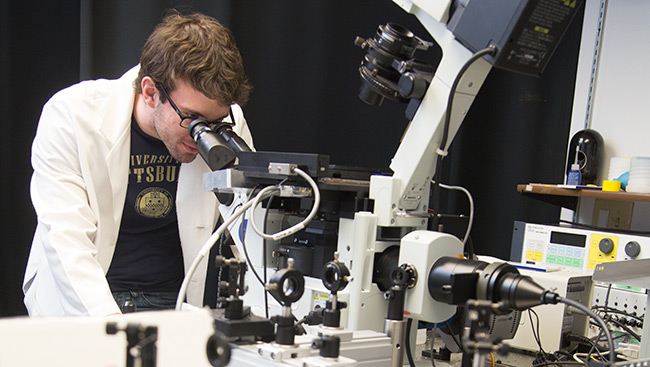 Article AdvocacyLearn from the strategies and actions we’ve taken at the University of Louisville to make lab tours a standout part of the advocacy portfolio.May 24, 2016
 -
 Video Career PathsErin Flynt is a senior medical writer at Envision Communications. Flynt talks about how the skills she developed during her PhD program are integrated in her current role as a medical writer.May 19, 2016
 -
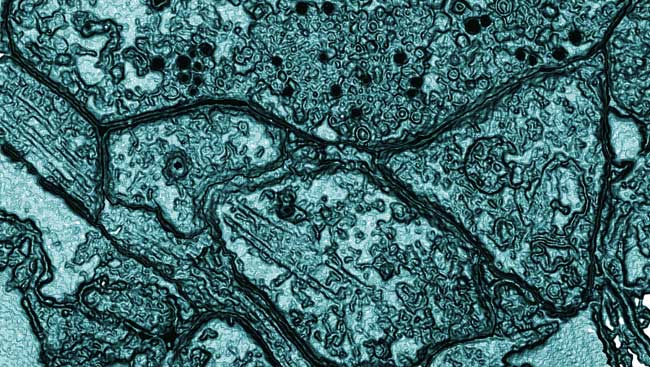 Article Scientific ResearchThe Tale of Two Roses: The Shaping of Sensory Coding Neuronal Ensembles by Reward and NorepinephrineMaterial below summarizes the article, Arc-Expressing Neuronal Ensembles Supporting Pattern Separation Require Adrenergic Activity in Anterior Piriform Cortex: An Exploration of Neural Constraints on Learning, on October 14, 2015 in The Journal of Neuroscience and authored by Amin MD. Shakhawat, Ali Gheidi, Iain T. MacIntyre, Melissa L. Walsh, Carolyn W. Harley, and Qi Yuan.May 19, 2016
 -
 Article TrainingWhen syllabi are already packed with traditional scientific training topics, how can you encourage your department’s faculty to prepare students for a variety of work environments?May 17, 2016
 -
 Article Professional DevelopmentUse this reference sheet as you update or create your first CV.May 17, 2016
 -
 Journal ArticleVisual working memory (VWM) requires precise feature binding. Previous studies have revealed a close relationship between the posterior parietal cortex (PPC) and feature binding during VWM, this study further examined their causal relationship through three transcranial direct current stimulation (tDCS) experiments. In Experiment 1 ( N = 57), participants underwent three sessions of tDCS separately, including PPC stimulation, occipital cortex stimulation, and sham stimulation, and completed delayed estimation tasks for orientations before and after stimulation. Results showed that tDCS over PPC selectively prolonged recall response time (RT) and increased the probability of non-target responses (a.k.a. failure of feature binding, p NT). In Experiment 2 ( N = 29), combining metacognition estimation, we further investigated whether the effects of PPC stimulation were attributed to mis-binding (i.e., participants self-reported "remembered" in non-target responses) or informed guessing trials (participants sel...Nov 5, 2024
 -
Journal ArticleSocial status and dominance are critical factors influencing well-being and survival across multiple species. However, dominance behaviors vary widely across species, from elaborate feather displays in birds to aggression in chimps. To effectively study dominance, it is essential to clearly define and reliably measure dominance behaviors. In laboratory settings, C57BL/6 mice are commonly used to study dominance due to their stable and linear social hierarchies. However, other mouse strains are also used for laboratory research. Despite substantial evidence for strain effects on behavioral repertoires, the impact of strain on dominance in mice remains largely unstudied. To address this gap, we compared dominance behaviors between CD1 and C57BL/6 male mice across four assays: observation of agonistic behaviors, urine marking, tube test, and a reward competition. We found that CD1 mice demonstrate increased fighting, increased territorial marking through urination, and increased pushing and resisting in the t...Nov 5, 2024
-
Journal ArticleNeurodevelopmental abnormalities are considered to be one of the important causes of schizophrenia. The offspring of methylazoxymethanol acetate (MAM)-exposed mice are recognized for the dysregulation of neurodevelopment and well-characterized with schizophrenia-like phenotypes. However, the inhibition-related properties of the medial prefrontal cortex (mPFC) and hippocampus throughout adolescence and adulthood have not been systematically elucidated. In this study, both 10 mg/kg and 15 mg/kg MAM-exposed mice exhibited schizophrenia-related phenotypes in both adolescence and adulthood, including spontaneous locomotion hyperactivity and deficits in prepulse inhibition (PPI). We observed that there was an obvious parvalbumin (PV) loss in mPFC and hippocampus of MAM-exposed mice, extending from adolescence to adulthood. Moreover, the frequency of sIPSCs in pyramidal neurons at mPFC and hippocampus was significantly dampened in the 10 mg/kg and 15 mg/kg MAM-exposed mice. Furthermore, the firing rate of putativ...Nov 5, 2024
-
 Video Career PathsJerome Jourquin, a scientific grants manager at the Susan G. Komen Breast Cancer Foundation, talks about the crucial skills he developed in his PhD program, and how he applies this skills to his current position.May 12, 2016
 -
 Article OutreachExperimentation is a great way to engage students and teach skills that are useful beyond the classroom or bench. At the Neuroscience Community Outreach Group at the University of Washington in Seattle, we developed neural engineering workshops to get high school students and teachers interested in neuroscience.May 12, 2016




