



Filter
-
(133)
-
(733)
-
(4)
-
(1)
-
(47832)
-
(91)
-
(25)
-
(14)
-
(433)
-
(7)
-
(181)
-
(8)
-
(33)
-
(17)
-
(7)
-
(9)
-
(9)
-
(5)
-
(21)
-
(8)
-
(12)
-
(9)
-
(3)
-
(10)
-
(10)
-
(56)
-
(45)
-
(12)
-
(3)
-
(7)
-
(6)
-
(5)
-
(8)
-
(7)
-
(11)
-
(58)
-
(13)
-
(30)
-
(8)
-
(5)
-
(10)
-
(5)
-
(14)
-
(4)
1301 - 1310
of 52753 results
-
 Journal ArticleThe external globus pallidus (GPe) is a central part of the basal ganglia indirect pathway implicated in movement and decision-making. As a hub connecting the dorsal striatum and subthalamic nucleus (STN), the GPe guides repetitive and routine behaviors. However, it remains unknown how diverse GPe cells engage in routine formation while learning action sequences in repetitive reward-seeking conditioning. Here, in male mice, we investigated the Ca2+ dynamics of two GPe cell types, astrocytes and parvalbumin-expressing neurons, during routine formation. Our findings show that the dynamics of GPe astrocytes may be involved in action sequence refinement, a characteristic potentially contributing to more efficient reward-seeking behavior. Significance Statement The ability to form and refine action sequences is essential for both survival and efficiency. In this study, we introduced the “routine index”, a measure that captures how consistently animals repeat a specific action sequence to maximize rewards. This...Mar 3, 2025
 -
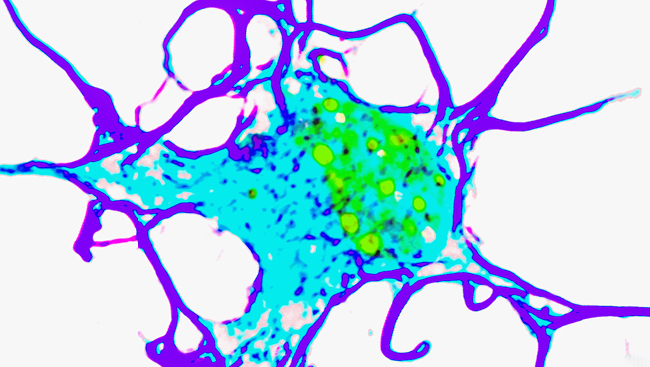 Article Scientific ResearchOrganelles are specialized subcellular structures that serve specific functions in all eukaryotic cells.May 23, 2018
 -
 Annual Meeting Video OutreachNeuroscience research regularly intersects with concepts of human nature, identity, free will, and other philosophical and religious topics. This Neuroscience 2017 Social Issues Roundtable explores paradigms for constructive engagement with diverse and religious audiences. Panelists examine tensions and domains of confluence between scientific and faith perspectives, the underlying values and assumptions in scientific research, and the role of cross-cultural dialogue on science education, practice and policy.May 22, 2018
 -
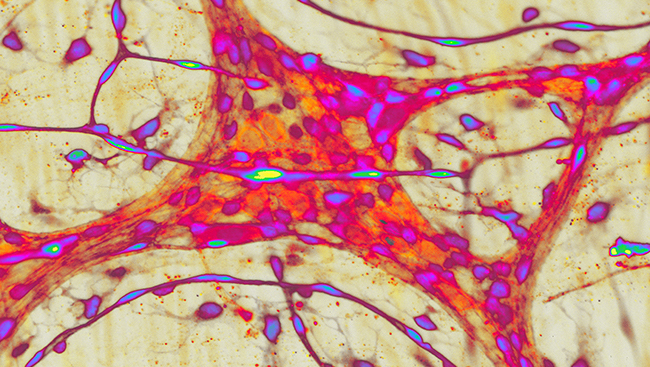 Article Scientific ResearchMaterial below summarizes the article, Working Memory Replay Prioritizes Weakly Attended Events, published on August 14, 2017, in eNeuro and authored by Anna Jafarpour, Will Penny, Gareth Barnes, Robert T. Knight, and Emrah Duzel. Working memory is a system with limited capacity that supports keeping information in mind for a short duration. Two important questions are: One, what are the mechanisms by which information is retained during the gap between encoding and recall (that is, the maintenance period), and two, how is information within working memory prioritized? These are often studied with a cuing procedure in which subjects are prompted to focus on one item. For example, if an event in a sequence of three events is cued, the cued event can be decoded during maintenance. In this study, we investigated how the information about a sequence of multiple events is retained without cueing.May 17, 2018
 -
 Journal ArticleThe striatum is the primary input nucleus of the basal ganglia, integrating a dense plexus of inputs from the cerebral cortex and thalamus to regulate action selection and learning. Neuroanatomical mapping of the striatum and its subcompartments has been carried out extensively in rats and mice, nonhuman primates, and cats allowing comparative neuroanatomy studies to derive heuristics about striatal composition and function. Here, we systematically map corticostriatal topography from motor, somatosensory, auditory, and visual cortices as well as thalamostriatal parafascicular (PfN) inputs in the Mongolian gerbil. We also map a pathway reported in mice from medial vestibular nucleus to the PfN that could convey vestibular information to the striatum. Our findings align with those of similar studies in other rodents, indicating homologous neuroanatomical connectivity patterns within the corticostriatal projectome across Rodentia. We observed corticostriatal peaks of dense labeling for each input with a diffu...Mar 1, 2025
 -
 Journal ArticleMitral cells (MCs) and tufted cells (TCs) in the olfactory bulb (OB) act as an input convergence hub and transmit information to higher olfactory areas. Since first characterized, they have been classed as distinct projection neurons based on size and location: laminarly arranged MCs with a diameter larger than 20 µm in the mitral layer (ML) and smaller TCs spread across both the ML and external plexiform layers (EPL). Recent in vivo work has shown that these neurons encode complementary olfactory information, akin to parallel channels in other sensory systems. Yet, many ex vivo studies still collapse them into a single class, mitral/tufted, when describing their physiological properties and impact on circuit function. Using immunohistochemistry and whole-cell patch–clamp electrophysiology in fixed or acute slices from adult mice, we attempted to align in vivo and ex vivo data and test a soma size-based classifier of bulbar projection neurons using passive and intrinsic firing properties. We found that the...Mar 1, 2025
 -
 Journal ArticleFacial paralysis is characterized by an injury to the facial nerve, causing the loss of the functions of the structures that it innervates, as well as changes in the motor cortex. Current models have some limitations for the study of facial paralysis, such as movement restriction, the absence of studying awake animals in behavioral contexts, and the lack of a model that fully evaluates facial movements. The development of an algorithm capable of automatically inferring facial paralysis and overcoming the existing limitations is proposed in this work. In C57/BL6J mice, we produced both irreversible and reversible facial paralysis. Video recordings were made of the faces of paralyzed mice to develop an algorithm for detecting facial paralysis applied to mice, which allows us to predict the presence of reversible and irreversible facial paralysis automatically. At the same time, the algorithm was used to track facial movement during gustatory stimulation and extracellular electrophysiological recordings in th...Mar 1, 2025
 -
 Journal ArticleNeuroinflammation has been widely recognized as the primary pathophysiological mechanism underlying ischemic white matter lesions (IWML) in chronic cerebral hypoperfusion (CCH). Adenosine A2A receptor (A2aR), an important adenosine receptor, exhibits a dual role in neuroinflammation by modulating both proinflammatory and anti-inflammatory responses. This study aimed to investigate the specific functions and mechanisms of A2aR in neuroinflammation. The findings revealed that A2aR initially exerted a proinflammatory role in the CCH model, transitioning to an anti-inflammatory role in later stages by regulating the phenotypic transformation of microglia. Further analyses using coimmunoprecipitation couple with mass spectrometry, in situ proximity ligation assay, AlphaFold protein structure prediction, [35S]GTPγS binding assay, and NanoBiT technology demonstrated that A2aR formed heteromers with mGluR5 during the early stage of CCH under high glutamate conditions, promoting the polarization of microglia toward...Mar 1, 2025
 -
 Journal ArticleHumans and nonhumans alike often make choices to gain information, even when the information cannot be used to change the outcome. Prior research has shown that the anterior cingulate cortex (ACC) is important for evaluating options involving reward-predictive information. Here we studied the role of ACC in information choices using optical inhibition to evaluate the contribution of this region during specific epochs of decision-making. Rats could choose between an uninformative option followed by a cue that predicted reward 50% of the time versus a fully informative option that signaled outcomes with certainty but was rewarded only 20% of the time. Reward seeking during the informative S+ cue decreased following ACC inhibition, indicating a causal contribution of this region in supporting reward expectation to a cue signaling reward with certainty. Separately in a positive control experiment and in support of a known role for this region in sustaining high-effort behavior for preferred rewards, we observe...Mar 1, 2025
 -
 Journal ArticleVestibular research is essential for understanding and treating disorders such as vertigo and Meniere's disease. The vestibulo-ocular reflex (VOR) is a key method for assessing vestibular function and an essential tool for diagnosing vertigo. Traditionally, the VOR comprises angular VOR (aVOR) and translational VOR (tVOR), which originate from the vestibular semicircular canals (SCCs) and otolith organs, respectively. VOR consists of both fast-phase and slow-phase eye movements, which functionally interact to contribute to gaze control. However, to calculate the gain and phase parameters of the VOR, it is common practice to exclude fast-phase information superimposed on slow-phase eye movements. As a result, the information contained in the fast phase has not been fully utilized. OVAR is primarily used to evaluate otolith function, as there is no SCC input during its steady state. It is widely accepted that fast-phase nystagmus (FPN) during OVAR is generated by periodic otolith inputs via the central vesti...Mar 1, 2025




