



Filter
-
(133)
-
(733)
-
(4)
-
(1)
-
(47832)
-
(91)
-
(25)
-
(14)
-
(433)
-
(7)
-
(181)
-
(8)
-
(33)
-
(17)
-
(7)
-
(9)
-
(9)
-
(5)
-
(21)
-
(8)
-
(12)
-
(9)
-
(3)
-
(10)
-
(10)
-
(56)
-
(45)
-
(12)
-
(3)
-
(7)
-
(6)
-
(5)
-
(8)
-
(7)
-
(11)
-
(58)
-
(13)
-
(30)
-
(8)
-
(5)
-
(10)
-
(5)
-
(14)
-
(4)
1291 - 1300
of 52753 results
-
 Journal ArticleWhen attempting to concurrently perform two distinct cognitive tasks, the performance of either task is frequently compromised. This phenomenon is known as dual-task interference. Although multiple task features have been postulated to influence on dual-task interference, the primary determinant remains unclear. The determinant factor causing dual-task interference is an important issue to understand its mechanism and associated functions including switching tasks and planning task order. The present study investigated this issue using monkeys and three behavioral tasks requiring distinct cognitive processes (spatial working memory, SWM; working memory and long-term memory of objects, PA; object working memory, DMS) and manipulating task pair (SWM and PA or SWM and DMS), task order (fixed or randomized) and task difficulty (different delay lengths). The task introduced first showed better performance as compared to the task introduced second, suggesting the task order as an important factor. However, the p...Mar 5, 2025
 -
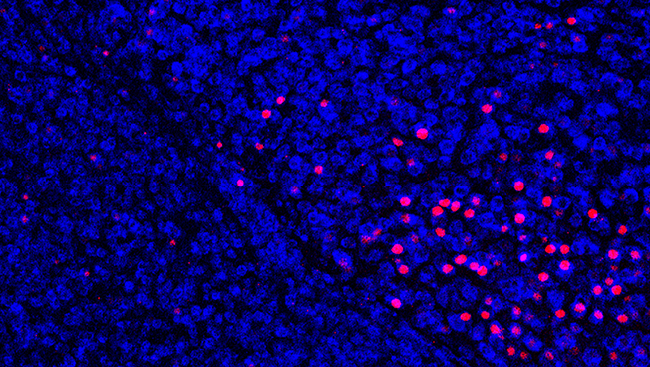 Article Scientific ResearchMaterial below summarizes the article, Optogentetic Activation of Non-nociceptive Aβ Fibers Induces Neuropathic Pain-Like Sensory and Emotional Behaviors after Nerve Injury in Rats, published on February 5, 2018, in eNeuro and authored by Ryoichi Tashima, Keisuke Koga, Misuzu Sekine, Kensho Kanehisa, Yuta Kohro, Keiko Tominaga, Katsuyuki Matshushita, Hidetoshi Tozaki-Saitoh, Yugo Fukazawa, Kazuhid Inoue, Hiromu Yawo, Hidemasa Furue, and Makoto Tsuda. Somatosensory information from the periphery is conveyed to the spinal dorsal horn (SDH) via primary afferent sensory neurons. The incoming sensory information is processed by complex circuits in the SDH, integrated to projection neurons relaying to several regions of the brain. Primary afferents are broadly divided into two classes: nociceptive (mainly unmyelinated C, and thinly myelinated alpha delta (Aδ) fibers), and non-nociceptive (myelinated alpha beta (Aβ) fibers), which respond to noxious and innocuous stimuli, respectively. Excitatory signals via nociceptive, which produces pain, and non-nociceptive fibers, which under normal healthy conditions do not cause pain, activate distinct SDH neuronal circuits. However, after injury to the nervous system from cancer, diabetes, chemotherapy, or trauma, even innocuous mechanical stimuli, such as the light touch of clothing, may cause pain. This abnormal pain is known as mechanical allodynia and is a serious symptom of neuropathic pain, which is a debilitating chronic pain condition following nerve damage.Jun 7, 2018
 -
 Annual Meeting Video Professional DevelopmentNavigating a successful career in academia requires multiple levels of planning, training, and reaching key milestones. Get advice from this panel of experts, who share their experiences and best practices for obtaining extramural funding at all stages of training and career, publishing in high profile publications, receiving mentoring, and negotiating.Jun 6, 2018
 -
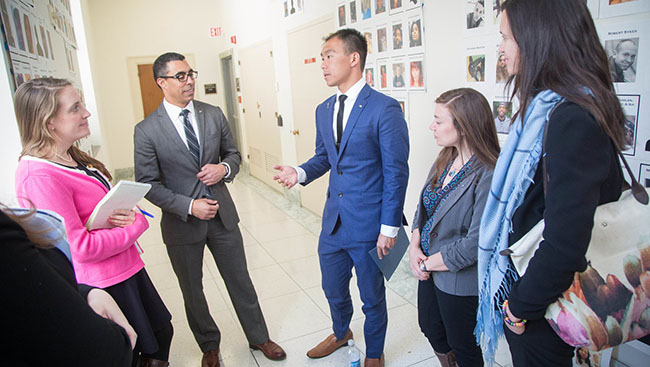 Webinar AdvocacyMeasuring the effects of science advocacy is a challenge. To effectively allocate your resources, this webinar will explore ways to gauge performance against short- and long-term advocacy goals, manage expectations, and identify gaps in science advocacy metrics. Speakers will touch on how to evaluate public opinion survey data about support for science and tailor your advocacy messages and approaches in light of that data.Jun 1, 2018
 -
 Article Professional DevelopmentNegative reviews, long hours, misunderstandings. At some point, work or school will feel difficult. Whether it’s a momentary frustration or a bigger obstacle, the right mindset and support system can help you move forward. Use this advice to help you get back on track. “I read once that every result is a temporary truth. I try to remember this when I face setbacks. If my results are negative, there is still some truth in what I find that advances the field in some small way, even if it may not be immediately apparent.” –Sruit Rayaprolu, University of Florida “I always remind myself of the big picture. Progress is infrequently linear, so even one step back is all right if the big picture is seven steps forward.” –Emily Johnson, Baldwin Wallace UniversityMay 31, 2018
 -
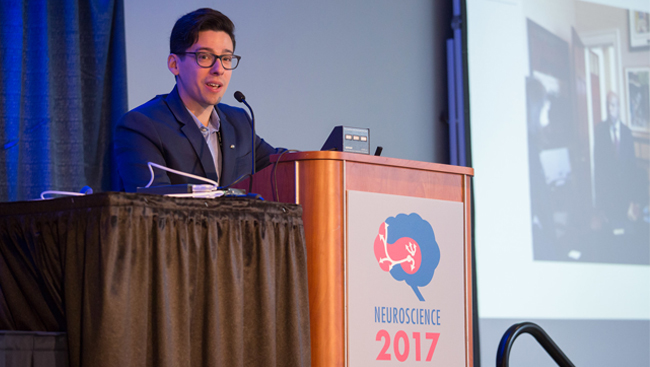 Video AdvocacyMichael Wells, a postdoctoral fellow at the Broad Institute of Massachusetts Institute of Technology (MIT) and Harvard University, is a vocal science advocate. In this video, he shares how you can combine your unique scientific research interests and desire to help more people understand the importance of supporting neuroscience. He emphasizes advocacy isn’t only defined by meeting members of Congress face-to-face. “You can do [advocacy] at a local level, at the school board level.” Advocacy takes different forms, and Wells believes, “There are plenty of opportunities for scientists from all walks of life to become more involved in science advocacy.” For Wells, social media, especially Twitter (@mfwells5), is an incredibly important and effective year-round advocacy tool. For example, in 2017 when he participated in SfN’s Capitol Hill Day, he extended his conversations with legislators to the general public by taking over the band Passion Pit’s Twitter handle. He led a conversation, called “We Need Science,” to answers Twitter users’ questions about mental health and explain why federal support for neuroscience research is critical for advancement.May 30, 2018
 -
 Webinar TrainingIn this webinar for SfN and Faculty for Undergraduate Neuroscience (FUN) members, hear from undergraduate faculty who will share their best practices in undergraduate pedagogy implemented at a variety of institutions: liberal arts colleges, a mid-sized university, and a large research institution.You will learn about different features of neuroscience curricula at the speakers’ institutions and lessons they have learned from launching and maintaining a neuroscience course of study for different administrative structures, types of degrees (including a minor and major), and an interdisciplinary neuroscience program. Speakers will share how their programs continue evolving to address new challenges and opportunities.May 30, 2018
 -
Journal ArticleNeuroligins (NLGNs) are a family of postsynaptic adhesion molecules that bind to their presynaptic partners, neurexins (NRXNs), facilitating the formation and maintenance of synapses. In humans, there are five genes encoding NLGNs ( NLGN1-3, NLGN4X , and NLGN4Y ), with NLGN1-3 having highly conserved counterparts in rodents, allowing these genes to be studied with high confidence of translational validity in mouse models. Human NLGN4X and 4Y were often assumed to serve similar functions because they share a 97% sequence homology, whereas mouse NLGN4-like is quite divergent. Many NLGN-mediated synaptic effects are modulated through post-translation modifications, which exert temporal and spatial control. In this report, we characterize a conserved phosphorylation site, serine 712, on NLGN4X and 4Y. Despite serine 712 being located in a highly conserved region between NLGN4X and 4Y, we observed kinase specificity. PKA exclusively phosphorylates NLGN4X S712, whereas Cdk5 phosphorylates S712 on both NLGN4X and...Mar 3, 2025
-
Journal ArticleEarly psychosis (EP) is a critical period for psychotic disorders during which the brain undergoes rapid and significant functional and structural changes(Shinn et al., 2017). The Human Connectome Project (HCP) is a global effort to map the human brain's connectivity in health and disease. Here we focus on HCP-EP subjects (i.e., those within five years of the initial psychotic episode) to determine macro- and micro-structural alterations in EP (HCP-EP sample, n=179: EP, n=123, Controls, n=56) and their association with clinical outcomes (i.e., symptoms severity) in HCP-EP. We carried out analyses of Deformation-Based-Morphometry (DBM), scalar indices from the Diffusion Tensor Imaging (DTI), and Tract-Based Spatial Statistics (TBSS). Lastly, we conducted correlation analyses focused on the midbrain (DBM and DTI) to examine associations between its structure and clinical symptoms. Our results show that the midbrain displays robust alteration in its structure (DBM and DTI) in the voxel-based analysis. Complim...Mar 3, 2025
-
Journal ArticleImpulsivity is often considered a risk factor for drug addiction; however, not all evidence supports this view. In the present study, we used a food reward delay-discounting task (DDT) to categorize rats as low-, middle-, and high-impulsive but failed to find any difference among these groups in the acquisition and maintenance of cocaine self-administration, regardless of electrical foot-shock punishment. Additionally, there were no group differences in locomotor responses to acute cocaine in rats with or without a history of cocaine self-administration. Unexpectedly, chronic cocaine self-administration selectively increased impulsive choice in low-impulsive rats. Resting-state fMRI analysis revealed a positive correlation between impulsivity and cerebral blood volume in the midbrain, thalamus, and auditory cortex. Using these three regions as seeds, we observed a negative correlation between impulsivity and functional connectivity between the midbrain and frontal cortex, as well as between the thalamus an...Mar 3, 2025




