



Filter
-
(133)
-
(733)
-
(4)
-
(1)
-
(47832)
-
(91)
-
(25)
-
(14)
-
(433)
-
(7)
-
(181)
-
(8)
-
(33)
-
(17)
-
(7)
-
(9)
-
(9)
-
(5)
-
(21)
-
(8)
-
(12)
-
(9)
-
(3)
-
(10)
-
(10)
-
(56)
-
(45)
-
(12)
-
(3)
-
(7)
-
(6)
-
(5)
-
(8)
-
(7)
-
(11)
-
(58)
-
(13)
-
(30)
-
(8)
-
(5)
-
(10)
-
(5)
-
(14)
-
(4)
1281 - 1290
of 52753 results
-
 Article Professional DevelopmentAccording to Donna Korol, an associate professor at Syracuse University, there isn’t a standard practice for finding and securing a postdoc. But there are considerations to keep in mind to help you decide what type of postdoc is right for you and how to be a competitive candidate. To help you navigate this process, Korol answered commonly asked questions. Click on each question to reveal her perspectives. Do you have additional questions or insights? Leave them in the comments.Jul 10, 2018
 -
 Journal ArticleCentral sensitization plays a critical role in bladder pain syndrome/interstitial cystitis (BPS/IC). Electroacupuncture (EA) nerve stimulation therapy has been broadly acknowledged as an effective means of alleviating chronic pathological pain. However, it remains to be explored whether EA is effective in mitigating pain-sensitive symptoms of BPS/IC and the mechanisms involved. This study aims to investigate the analgesic effect and mechanism of EA therapy. To achieve this goal, we employed several techniques: mechanical pain threshold tests to assess pain sensitivity, urodynamic studies to evaluate bladder function, Western blotting (WB) for protein analysis, immunofluorescence for visualizing, and transcriptomics. A rat cystitis model was established through a systemic intraperitoneal injection with cyclophosphamide (CYP). EA therapy was executed by stimulating the deep part of the hypochondriac point, where the 2nd-4th sacral nerves traverse. EA treatment was observed to effectively reduce mechanical al...Mar 10, 2025
 -
Journal ArticleAlexander disease (AxD) is a rare neurological disorder caused by dominant gain-of-function mutations in the gene for glial acidic fibrillary protein ( GFAP ). Expression of mutant protein results in astrocyte dysfunction that ultimately leads to developmental delay, failure to thrive, and intellectual and motor impairment. The disease is typically fatal, and at present there are no preventative or effective treatments. To gain a better understanding of the link between astrocyte dysfunction and behavioral deficits in AxD we recently developed a rat model that recapitulates many of the clinical features of the disease, including failure to thrive, motor impairment, and white matter deficits. In the present study, we show that both male and female AxD model rats exhibit a neurodegenerative profile with a progressive neuroinflammatory response combined with reduced expression of synaptic and mitochondrial proteins. Consistent with these results AxD rats show reduced hippocampal long-term potentiation and are...Mar 10, 2025
-
 TrainingA transatlantic cooperation for enriched neuroscience training The Federation of European Neuroscience Societies (FENS) and the Society for Neuroscience (SfN) are delighted to announce their strategic collaboration on priority areas including scientific training and career development. The two organizations recognize the importance of thinking globally about science and the enrichment that comes from a global perspective. By combining their efforts, FENS and SfN aim to further enhance the support provided to their members in today’s complex scientific and political environment. The FENS Committee on Higher Education and Training (CHET) and the SfN Neuroscience Training Committee (NTC) are aligning their strategies to offer their members opportunities that may not be available through traditional training programs. The two committees will work closely together, exchange in-depth information, share tools, and develop coordinated training activities.Jul 3, 2018
 -
 Article Scientific ResearchMaterial below summarizes the article, Mechanosensory Stimulation Evokes Acute Concussion-Like Behavior by Activating GIRKs Coupled to Muscarinic Receptors in a Simple Vertebrate, published on April 18, 2017, in eNeuro and authored by Wen-Chang Li, Xiao-Yue Zhu and Emma Ritson.Jun 26, 2018
 -
 Article Scientific ResearchMaterial below summarizes the article, Mitochondrial Ultrastructure Is Coupled to Synaptic Performance at Axonal Release Sites, published on January 15, 2018, in eNeuro, authored by Csaba Cserép, Balázs Pósfai, Anett Dóra Schwarcz and Ádám Dénes. Synaptic transmission, the process through which brain cells communicate with each other, consumes a huge amount of energy, the vast majority of which is provided by neuronal mitochondria. As information is being processed and stored in the brain, long-term changes occur in synaptic strength, altering both the structure and the activity of these connections. This means the amount of energy needed at a given location in neural networks is also changing in space and time, making some kind of adaptation mechanism necessary. Our eNeuro paper describes the structural basis of this — so far unrecognized — adaptation mechanism that is likely responsible for local demand matching.Jun 21, 2018
 -
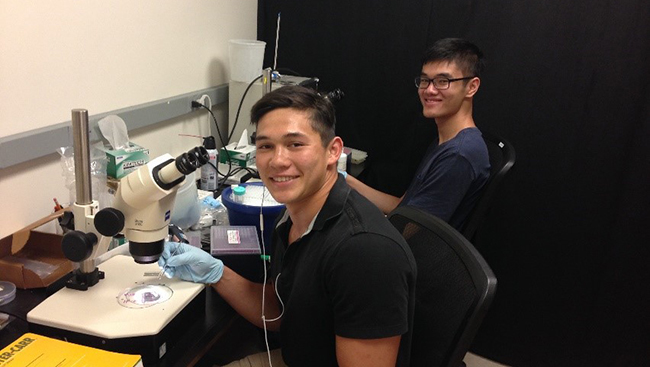 Article TrainingOpening your lab to undergraduates can positively impact the next generation of scientists. They’ll have the opportunity to be exposed to the world of scientific discovery, experience failure and practice resilience, and develop critical thinking skills. Audrey Chen, one of The Claremont College’s 5-C Summer Undergraduate Research Program faculty, expands on these advantages and explains how to successfully integrate students into ongoing research projects.Jun 20, 2018
 -
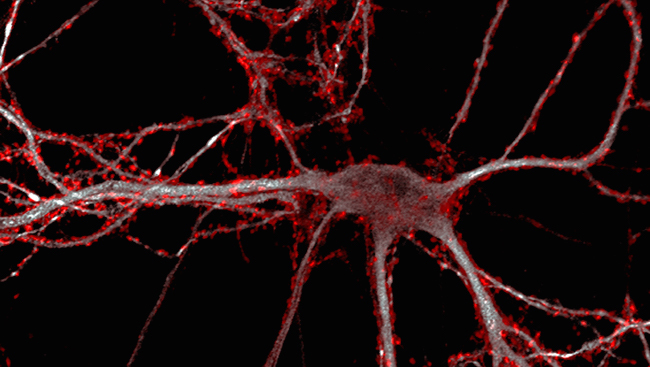 Article Annual Meeting Scientific ResearchMaterial below is adapted from the SfN Short Course, Purification and Culture Methods for Astrocytes, by Shane Liddelow, PhD. Short Courses are day-long scientific trainings on emerging neuroscience topics and research techniques held just prior to SfN’s annual meeting. Astrocytes are star-shaped glial cells that can clear debris, form scars, and take a number of other actions in response to a variety of central nervous system (CNS) problems, such as brain tumors, stroke, and neurodegenerative disease. But alongside beneficial effects, reactive astrocytes may also have a negative impact on CNS health. In order to understand the diversity of roles that these cells can play, researchers have recently devised methods for isolating and growing them in the lab. A comparison of these methods will reveal their potential in future research, as well as bring to light the ways in which these methods could be enhanced. Purifying a single cell type can be a powerful tool, but it is important to keep in mind whether the method you choose for purification will allow you to investigate the aspects of the cells that you need to study.Jun 19, 2018
 -
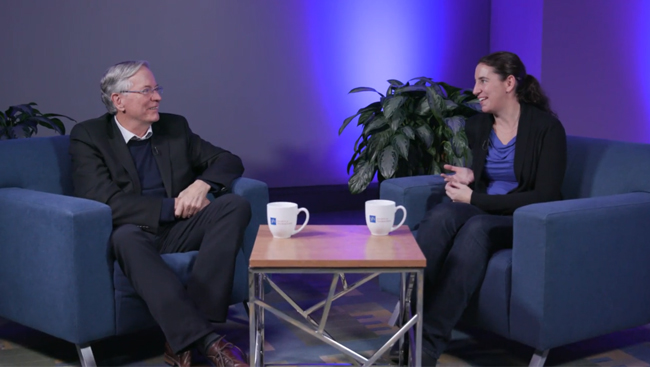 Video Professional DevelopmentJoin Brian MacVicar, co-director of the Djavad Mowafaghian Center for Brain Health at the University of British Columbia, and Clare Howarth, Vice-Chancellor's Advanced Fellow, for a conversation on their long-standing research collaboration. Through their story, you’ll gain a greater understanding of how collaborations can: - Begin and then evolve over time. - Need flexibility and adaptability as research findings surface. - Benefit from effective and proactive communication and relationship-building. - Lead to personal growth and lasting professional connections. What started as a collaboration when Howarth was a Sir Henry Wellcome postdoctoral research fellow in MacVicar’s lab in Canada, eventually turned into an international and multi-dimensional research effort when Howarth left for additional fellowships, and her own lab in England. Building on their initial work, labs from five countries (Canada, England, Denmark, Australia, and New York) joined them. Their research resulted in a paper published in JNeurosci in March 2017, A Critical Role for Astrocytes in Hypercapnic Vasodilation in Brain.Jun 13, 2018
 -
 Annual Meeting Video Professional DevelopmentThe National Institutes of Health (NIH) and other funding bodies have recently focused on increasing sharing, publication, and citation of research data and metadata to improve scholarly communication, reproducibility, and translation. Major journals are responding by demanding that data and metadata underlying publications be made available in public repositories for reuse to fuel novel discoveries from pooled information. This Neuroscience 2017 committee shares the progress toward achieving these goals using traumatic brain injury and spinal cord injury as illustrating examples.Jun 12, 2018




