



Filter
-
(133)
-
(733)
-
(4)
-
(1)
-
(47830)
-
(91)
-
(25)
-
(14)
-
(433)
-
(7)
-
(181)
-
(8)
-
(33)
-
(17)
-
(7)
-
(9)
-
(9)
-
(5)
-
(21)
-
(8)
-
(12)
-
(9)
-
(3)
-
(10)
-
(10)
-
(56)
-
(45)
-
(12)
-
(3)
-
(7)
-
(6)
-
(5)
-
(8)
-
(7)
-
(11)
-
(58)
-
(13)
-
(30)
-
(8)
-
(5)
-
(10)
-
(5)
-
(14)
-
(4)
1081 - 1090
of 52751 results
-
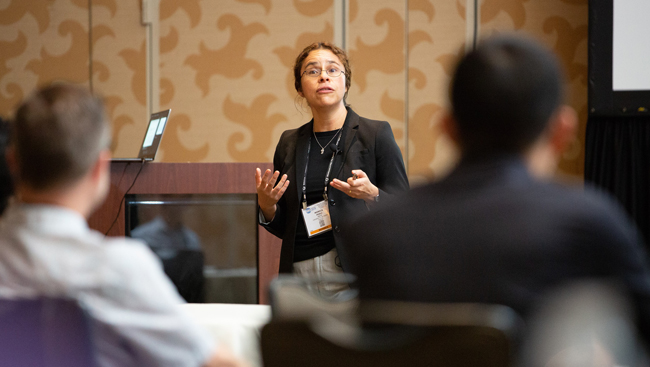 Podcast Career PathsMonica Perez started her career as a physical therapist in South America, moving to the United States to conduct research at The Miami Project to Cure Paralysis. The scientists and clinicians at The Miami Project take innovative approaches to understanding the intersection of science and rehabilitation in relation to spinal cord and brain injuries. Perez’s lab aims to understand physiological mechanisms that contribute to the control of movement following spinal cord injury, and to use this information to develop procedures that enhance voluntary motor output. In this Meet the Expert, Perez outlines the steps along the path that got her where she is today, including training at the University of Copenhagen and at the National Institute of Neurological Disorders and Stroke. She discusses her translational science experiences and how she built a research program from a basic mechanistic question to design approaches that aim to improve clinical rehabilitation. She also shares guiding questions that have helped her understand the relationship between anatomy and behavior and will help any neuroscientist make strategic decisions at the start of their career.Jun 26, 2019
 -
 Journal ArticleOligodendrocyte progenitor cells (OPCs) receive synaptic input from a diverse range of neurons in the developing and adult brain. Understanding whether the neuronal populations that synapse with OPCs in the healthy brain is altered by demyelination and / or remyelination may support the advancement of neuroprotective or myelin repair strategies being developed for demyelinating diseases such as multiple sclerosis. To explore this possibility, we employed cre-lox transgenic technology to facilitate the infection of OPCs by a modified rabies virus, enabling the retrograde monosynaptic tracing of neuron-OPC connectivity. In the healthy adult mouse, OPCs in the corpus callosum primarily received synaptic input from ipsilateral cortical neurons. Of the cortical neurons, ∼50% were layer V pyramidal cells. Cuprizone demyelination reduced the total number of labelled neurons. However, the frequency / kinetics of mini excitatory post-synaptic currents recorded from OPCs appeared preserved. Of particular interest, d...May 9, 2025
 -
Journal ArticleLactate plays an important role in brain energy metabolism. It contributes to normal brain development and to neuroprotection in diabetic hypoglycemia, but its role in neonatal hypoglycemia is unclear. Moreover, lactate can work as a signaling substance via the lactate receptor HCAR1 (Hydroxycarboxylic acid receptor 1). Recent studies indicate that HCAR1 is protective in mouse models of neonatal hypoxic ischemia and has a role in metabolic regulation in glial cells during hypoglycemia. Here we have studied potential impacts of HCAR1 on axonal and myelin development in the cerebral cortex and corpus callosum of young (p21) wild type (WT) mice and HCAR1 KO mice and in cortical organotypic brain slice cultures. The HCAR1 KO mice showed lower axonal area relative to WT in both cortex and corpus callosum. However, the myelin area was unaffected by HCAR1 KO. Using particle- and colocalization analysis we show that HCAR1 KO predominantly reduces axonal size in unmyelinated axons. Using an organotypic brain slice ...May 9, 2025
-
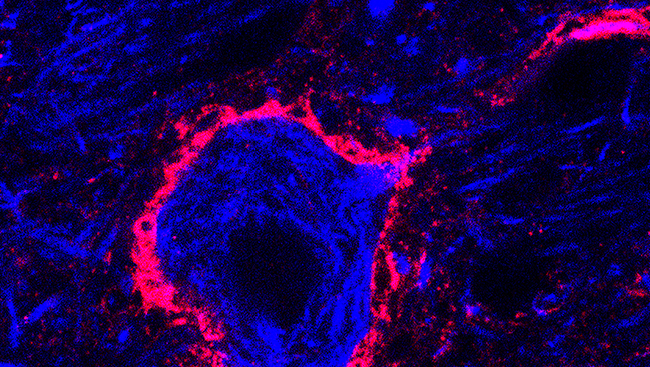 Article Scientific ResearchMaterial below is adapted from the SfN Short Course session Genetic and Neural Circuit Approaches to Studying Sex Differences, by Jessica Tollkuhn. Short Courses are daylong scientific trainings on emerging neuroscience topics and research techniques held the day before the start of SfN’s annual meeting. Differences between the male and female brain largely arise due to the influence of sex chromosomes and gonadal hormones and can influence behaviors such as mating, aggression, and parenting. By understanding the contributions these factors make to differences in neural circuitry and corresponding behavior, researchers can begin to identify the causes for distinctions between the sexes they’ve seen in their own results. Sex chromosomes can influence brain structure and circuitry directly via genetics and indirectly by regulating the development of the gonads, or sex organs. In people, abnormalities in sex chromosome number cause some of the more common genetic disorders, resulting in symptoms that can affect behavior including motor and social skills, as well as language.Jun 19, 2019
 -
 Annual Meeting Video Professional DevelopmentThe FAIR principles, developed by the neuroscience community with the objective of promoting open science, are outlined by the International Neuroinformatics Coordinating Facility as ensuring data is findable, accessible, interoperable, and reusable. These principles aim to enhance the ability of machines to find and use data, allowing individual researchers to cite data sets to inform more advanced studies — in short, how machines can solve the problem of having too much data to sort, in no single format. Representing tool development initiatives, publishing, and data science, speakers from academia and industry across the globe come together in this workshop to present solutions for sharing, publishing, and collaborating in neuroscience. They’ll cover the principles in detail, data standards and repositories, ethical and legal issues such as General Data Protection Regulation in the European Union, and Brain Imaging Data Structure, a way of organizing neuroimaging and behavioral data. From the publishing perspective, they’ll also propose questions to consider when publishing a paper, such as how to share your data and what information to make available.Jun 19, 2019
 -
 Article AdvocacyKeiji Tanaka chairs the International Brain Research Organization (IBRO) Global Engagement Committee, which aims to build awareness and support for research and public education concerning the brain and the nervous system, and to enhance global cooperation through advocacy. Here he offers some of the insights he’s made into the many forms advocacy partnerships can take, starting with his own experience in Japan, and how sharing strategies and resources can benefit science globally. What does advocacy look like in Japan? Advocacy in Japan is different from advocacy in the United States, where scientists can approach lawmakers on Capitol Hill. Not many Parliament members have an interest in science, so instead most of our work is to encourage a cultural climate promoting science. The public’s interest in science is important. If they show interest, it stimulates journalists to cover science, and we are reported in newspapers and on television. Then Parliament members notice, and we do approach them occasionally.Jun 18, 2019
 -
Journal ArticleCell shape is crucial to cell function, particularly in neurons. The cross-sectional diameter, also known as caliber, of axons and dendrites is an important parameter of neuron shape, best appreciated for its influence on the speed of action potential propagation. Many studies of axon caliber focus on cell-wide regulation and assume that caliber is static. Here, we have characterized local variation and dynamics of axon caliber in vivo using the peripheral axons of zebrafish touch-sensing neurons at embryonic stages, prior to sex determination. To obtain absolute measurements of caliber in vivo, we paired sparse membrane labeling with super-resolution microscopy of neurons in live fish. We observed that axon segments had varicose or “pearled” morphologies, and thus vary in caliber along their length, consistent with reports from mammalian systems. Sister axon segments originating from the most proximal branch point in the axon arbor had average calibers that were uncorrelated with each other. Axon caliber ...May 8, 2025
-
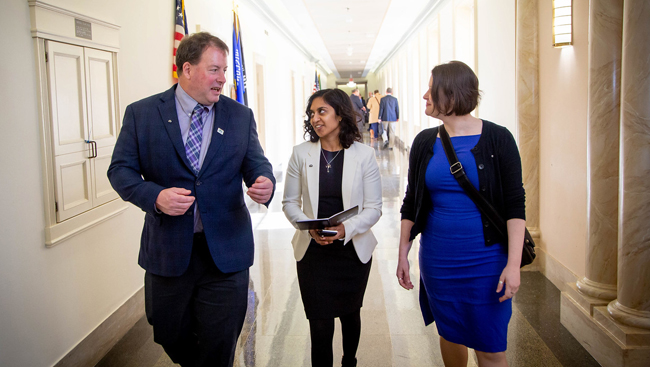 Video AdvocacyBy uniting our voices, we can help to advance neuroscience research priorities and scientific discovery. Learn how legislators make decisions that can impact your work and how you fit into (and can influence) that decision-making process. This video covers: The difference between advocacy and lobbying. • Why your voice as a constituent-scientist is particularly valuable. • How SfN and the broader scientific community typically collaborate for a larger impact. • SfN is dedicated to helping you continue to grow as an advocate whether you’re brand new or have years of experience. Learn more at sfn.org/advocacy or email advocacy@sfn.org for assistance.Jun 14, 2019
 -
 Webinar DiversityTwo institutional leaders will discuss their institutions’ successful strategies to diversify their faculty and create an inclusive environment where faculty can thrive and serve as role models to trainees. Cristina Alfaro, provost chair of faculty diversity and inclusion at San Diego State University, and Philip Kass, vice provost for academic affairs at the University of California, Davis, will share their insights on cultivating strong support for and commitment to diversity and inclusion at the departmental and institutional levels.Jun 12, 2019
 -
 Annual Meeting Video Professional DevelopmentCollaboration in science highlights the need for developing leadership in multidisciplinary research, bridging gaps across campuses, countries, and continents. This workshop highlights common barriers that may arise in large-scale collaborations and offers ways to shift from a traditional hierarchical model, based on power and control, to a team-centric model that promotes a culture of information-sharing and can lead to more new ideas.Jun 12, 2019




