



Filter
-
(133)
-
(733)
-
(4)
-
(1)
-
(47830)
-
(91)
-
(25)
-
(14)
-
(433)
-
(7)
-
(181)
-
(8)
-
(33)
-
(17)
-
(7)
-
(9)
-
(9)
-
(5)
-
(21)
-
(8)
-
(12)
-
(9)
-
(3)
-
(10)
-
(10)
-
(56)
-
(45)
-
(12)
-
(3)
-
(7)
-
(6)
-
(5)
-
(8)
-
(7)
-
(11)
-
(58)
-
(13)
-
(30)
-
(8)
-
(5)
-
(10)
-
(5)
-
(14)
-
(4)
621 - 630
of 52751 results
-
 Journal ArticleThirst is a strongly motivated internal state that is represented in central brain circuits that are only partially understood. Water seeking is a discrete step of the thirst behavioral sequence that is amenable to uncovering the mechanisms for motivational properties such as goal-oriented behavior, value encoding, and behavioral competition. In Drosophila water seeking is regulated by the NPY-like neuropeptide NPF, however the circuitry for NPF-dependent water seeking is unknown. To uncover the downstream circuitry, we identified the NPF receptor NPFR and the neurons it is expressed in as being acutely critical for thirsty water seeking in males. Refinement of the NPFR pattern uncovered a role for a single neuron, the L1-l, in promoting thirsty water seeking. The L1-l neuron increases its activity in thirsty flies and is involved in the regulation of dopaminergic neurons in long-term memory formation. Thus, NPFR and its ligand NPF, already known for its role in feeding behavior, are also important for a s...Oct 8, 2025
 -
Journal ArticleSleep-wake states bi-directionally interact with epilepsy and seizures, but the mechanisms are unknown. A barrier to comprehensive characterization and the study of mechanisms has been the difficulty of annotating large chronic recording datasets. To overcome this barrier, we sought to develop an automated method of classifying sleep-wake states, seizures, and the post-ictal state in mice ranging from controls to mice with severe epilepsy with accompanying background EEG abnormalities. We utilized a large dataset of recordings, including EMG, EEG, and hippocampal local field potentials, from control and intra-amygdala kainic acid-treated mice. We found that an existing sleep-wake classifier performed poorly, even after retraining. A support vector machine, relying on typically used scoring parameters, also performed below our benchmark. We then trained and evaluated several multi-layer neural network architectures and found that a bidirectional long short-term memory-based model performed best. This ‘Sleep...Oct 8, 2025
-
Journal ArticleLoss of function Frazzled/DCC mutants disrupt synaptogenesis in the Giant Fiber (GF) System of Drosophila . We observe weaker physiology in loss-of-function (LOF) male and female specimens, characterized by longer latencies and reduced response frequencies between the GFs and the motor neurons. These physiological phenotypes are linked to a loss of gap junctions in the GFs, specifically the loss of the shaking-B(neural+16) isoform of innexin in the presynaptic terminal. We present evidence of Frazzled's role in gap junction regulation by utilizing the UAS-GAL4 system in Drosophila to rescue mutant phenotypes. Expression of various UAS-Frazzled constructs in a Frazzled LOF background was used to dissect the role of different parts of the Frazzled receptor in the assembly of electrical synapses. Expressing Frazzled’s intracellular domain in Frazzled LOF mutants rescued axon pathfinding and synaptogenesis. This is supported by the complementary result that Frazzled fails to rescue synaptic function when the t...Oct 8, 2025
-
Journal ArticleNovel stimuli can be stressful for individuals with Autism Spectrum Disorders (ASD), though repeated exposure can reduce this effect. In Cntnap2-/- and Shank3B+/- mouse models of ASD, novel background odors impaired behavioral target odor recognition but that deficit improved with training. To investigate the neural basis of this improvement, we used widefield calcium imaging to measure olfactory bulb responses in Cntnap2-/- and Shank3B+/- mice and WT mice of either sex. Training with background odors enhanced both behavioral performance and neural discriminability of odor mixtures in both Cntnap2-/- and Shank3B+/- as well as WT mice. Naïve Cntnap2-/- and Shank3B+/- mice showed greater trial-to-trial neural variability than WT mice, but training stabilized neural responses. Critically, training produced a widespread reduction in olfactory bulb responses to background odors in ASD models, but not in WT mice. Thus, despite similar behavioral improvements as WT mice, Cntnap2-/- and Shank3B+/- mice relied on a...Oct 8, 2025
-
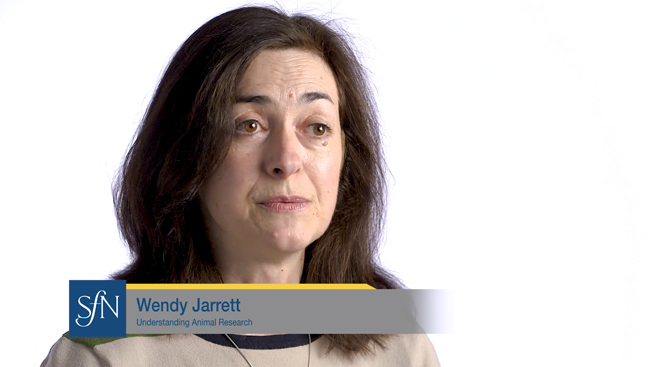 Video AdvocacyCommunicating openly with scientists and nonscientists can help inform and shift perspectives on animal research. In this video, learn how to help correct misunderstandings, strategies for explaining how your work with animals contributes to treatments for brain diseases and disorders, and ways you can collaborate with your institution to increase engagement with your research. Scientists can improve understanding of animal research in a variety of ways, including: • Sharing resources including images, videos, and virtual lab tours from Understanding Animal Research. • Participating as an individual or with your institution in Biomedical Research Awareness Day, held by Americans for Medical Progress. • Signing the Concordat on Openness on Animal Research, a set of commitments for life science organizations based in the United Kingdom to enhance their animal research communications.Jul 27, 2021
 -
Journal ArticleHumans rapidly update the control of an ongoing movement following changes in contextual parameters. This involves adjusting the controller to exploit redundancy in the movement goal, such as when reaching for a narrow or wide target, and adapting to dynamic changes such as velocity-dependent force fields (FFs). Although flexible control and motor adaptation are computationally distinct, the fact that both unfold within the same movement suggests that they interact functionally to support task-specific adjustments. To test this hypothesis, we conducted a series of experiments combining changes in the target structure and a force field presented separately or in combination. Seventy-six human participants (both sexes) took part in this study, with each experiment involving different participants. They were asked to reach for a target that could change from a narrow square to a wide rectangle between or during trials. Step loads were used to assess whether participants exploited target redundancy. In a separ...Oct 7, 2025
-
Journal ArticleAberrant dopamine transmission is a hallmark of several psychiatric disorders. Dopamine neurons in the ventral tegmental area (VTA) display distinct activity states that are regulated by discrete afferent inputs. For example, burst firing requires excitatory input from the mesopontine-tegmentum, while dopamine neuron population activity, defined as the number of spontaneously active dopamine neurons, is thought to be dependent on inhibitory drive from the ventral pallidum (VP). Rodent models used to study psychiatric disorders, such as psychosis, consistently exhibit elevated dopamine neuron population activity, due to decreased tonic inhibition from the VP. However, it remains unclear whether the VP can modulate all dopamine neurons, or if only a specific subset of VTA dopamine neurons receive innervation from the VP to be recruited as required. This knowledge is critical for understanding dopamine regulation in normal and pathological conditions. Here, we used in vivo electrophysiology in male and female...Oct 7, 2025
-
Journal ArticleThis study aims to examine the changes in AQP4 polarity and pericyte vascularity during temporal lobe epilepsy (TLE) progression, with the goal of identifying potential drug targets or strategies to delay the onset and progression of TLE. Chronic TLE was induced in male rats using pilocarpine. AQP4 polarity and pericyte vascular coverage were assessed by immunofluorescence. The effects of modulating AQP4 polarity on PTZ-induced TLE model using male mice were studied. Molecular mechanisms of AQP4 polarity were explored using Transwell co-culture and transcriptomics, validated at the protein level. ELISA was used to measure PDGF-BB levels in serum and cerebrospinal fluid. Following pilocarpine-induced chronic TLE model establishment, AQP4 polarity and pericyte vascular coverage rapidly increased but later declined, reaching the lowest levels in epileptic animals. Trifluoperazine prevented AQP4 redistribution, reduced seizure duration, and alleviated brain edema in PTZ-induced TLE mouse model. Transcriptomic ...Oct 7, 2025
-
 Article DiversityA coordinated international effort will be central to effectively promoting diversity in science. The ALBA Network aims to promote equality and diversity in the brain sciences by sharing best practices and providing better visibility and networking opportunities to scientists from underrepresented groupsJul 22, 2021
 -
Article CommunityA coordinated international effort will be central to effectively promoting diversity in science. The ALBA Network aims to promote equality and diversity in the brain sciences by sharing best practices and providing better visibility and networking opportunities to scientists from underrepresented groupsJul 22, 2021




