



Filter
-
(133)
-
(733)
-
(4)
-
(1)
-
(47830)
-
(91)
-
(25)
-
(14)
-
(433)
-
(7)
-
(181)
-
(8)
-
(33)
-
(17)
-
(7)
-
(9)
-
(9)
-
(5)
-
(21)
-
(8)
-
(12)
-
(9)
-
(3)
-
(10)
-
(10)
-
(56)
-
(45)
-
(12)
-
(3)
-
(7)
-
(6)
-
(5)
-
(8)
-
(7)
-
(11)
-
(58)
-
(13)
-
(30)
-
(8)
-
(5)
-
(10)
-
(5)
-
(14)
-
(4)
561 - 570
of 52751 results
-
 Journal ArticleDopamine release in the nucleus accumbens is classically linked to associative learning, signaling relationships between predictive cues and outcomes. Yet, dopamine is also strongly modulated by novelty, a nonassociative factor that has received comparatively little attention. Here, we used optical dopamine sensors in awake, behaving male and female mice to define how novelty alters the temporal dynamics of dopamine release during aversive learning. We manipulated novelty in three ways: (1) omitting expected footshocks, (2) introducing novel neutral cues concurrently with shock-predictive stimuli, and (3) presenting novel stimuli in an unpaired fashion within a context. Across all conditions, manipulations robustly increased dopamine release and in some cases altered the directionality of cue-evoked dopamine responses. Notably, these effects extended beyond the immediate stimulus window, altering subsequent responses to both conditioned cues and footshocks. Together, these findings demonstrate that changes...Dec 1, 2025
 -
 Journal ArticleOlfaction is the dominant sensory modality in rodents. It can be used to assess behavioral phenomena including stress, learning and memory, and social investigation, and impaired olfaction is implicated in several neurological disorders. Paradigms such as the olfactory habituation/dishabituation (OHD) task can assess olfactory perception, memory, and motivation. However, these tasks require manual stimulus presentation, introducing variability and making them labor-intensive. Olfactometers allow automated stimulus delivery, but the OHD task has not yet been adapted for use with an olfactometer. Additionally, current olfactometer designs require proprietary software or components that are difficult to obtain/fabricate and commercial units are expensive. As a result, these apparatuses have not been widely implemented. Here, we describe the design and assembly of the Odor Delivery Optimization Research System (ODORS), an economical, modular, and open-source olfactometer for use in rodents, and describe a vari...Dec 1, 2025
 -
 Journal ArticleThe medial habenula (MHb) and its main projection target, the interpeduncular nucleus (IPN), play an important role in mood/affect, anxiety, and the aversive experience associated with nicotine withdrawal. Given that MHb axons release glutamate onto IPN neurons, we investigated the expression and functional responses of ionotropic glutamate receptors (iGluRs) in neurons of the rostral IPN (IPR) in male rats. After confirming mRNA expression of Gria1 and Grin1 iGluR subunits in IPR, we employed glutamate uncaging coupled with two-photon imaging and patch-clamp electrophysiology. IPR dendrites, which often contained spine-like protrusions suggestive of synaptic contacts, featured a variety of response profiles following localized glutamate uncaging. Pharmacology experiments confirmed functional α-amino-3-hydroxy-5-methyl-4-isoxazolepropionic acid and N -methyl-d-aspartate iGluR responses in IPR neuronal somata. Rats were trained to self-administer nicotine or saline during 10 fixed ratio 1 sessions and seven...Dec 1, 2025
 -
.png) Podcast Scientific ResearchAuthors Paula Celeste Salamone and Agustín Ibáñez discuss their paper, “Interoception Primes Emotional Processing: Multimodal Evidence from Neurodegeneration,” published in Vol. 41, Issue 19 of the Journal of Neuroscience, with Editor-in-Chief Marina Picciotto. Find the SfN Journals: In Conversation webinar series on-demand here. On Neuro Current, we delve into the stories and conversations surrounding research published in the journals of the Society for Neuroscience. Through its publications, JNeurosci, eNeuro, and the History of Neuroscience in Autobiography, SfN promotes discussion, debate, and reflection on the nature of scientific discovery, to advance the understanding of the brain and the nervous system. Find out more about SfN and connect with us on Twitter, Instagram, and LinkedIn.Mar 22, 2022
Podcast Scientific ResearchAuthors Paula Celeste Salamone and Agustín Ibáñez discuss their paper, “Interoception Primes Emotional Processing: Multimodal Evidence from Neurodegeneration,” published in Vol. 41, Issue 19 of the Journal of Neuroscience, with Editor-in-Chief Marina Picciotto. Find the SfN Journals: In Conversation webinar series on-demand here. On Neuro Current, we delve into the stories and conversations surrounding research published in the journals of the Society for Neuroscience. Through its publications, JNeurosci, eNeuro, and the History of Neuroscience in Autobiography, SfN promotes discussion, debate, and reflection on the nature of scientific discovery, to advance the understanding of the brain and the nervous system. Find out more about SfN and connect with us on Twitter, Instagram, and LinkedIn.Mar 22, 2022 -
.png) Podcast Scientific ResearchIn this episode, Karl Herrup and Christophe Bernard explore how logical fallacies and unseen bias limit scientific advancement in their fields of Alzheimer's disease and epilepsy.Mar 22, 2022
Podcast Scientific ResearchIn this episode, Karl Herrup and Christophe Bernard explore how logical fallacies and unseen bias limit scientific advancement in their fields of Alzheimer's disease and epilepsy.Mar 22, 2022 -
 Journal ArticleRNA localization to neuronal axons and dendrites provides spatiotemporal control over gene expression to support synapse function. Neuronal messenger RNAs (mRNAs) localize as ribonucleoprotein particles (RNPs), commonly known as RNA granules, the composition of which influences when and where proteins are made. High-throughput sequencing has revealed thousands of mRNAs that localize to the hippocampal neuropil. Whether these mRNAs are spatially organized into common RNA granules or distributed as independent mRNAs for proper delivery to synapses is debated. Here, using highly multiplexed single molecule fluorescence in situ hybridization (HiPlex smFISH) and colocalization analyses, we investigate the subcellular spatial distribution of 15 synaptic neuropil localized mRNAs in the male and female rodent hippocampus. We observed that these mRNAs are present in the neuropil as heterogeneously sized fluorescent puncta with spatial colocalization patterns that generally scale by neuropil mRNA abundance. Indeed, ...Nov 21, 2025
 -
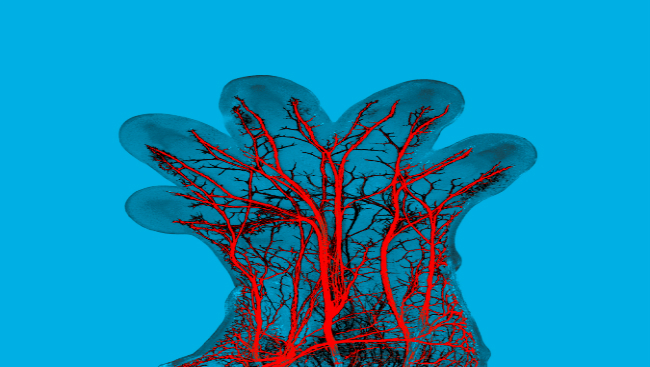 Article AdvocacyThe Society for Neuroscience hosted a live webinar on How to Prepare for, Defend Against, and Recover from Animal Rights Oppositional Efforts, which included moderator and Chair of SfN’s Animals in Research Committee Dr. Katalin Gothard, MD, PhD and panelists Dr. Eric Nestler, MD, PhD, Dr. Sharon Juliano, PhD, and Matthew Bailey, President of the National Association for Biomedical Research (NABR) and the Foundation for Biomedical Research (FBR).Feb 15, 2022
 -
Journal ArticleDopamine release in the nucleus accumbens (NAc) is classically linked to associative learning, signaling relationships between predictive cues and outcomes. Yet, dopamine is also strongly modulated by novelty, a non-associative factor that has received comparatively little attention. Here, we used optical dopamine sensors in awake, behaving male and female mice to define how novelty alters the temporal dynamics of dopamine release during aversive learning. We manipulated novelty in three ways: (1) omitting expected footshocks, (2) introducing novel neutral cues concurrently with shock-predictive stimuli, and (3) presenting novel stimuli in an unpaired fashion within a context. Across all conditions, manipulations robustly increased dopamine release and in some cases altered the directionality of cue-evoked dopamine responses. Notably, these effects extended beyond the immediate stimulus window, altering subsequent responses to both conditioned cues and footshocks. Together, these findings demonstrate that ...Nov 20, 2025
-
Journal ArticleDecoding algorithms provide a powerful tool for understanding the firing patterns that underlie cognitive processes such as motor control, learning, and recall. When implemented in the context of a real-time system, decoders also make it possible to deliver feedback based on the representational content of ongoing neural activity. That in turn allows experimenters to test hypotheses about the role of that content in driving downstream activity patterns and behaviors. While multiple real-time systems have been developed, they are typically implemented with a compiled programming language, making them more difficult for users to quickly adapt for new experiments. Here we present a software system written in the widely-used Python programming language to facilitate rapid experimentation. Our solution implements the state-space based clusterless decoding algorithm for an online, real-time environment. The parallelized application processes neural data with temporal resolution of 6 ms and median computational l...Nov 20, 2025
-
Journal ArticleThe medial habenula (MHb) and its main projection target, the interpeduncular nucleus (IPN), play an important role in mood/affect, anxiety, and the aversive experience associated with nicotine withdrawal. Given that MHb axons release glutamate onto IPN neurons, we investigated the expression and functional responses of ionotropic glutamate receptors (iGluR) in neurons of the rostral IPN (IPR) in male rats. After confirming mRNA expression of Gria1 and Grin1 iGluR subunits in IPR, we employed glutamate uncaging coupled with 2-photon imaging and patch clamp electrophysiology. IPR dendrites, which often contained spine-like protrusions suggestive of synaptic contacts, featured a variety of response profiles following localized glutamate uncaging. Pharmacology experiments confirmed functional α-Amino-3-hydroxy-5-methyl-4-isoxazolepropionic acid (AMPA) and N-methyl-D-aspartate (NMDA) iGluR responses in IPR neuronal somata. Rats were trained to self-administer nicotine or saline during 10 fixed ratio 1 (FR1) se...Nov 18, 2025




