



Filter
-
(133)
-
(733)
-
(4)
-
(1)
-
(47830)
-
(91)
-
(25)
-
(14)
-
(433)
-
(7)
-
(181)
-
(8)
-
(33)
-
(17)
-
(7)
-
(9)
-
(9)
-
(5)
-
(21)
-
(8)
-
(12)
-
(9)
-
(3)
-
(10)
-
(10)
-
(56)
-
(45)
-
(12)
-
(3)
-
(7)
-
(6)
-
(5)
-
(8)
-
(7)
-
(11)
-
(58)
-
(13)
-
(30)
-
(8)
-
(5)
-
(10)
-
(5)
-
(14)
-
(4)
351 - 360
of 52751 results
-
 Journal ArticleCortical neurons in sensory areas undergo a protracted process of postnatal maturation that includes changes in membrane properties, synaptic drive, and connectivity. The completion of this process is associated with the closure of critical periods for experience-dependent plasticity in visual, auditory, and somatosensory cortices. Whether these findings extend to the postnatal development of cortical circuits for taste is currently unknown. Taste receptor cells in the taste buds reliably fire action potentials in response to taste stimuli by the third postnatal week and show extended refinement of membrane excitability into adulthood. Taste responsive neurons in the nucleus of the solitary tract show reorganization of peripheral nerve terminals (NTS) over a timeline comparable to taste buds. However, no study to date investigated the postnatal development of neurons in the gustatory cortex (GC). Here, we focused on pyramidal neurons in the deep layers of GC in acute slices from male and female mice and co...Apr 1, 2026
 -
.png) Podcast Scientific ResearchLaia Fibla and John Spencer discuss their paper, “Language exposure and brain myelination in early development”, published in Vol. 43, Issue 23 of JNeurosci, with Reviewing Editor Elana Zion-Golumbic.Aug 22, 2023
Podcast Scientific ResearchLaia Fibla and John Spencer discuss their paper, “Language exposure and brain myelination in early development”, published in Vol. 43, Issue 23 of JNeurosci, with Reviewing Editor Elana Zion-Golumbic.Aug 22, 2023 -
.png) Podcast Scientific ResearchLaia Fibla and John Spencer discuss their paper, “Language exposure and brain myelination in early development”, published in Vol. 43, Issue 23 of JNeurosci, with Reviewing Editor Elana Zion-Golumbic.Aug 22, 2023
Podcast Scientific ResearchLaia Fibla and John Spencer discuss their paper, “Language exposure and brain myelination in early development”, published in Vol. 43, Issue 23 of JNeurosci, with Reviewing Editor Elana Zion-Golumbic.Aug 22, 2023 -
 Journal ArticleEpigenetic and transcriptional mechanisms are key contributors to alcohol use disorder (AUD). However, a better understanding of the specific genes, transcripts, and chromatin marks affected is necessary to inform novel pharmacotherapies. Here, we systematically investigate the genome-wide epigenetic and transcriptomic effects of ethanol across key brain regions relevant to AUD and assess how these outcomes differ between acute and chronic exposure in male C57BL/6J mice. We show that alcohol-derived acetate contributes to histone acetylation in the brain in response to acute or chronic exposure, with a broader and more robust effect following repeated exposure. Further, we find that chromatin and transcriptomic changes elicited by acute or chronic ethanol exposure are predominantly specific to brain region, and observe more robust dysregulation of gene and transcript expression following acute exposure. We show that ethanol-induced transcriptional changes are paradigm-dependent in some brain regions, most ...Mar 30, 2026
 -
 Webinar Video Professional DevelopmentJoin this interactive session as JNeurosci Reviewing Editors Bruno Averbeck and Anne-Marie Oswald discuss best practices for writing computational neuroscience papers for The Journal of Neuroscience. They will offer tips and strategies for how to organize the paper and clearly present technical material to the broad neuroscience community that is the readership of the journal. Attendees can submit questions at registration and live during the webinar.Aug 21, 2023
 -
 Webinar Scientific ResearchThe spinal cord innervates the entire body at and below the neck. Thus, spinal cord injury (SCI) negatively impacts the spinal cord and all organs below the level of the injury. For more than 20 years, Dr. McTigue’s work has focused on glial repair after SCI, including oligodendrocyte progenitor cells (OPCs), which is shown to robustly divide and differentiate into oligodendrocytes that generate new myelin after SCI.Aug 18, 2023
 -
 Video Career PathsNana Voitenko, PhD, an SfN member based in Kyiv, Ukraine, and her lab members kept working even as Russia invaded Ukraine in February 2022. Her work, which is focused on how the immune system affects chronic pain at a molecular and cellular level, was halted, however, Oct. 10, 2022, as Russia launched missile airstrikes on Kyiv and across Ukraine. In this interview with Voitenko, hear how the war in Ukraine has altered her life and research, and how scientific communities like SfN are more important than ever before.Aug 16, 2023
 -
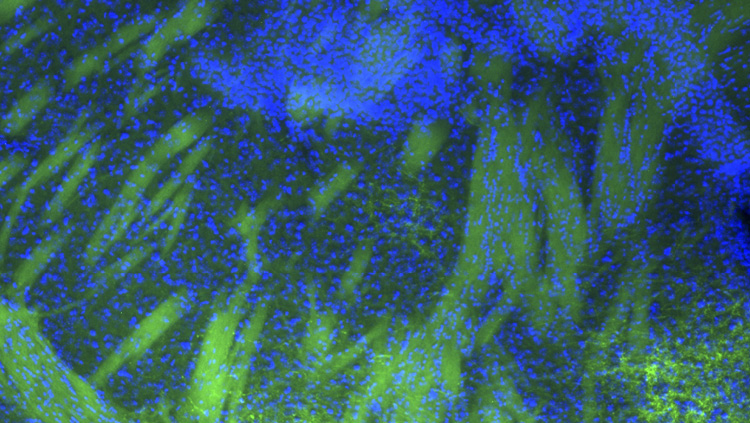 Article Professional DevelopmentThe Neuroscience Scholars Program is a two-year training program open to underrepresented graduate students and postdoctoral researchers. Building on 40 years of historic engagement, the program supports annual travel awards, mentoring, and the professional development of NSP Fellows and Associates. All materials available in this archive are provided open access to the field and are supported by the National Institute of Neurological Disorders and Stroke (NINDS). The contents of this series are solely the responsibility of the Society for Neuroscience and do not necessarily reflect the official views of NINDS. Learn more about the Neuroscience Scholars Program. Program Year 2023–2024Aug 14, 2023
 -
 Video Scientific ResearchNeuronline is a benefit of SfN membership. Renew your membership now to make sure you don’t lose access.Aug 9, 2023
 -
 Article DiversityWhat I feared happened. The Supreme Court of the United States in an expected decision of six to three, and following a trend of its conservative majority, eliminated the affirmative action law that until today allowed significant number of universities to guarantee that a portion of their matriculants would come from underrepresented groups if they met the admission requirements.Aug 7, 2023




