



Filter
-
(133)
-
(733)
-
(4)
-
(1)
-
(47833)
-
(91)
-
(25)
-
(14)
-
(433)
-
(7)
-
(182)
-
(8)
-
(33)
-
(17)
-
(7)
-
(9)
-
(9)
-
(5)
-
(21)
-
(8)
-
(12)
-
(9)
-
(3)
-
(10)
-
(10)
-
(56)
-
(45)
-
(12)
-
(3)
-
(7)
-
(6)
-
(5)
-
(8)
-
(7)
-
(11)
-
(58)
-
(13)
-
(30)
-
(8)
-
(5)
-
(10)
-
(5)
-
(15)
-
(4)
2051 - 2060
of 52756 results
-
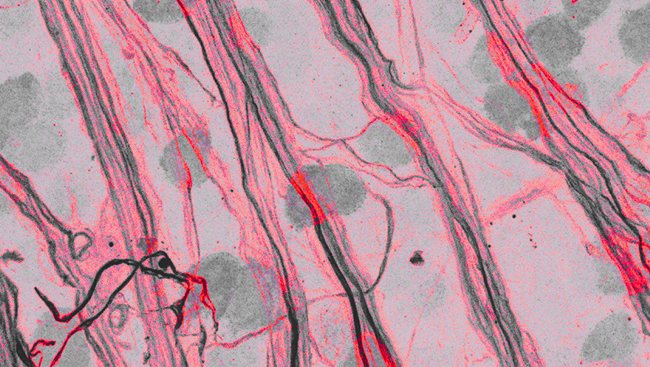 Webinar TrainingThere are many different types of neuroscience master’s programs — how do you know which one may be right for you or your school? This webinar will provide an overview of the different approaches to master’s studies, with a focus on program benefits for both students and faculty.May 15, 2015
 -
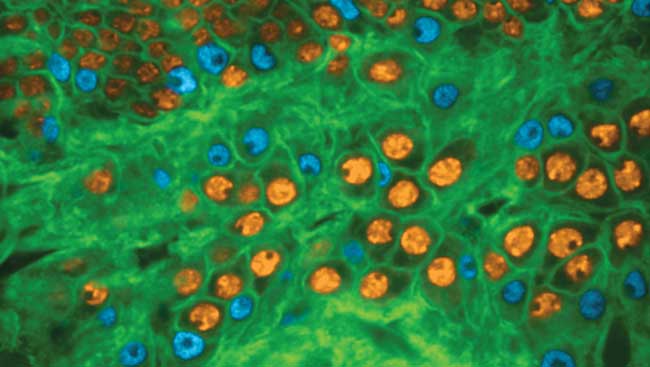 Article Professional DevelopmentWhether you’re preparing your first article or looking for a refresher, use this guide to help you answer the basics on authorship, editorial handling, and peer review.May 15, 2015
 -
 Journal ArticleRett syndrome (RTT), a severe neurodevelopmental disorder caused by mutations in the MeCP2 gene, is characterized by cognitive and social deficits. Previous studies have noted hypoactivity in the medial prefrontal cortex (mPFC) pyramidal neurons of MeCP2-deficient mice (RTT mice) in response to both social and nonsocial stimuli. To further understand the neural mechanisms behind the social deficits of RTT mice, we monitored excitatory pyramidal neurons in the prelimbic region of the mPFC during social interactions in mice. These neurons' activity was closely linked to social preference, especially in wild-type mice. However, RTT mice showed reduced social interest and corresponding hypoactivity in these neurons, indicating that impaired mPFC activity contributes to their social deficits. We identified six mPFC neural ensembles selectively tuned to various stimuli, with RTT mice recruiting fewer neurons to ensembles responsive to social interactions and consistently showing lower stimulus-ON ensemble transi...Sep 12, 2024
 -
Journal ArticleTwo-photon calcium imaging allows for the activity readout of large populations of neurons at single cell resolution in living organisms, yielding new insights into how the brain processes information. Holographic optogenetics allows us to trigger activity of this population directly, raising the possibility of injecting information into a living brain. Optogenetic triggering of activity that mimics “natural” information, however, requires identification of stimulation targets based on real-time analysis of the functional network. We have developed NeuroART ( Neuro nal A nalysis in R eal T ime), software that provides real-time readout of neuronal activity integrated with downstream analysis of correlations and synchrony, and of sensory metadata. On the example of auditory stimuli, we demonstrate real-time inference of the contribution of each neuron in the field of view to sensory information processing. To avoid the limitations of microscope hardware and enable collaboration of multiple research groups, ...Sep 12, 2024
-
Journal ArticleStudies employing EEG to measure somatosensory responses have been typically optimized to compute event-related potentials in response to discrete events (ERPs). However, tactile interactions involve continuous processing of non-stationary inputs that change in location, duration, and intensity. To fill this gap, this study aims to demonstrate the possibility of measuring the neural tracking of continuous and unpredictable tactile information. Twenty-seven young adults (females = 15) were continuously and passively stimulated with a random series of gentle brushes on single fingers of each hand, which were covered from view. Thus, tactile stimulations were unique for each participant, and stimulated fingers. An encoding model measured the degree of synchronization between brain activity and continuous tactile input, generating a temporal response function (TRF). Brain topographies associated with the encoding of each finger stimulation showed a contralateral response at central sensors starting at 50 ms an...Sep 12, 2024
-
Journal ArticleSystemic inflammation has been implicated in the development and progression of neurodegenerative conditions such as cognitive impairment and dementia. Recent clinical studies indicate an association between sepsis, endothelial dysfunction, and cognitive decline. However, the investigations of the role and therapeutic potential of the cerebral microvasculature in sepsis-induced cognitive dysfunction have been limited by the lack of standardized experimental models for evaluating the alterations in the cerebral microvasculature and cognition induced by the systemic inflammatory response. Herein, we validated a mouse model of endotoxemia that recapitulates key pathophysiology related to sepsis-induced cognitive dysfunction, including the induction of an acute systemic hyperinflammatory response, blood-brain barrier (BBB) leakage, neurovascular inflammation, and memory impairment after recovery from the systemic inflammation. In the acute phase, we identified novel molecular (e.g. upregulation of plasmalemma ...Sep 12, 2024
-
 Article Career PathsYou enjoy seeking out the answers to big problems. You aren’t frustrated when you can’t find a solution right away.May 8, 2015
 -
 Article Professional DevelopmentDo you ever enter a lab, meeting, or lunchroom feeling like you need to hide your personality to fit in?May 8, 2015
 -
 Video Scientific ResearchThe FENS-SfN Summer School on Neurodevelopmental Psychiatric Disorders took place June 22nd to 28th, 2014, in Bertinoro, Italy. Dr. Kevin Mitchell from Trinity College in Dublin, Ireland talks about the Genetic heterogeneity of neurodevelopmental disorders - implications for animal modelling-1 and modelling-2.May 8, 2015
 -
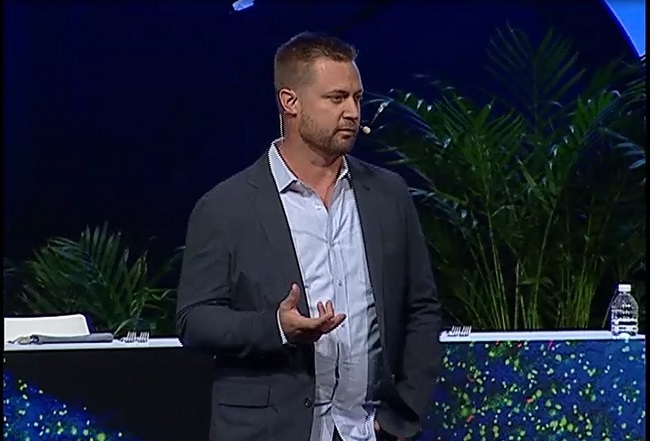 Video OutreachFrom evoking memories of fun beach vacations to cozy Thanksgivings home, food has tremendous power to take you back in time to pleasurable times and places. As Top Chef star Bryan Voltaggio explains in this video, this is why he wakes up every day and heads into the kitchen. He knows he’s accomplished something when he recreates positive childhood experiences for his restaurants’ diners through the limitless tastes, smells, sounds, and colors of food. In addition to sharing his own food-associated memories and how he creates rich culinary experiences, Bryan does a fascinating demonstration of unique dishes. Joining him on stage to discuss what memories this food triggers for them are Barry Everitt, University of Cambridge; Stuart Firestein, Columbia University; and Leslie Vosshall, Rockefeller University.May 8, 2015




