



Filter
-
(133)
-
(733)
-
(4)
-
(1)
-
(47833)
-
(91)
-
(25)
-
(14)
-
(433)
-
(7)
-
(182)
-
(8)
-
(33)
-
(17)
-
(7)
-
(9)
-
(9)
-
(5)
-
(21)
-
(8)
-
(12)
-
(9)
-
(3)
-
(10)
-
(10)
-
(56)
-
(45)
-
(12)
-
(3)
-
(7)
-
(6)
-
(5)
-
(8)
-
(7)
-
(11)
-
(58)
-
(13)
-
(30)
-
(8)
-
(5)
-
(10)
-
(5)
-
(15)
-
(4)
1781 - 1790
of 52756 results
-
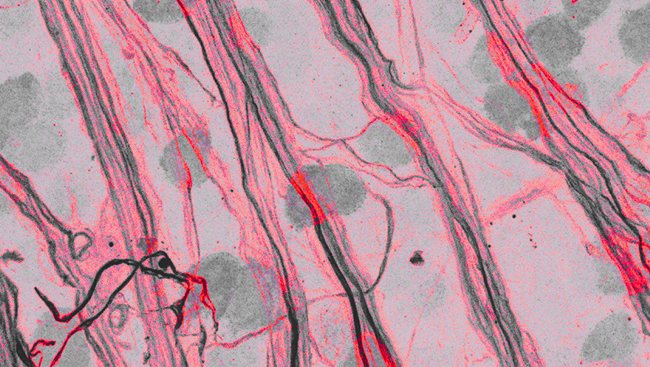 Article Scientific ResearchAnimal rights activist groups use a variety of crippling ploys to stunt research. Here’s a review of their tactics and what you can do to protect yourself and your research.Jun 14, 2016
 -
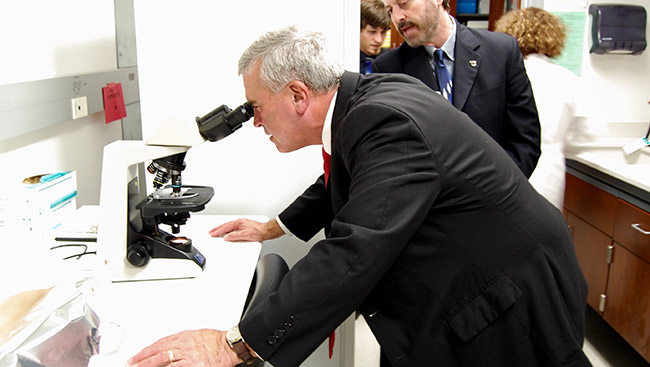 Article AdvocacyAs neuroscientists, it is critical for the future of our field that we help lawmakers understand the importance of scientific research to human health and economic development.Jun 9, 2016
 -
 Article Career PathsHow Clinical Training Impacted This Physician’s Choice to Research Pediatric Developmental DisordersJoseph Gleeson explains why he dedicated his career to studying and pursuing treatments for developmental brain disorders.Jun 7, 2016
 -
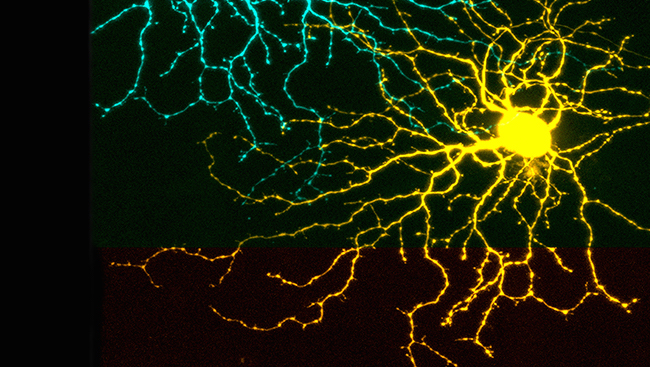 Article Scientific ResearchAdolescence can be a rough and turbulent ride — not only for teenagers, but for everyone else around them. And the explanation for erratic behavior — anger, impulsivity, unnecessary risks, and inappropriate and suboptimal choices — has likely troubled parents for generations. Neuroscience first answered this mystery decades ago. Our brains, it turned out, are not fully developed at birth and undergo considerable neuronal maturation processes during adolescence until early adulthood.Jun 2, 2016
 -
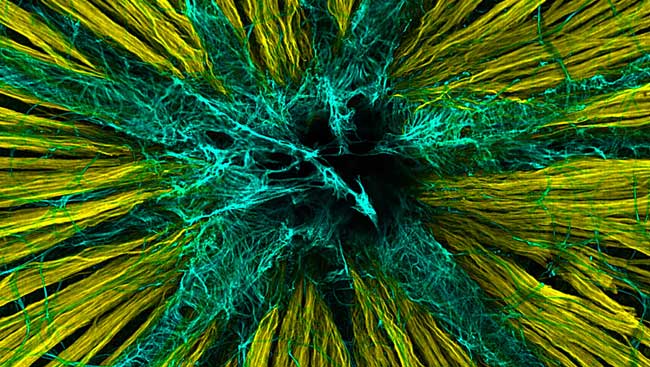 Article Career PathsI work on malformations of cerebral cortical development. These are congenital abnormalities of brain development that are highly associated with epilepsy, intellectual disabilities, and autism.Jun 2, 2016
 -
 Journal ArticleFear generalization is a hallmark of anxiety disorders. Experimentally, fear generalization can be difficult to dissociate from its counterpart, fear discrimination. Here we use minimal threat learning procedures to reveal such a dissociation. We show that in Long Evans rats, an auditory threat cue predicting foot shock on 10% of trials produces a discriminated fear response that does not generalize to a neutral auditory cue. Even slightly higher foot shock probabilities (30% and 20%) produce fear generalization. AAV-mediated, caspase-3 deletion of ventral pallidum neurons abolishes fear generalization and reduces threat cue responding during extinction. The ventral pallidum’s contribution to fear generalization and extinction threat responding does not depend on inputs from the nucleus accumbens. The results demonstrate a minimal threat learning approach to dissociate fear discrimination from fear generalization, and a novel role for the ventral pallidum in generalizing and expressing fear. Significance ...Nov 7, 2024
 -
Journal ArticleThe pretectum of vertebrates contains neurons responsive to global visual motion. These signals are sent to the cerebellum, forming a subcortical pathway for processing optic flow. Global motion neurons exhibit selectivity for both direction and speed, but this is usually assessed by first determining direction preference at intermediate velocity (16-32 deg/sec), and then assessing speed tuning at the preferred direction. A consequence of this approach is that it is unknown if and how direction preference changes with speed. We measured directional selectivity in 114 pretectal neurons from 44 zebra finches ( Taeniopygia guttata ) across spatial and temporal frequencies, corresponding to a speed range of 0.062 to 1024°/s. Pretectal neurons were most responsive at 32-64°/s with lower activity as speed increased or decreased. At each speed, we determined if cells were directionally-selective, bidirectionally-selective, omnidirectionally responsive, or unmodulated. Notably, at 32°/s, 60% of the cells were dire...Nov 7, 2024
-
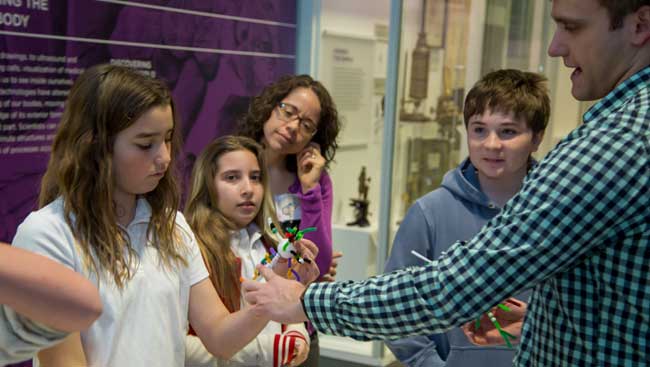 Article TrainingIt is often said that academic fields are becoming increasingly segregated as specializations develop more jargon and become more detailed with each new peer-reviewed paper. However, the classes co-taught by Professors Otis and Sathian are unique interdisciplinary spaces where students across traditional disciplinary divides are able to wrestle with topics shared by the humanities and sciences: perception, imagination, and art.May 26, 2016
 -
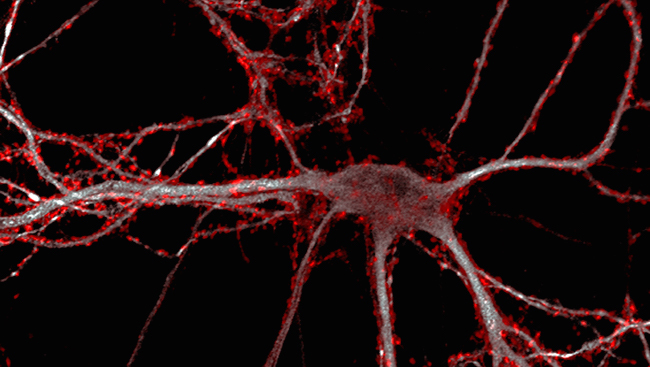 Video Career PathsAmy Moore, the director of research programs at Georgia Research Alliance, talks about how her PhD program developed skills she is still using in her current role.May 26, 2016
 -
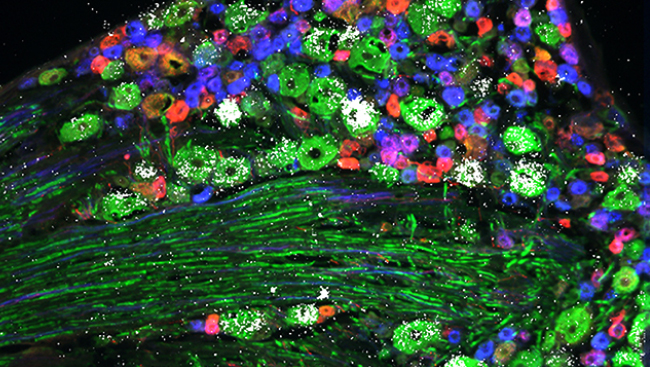 Article Scientific ResearchAxons navigate in a complex environment with a multitude of external chemotactic cues that must be detected and effectively translated by a suitable growth response.May 26, 2016




