



Filter
-
(133)
-
(733)
-
(4)
-
(1)
-
(47833)
-
(91)
-
(25)
-
(14)
-
(433)
-
(7)
-
(182)
-
(8)
-
(33)
-
(17)
-
(7)
-
(9)
-
(9)
-
(5)
-
(21)
-
(8)
-
(12)
-
(9)
-
(3)
-
(10)
-
(10)
-
(56)
-
(45)
-
(12)
-
(3)
-
(7)
-
(6)
-
(5)
-
(8)
-
(7)
-
(11)
-
(58)
-
(13)
-
(30)
-
(8)
-
(5)
-
(10)
-
(5)
-
(15)
-
(4)
1691 - 1700
of 52756 results
-
 Journal ArticleAutism spectrum disorder (ASD) is characterized by deficits in social interaction and communication, cognitive rigidity, and atypical sensory processing. Recent studies suggest that the basal ganglia, specifically the striatum (NSt), plays an important role in ASD. While striatal interneurons, including cholinergic (ChAT+) and parvalbumin-positive (PV+) GABAergic neurons, have been described to be altered in animal models of ASD, their specific contribution remains elusive. Here, we combined behavioral, anatomical, and electrophysiological quantifications to explore if interneuron balance could be implicated in atypical sensory processing in cortical and striatal somatosensory regions of rats subjected to a valproic acid (VPA) model of ASD. We found that VPA animals showed a significant decrease in the number of ChAT+ and PV+ cells in multiple regions (including the sensorimotor region) of the NSt. We also observed significantly different sensory-evoked responses at the single-neuron and population levels ...Dec 1, 2024
 -
 Journal ArticleThe medial frontal cortex (mFC) and locus ceruleus (LC) are two brain areas that have been implicated in a range of cognitive phenomena, such as attention, memory, and decision-making. Regulators of these brain regions at the molecular level are not well understood but might help to elucidate underlying mechanisms of disorders that present with deficits in these cognitive domains. To probe this, we used chemogenetic stimulation of neurons in the LC with axonal projections to the prelimbic subregion (PrL) of the mFC and subsequent bulk RNA sequencing from the mouse PrL. We found that stimulation of this circuit caused an increase in transcription of a host of genes, including the Apoe gene. To investigate cell type-specific expression of Apoe in the PrL, we used a dual-virus approach to express either the excitatory DREADD receptor hM3Dq in LC neurons with projections to the PrL or a control virus and found that increases in Apoe expression in the PrL following depolarization of LC inputs is enriched in GAB...Dec 1, 2024
 -
 Journal ArticleCertain structural brain connections have been confirmed to influence sleep duration in children. However, the causal relationships between all brain regions and children's sleep duration remain unclear. A two-sample Mendelian randomization analysis was conducted using data from genome-wide association studies (GWAS) to examine the relationships between 206 structural connections and sleep duration in children. Sensitivity analyses were employed to validate the findings and assess the robustness of the causal inferences. Stronger connectivity from the left hemisphere (LH) control network to the accumbens ( β = −0.15; 95% CI = [−0.30, −2.88 × 10⁻³]; p = 0.05) and from the LH somatomotor network to the LH default network ( β = −0.18; 95% CI = [−0.34, −0.03]; p = 0.02) in white-matter structural connectivity (SC) were associated with shorter sleep durations. Conversely, increased white-matter SC from the LH dorsal attention network to the thalamus ( β = 0.14; 95% CI = [8.45 × 10⁻⁴, 0.27]; p = 0.05), fro...Dec 1, 2024
 -
 Journal ArticleDelay discounting (DD) is a phenomenon where individuals devalue a reward associated with a temporal delay, with the rate of devaluation being representative of impulsive-like behavior. Here, we first sought to develop and validate a mouse DD task to study brain circuits involved in DD decision-making within short developmental time windows, given widespread evidence of developmental regulation of impulse control and risk-taking. We optimized a T-maze DD task for mice that enables training and DD trials within 2 weeks. Mice learned to choose between a large and a small reward located at opposite arms of a T-maze. Once training criteria were met, mice underwent DD whereby the large reward choice was associated with a temporal delay. Task validation showed that adolescent C57BL/6J mice display an increased preference for the small reward upon a temporal delay, confirming increased impulsivity compared with adults. We next used this DD task to explore the neural basis of decision-making. We used tyrosine hydr...Dec 1, 2024
 -
 Journal ArticleGoal-directed actions require transforming sensory information into motor plans defined across multiple parameters and reference frames. Substantial evidence supports the encoding of target direction in gaze- and body-centered coordinates within parietal and premotor regions. However, how the brain encodes the equally critical parameter of target distance remains less understood. Here, using Bayesian pattern component modeling of fMRI data during a delayed reach-to-target task, we dissociated the neural encoding of both target direction and the relative distances between target, gaze, and hand at early and late stages of motor planning. This approach revealed independent representations of direction and distance along the human dorsomedial reach pathway. During early planning, most premotor and superior parietal areas encoded a target’s distance in single or multiple reference frames and encoded its direction. In contrast, distance encoding was magnified in gaze- and body-centric reference frames during la...Dec 1, 2024
 -
 Journal ArticleLysosomes and related precursor organelles robustly build up in swollen axons that surround amyloid plaques and disrupted axonal lysosome transport has been implicated in worsening Alzheimer's pathology. Our prior studies have revealed that loss of Adaptor protein-4 (AP-4) complex function, linked primarily to spastic paraplegia (HSP), leads to a similar build of lysosomes in structures we term “AP-4 dystrophies.” Surprisingly, these AP-4 dystrophies were also characterized by enrichment of components of APP processing machinery, β-site cleaving enzyme 1 (BACE1) and Presenilin 2. Our studies examining whether the abnormal axonal lysosome buildup resulting from AP-4 loss could lead to amyloidogenesis revealed that the loss of AP-4 complex function in an Alzheimer's disease model resulted in a strong increase in size and abundance of amyloid plaques in the hippocampus and corpus callosum as well as increased microglial association with the plaques. Interestingly, we found a further increase in enrichment of ...Dec 1, 2024
 -
Journal ArticleReported associations between functional connectivity and affective disorder symptoms are minimally reproducible, which can partially be attributed to difficulty capturing highly variable clinical symptoms in cross-sectional study designs. “Dense sampling” protocols, where participants are sampled across multiple sessions, can overcome this limitation by studying associations between functional connectivity and variable clinical states. Here, we characterized effect sizes for the association between functional connectivity and time-varying positive and negative daily affect in a nonclinical cohort. Data were analyzed from 24 adults who attended four research visits, where participants self-reported daily affect using the PANAS-X questionnaire and completed 39 min of functional magnetic resonance imaging across three passive viewing conditions. We modeled positive and negative daily affect in relation to network-level functional connectivity, with hypotheses regarding within-network connectivity of the defa...Dec 1, 2024
-
 Journal ArticleAlthough most adults in the United States will drink alcohol in their life, only ∼6% will go on to develop an alcohol use disorder (AUD). While a great deal of work has furthered our understanding of the cycle of addiction, it remains unclear why certain people transition to disordered drinking. Altered activity in regions implicated in AUDs, like the basolateral amygdala (BLA), has been suggested to play a role in the pathophysiology of AUDs, but how these networks contribute to alcohol misuse remains unclear. Here we investigated how the impact of alcohol on the BLA network relates to alcohol exposure. We first examined the effect of acute ethanol administration on the BLA and frontal cortical networks and the relationship with subsequent voluntary ethanol consumption using the Intermittent Access paradigm. In addition, we recorded network activity from the BLA and frontal cortex throughout the Drinking-in-the-Dark-Multiple Scheduled Access paradigm to assess the impact of voluntary alcohol consumption o...Dec 1, 2024
 -
Journal ArticlePreterm infants are at risk for brain injury and neurodevelopmental impairment due, in part, to white matter injury following chronic hypoxia exposure. However, the precise molecular mechanisms by which neonatal hypoxia disrupts early neurodevelopment are poorly understood. Here, we constructed a brain-wide map of the regenerative response to newborn brain injury using high-resolution imaging-based spatial transcriptomics to analyze over 800,000 cells in a mouse model of chronic neonatal hypoxia. Additionally, we developed a new method for inferring condition-associated differences in cell type spatial proximity, enabling the identification of niche-specific changes in cellular architecture. We observed hypoxia-associated changes in region-specific cell states, cell type composition, and spatial organization. Importantly, our analysis revealed mechanisms underlying reparative neurogenesis and gliogenesis, while also nominating pathways that may impede circuit rewiring following neonatal hypoxia. Altogether...Dec 1, 2024
-
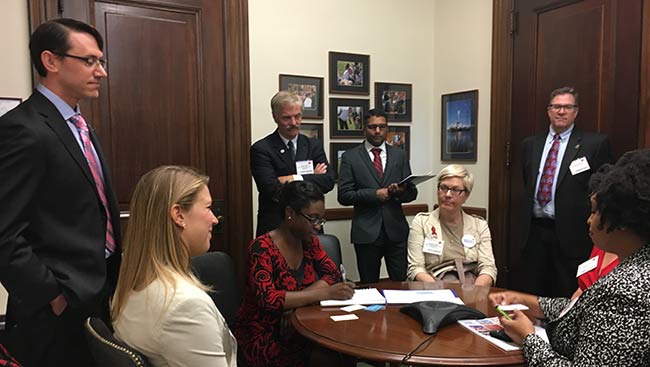 Article AdvocacyIn addition to running a laboratory at the Virginia Tech Carilion Research Institute (VTCRI), Mike Fox devotes his time to a wide range of outreach activities.Nov 3, 2016




