



Filter
-
(133)
-
(733)
-
(4)
-
(1)
-
(47830)
-
(91)
-
(25)
-
(14)
-
(433)
-
(7)
-
(181)
-
(8)
-
(33)
-
(17)
-
(7)
-
(9)
-
(9)
-
(5)
-
(21)
-
(8)
-
(12)
-
(9)
-
(3)
-
(10)
-
(10)
-
(56)
-
(45)
-
(12)
-
(3)
-
(7)
-
(6)
-
(5)
-
(8)
-
(7)
-
(11)
-
(58)
-
(13)
-
(30)
-
(8)
-
(5)
-
(10)
-
(5)
-
(14)
-
(4)
1181 - 1190
of 52751 results
-
 Journal ArticleOne pending question in social neuroscience is whether interpersonal interactions are processed differently by the brain depending on the bodily characteristics of the interactor, i.e., their physical appearance. To address this issue, we engaged participants in a minimally interactive task with an avatar either showing bodily features or not while recording their brain activity using Electroencephalography (EEG) in order to investigate indices of action observation and action monitoring processing. Multivariate results showed that bodily compared to non-bodily appearance modulated parieto-occipital neural patterns throughout the entire duration of the observed movement and that, importantly, such patterns differ from the ones related to initial shape processing. Furthermore, among the electrocortical indices of action monitoring, only the early observational Positivity (oPe) was responsive to the bodily appearance of the observed agent under the specific task requirement to predict the partner movement. T...Apr 7, 2025
 -
Journal ArticleSubstantia nigra pars compacta (SNc) dopaminergic (DA) neurons are characterized by specific morphological and electrophysiological properties. First, in ∼90% of the cases, their axon arises from an axon-bearing dendrite (ABD) at highly variable distances from the soma. Second, they display a highly regular pattern of spontaneous activity (aka pacemaking) and a broad action potential (AP) that faithfully back-propagate through the entire dendritic arbor. In previous studies (Moubarak et al., 2019; Moubarak et al., 2022), we demonstrated that the presence of a high density of sodium current in the ABD and the complexity of this dendrite played a critical role in the robustness of pacemaking and setting the half-width of the AP. In the current study, we investigated the postnatal development of both morphology and AP shape in SNc DA neurons in order to determine when and how the mature electrophysiological phenotype of these neurons was achieved. To do so, we performed electrophysiological recordings of SNc ...Apr 7, 2025
-
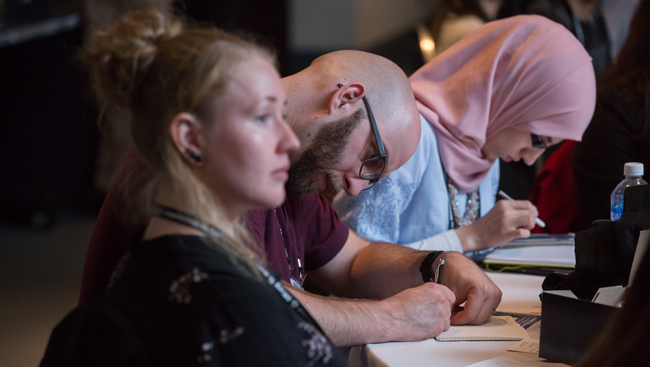 Article Professional DevelopmentBeing offered an interview is often the rate-limiting step of the admissions process, and the wait can be nerve-racking. As you wait to hear back from your top choice schools and programs, here are the important considerations to weigh. Before You Accept an Interview: - Prioritize your level of interest in each program. There could be a conflicting interview dates, with some programs offering no alternates. It’s important to consider how likely you are to accept an offer from a program if an offer is made before you commit to interviewing for the program.Dec 19, 2018
 -
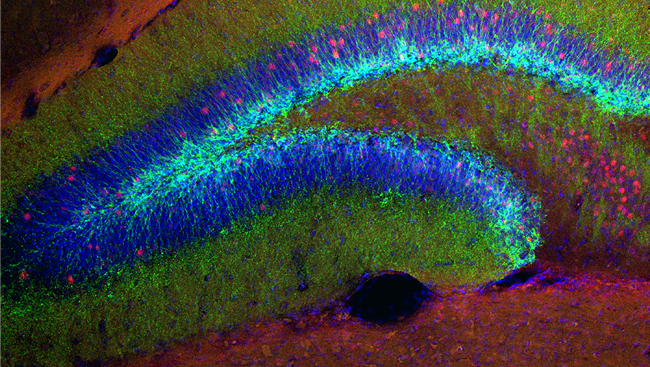 Article Professional DevelopmentBy Karen Herrera-Ferrá, MD, Arleen Salles, PhD, and Laura Cabrera, PhD The impact of scientific brain research and the effects of neurotechnology on human beings as biological and moral beings is increasingly felt in medicine and the humanities around the world. Neuroethics attempts to offer a collective response to the ethical issues raised by rapidly developing science and to find new answers to age-old philosophical questions. A growing number of publications show that the field has disseminated to many countries, including developing countries. Mindful that ethical issues are typically shaped by the interplay of science and society, there has been a recent emphasis on the need for a more culturally and socially sensitive field and a call for a wider and more inclusive neuroethics: a “cross cultural,” “global,” or “international” neuroethics. While the sentiment is good, what exactly a more inclusive neuroethics entails is not necessarily clear. Does it entail just recognizing the need for the field to be more aware of existing disparities in brain and mental health issues and their treatment in different regions? Does it entail recognizing the global scope of neuroethical problems? Or possibly working towards a common, unified approach to neuroethical issues that incorporates different viewpoints and methods?Dec 18, 2018
 -
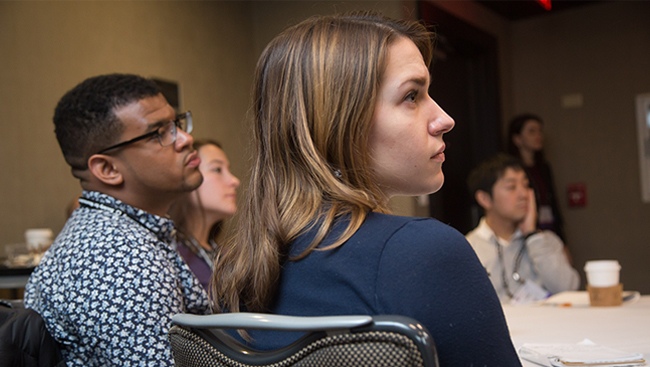 Article Professional DevelopmentElisa Floriddia, postdoc at the Kalorinska Institute (KI) in Sweden and member of SfN's Professional Development Committee (PDC), reflects on ways extracurricular leadership opportunities have enriched her career. As chair of her institution's postdoc association, she rallied peers together to bring awareness to common issues postdocs face and gained professional confidence. Read about her experience and learn from her advice to other postdocs. Can you walk through your career path so far? I'm from Italy, where I did my undergraduate and graduate training. During my Master's program, I had a fantastic mentor who advised trainees to go after the science we wanted to do. My mentor also emphasized how valuable it is to change countries, which gave me the courage to seek PhD training opportunities elsewhere in Europe. I ended up moving to Germany which were fantastic years, science-wise. Along the way, I had questions about how to get to the next step in my career path. My PhD adviser suggested I become a member of SfN and then I could access the online content, which I found very useful. I decided I wanted to continue in an academic path after I graduated, so I pursued postdoctoral training and am now in my second postdoc appointment at the Karolinska Institute (KI) in Sweden.Dec 11, 2018
 -
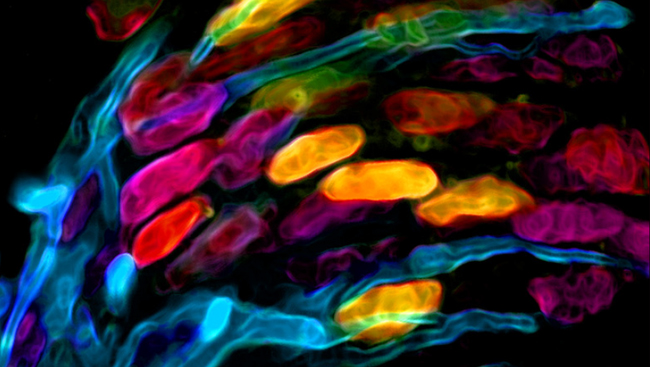 Virtual Conference Professional DevelopmentThis event took place on January 23 - 24, 2019 and is no longer available on-demand.Dec 5, 2018
 -
 Article Professional DevelopmentAs you reflect on your accomplishments this year and think about the year ahead, take time to explore the most popular interviews, articles, and toolkits published on Neuronline in 2018. They may help you stay on top of scientific findings or inspire your next career move.Dec 4, 2018
 -
 Webinar TrainingAs the skills and needs of the 21st century biomedical workforce evolve, so too must the graduate programs that train neuroscience students. In this webinar, faculty from three top U.S. universities will discuss how their graduate programs are: - Broadening the pool of candidates recruited to graduate school. - Re-examining the scientific topics and skills that students learn. - Ensuring trainees are exposed to and prepared for the broad range of career options available for neuroscientists. After attending this webinar, participants will be able to: - Understand strategies for recruiting trainees from diverse backgrounds into graduate neuroscience programs and supporting them when they are in the programs. - Understand successful initiatives to broaden graduate training to cover topics such as computational skills, science policy, education, or entrepreneurship. - Know how to incorporate professional development programming that provides training for a diversity of career paths. - Learn how to work within the overall university or institutional structure to meet evolving needs for recruiting, training, and helping students seek intended careers.Dec 1, 2018
 -
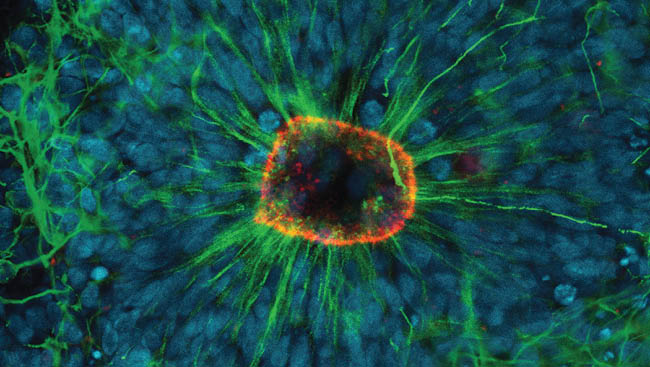 Article Scientific ResearchMaterial below summarizes the article, An Atoh1-S193A Phospho-Mutant Allele Causes Hearing Deficits and Motor Impairment, published on July 20, 2017, in JNeurosci and authored by Wei Rose Xie, Hsin-I Jen, Michelle L. Seymour, Szu-Ying Yeh, Fred A. Pereira, Andrew K. Groves, Tiemo J. Klisch, and Huda Y. Zoghbi.Nov 29, 2018
 -
Journal ArticleSynchronous activity of neuronal networks is found in many brain areas and correlates with cognition and behavior. Gamma synchrony is particularly strong in the dentate gyrus, which is thought to process contextual information in the hippocampus. Several network mechanisms for synchrony generation have been proposed and studied computationally. One such mechanism relies solely on recurrent inhibitory interneuron connectivity, but it requires a large enough number of synapses. Here, we incorporate previously published connectivity data of the dentate gyrus from mice of either sex into a biophysical computational model to test its ability to generate synchronous activity. We find that recurrent interneuron connectivity is insufficient to induce synchronous activity. This applies to an interneuron ring network and the broader dentate gyrus circuitry. Despite asynchronous input, recurrent interneuron connectivity can have small synchronizing effects but can also desynchronize the network for some types of syna...Apr 2, 2025




