



Filter
-
(133)
-
(733)
-
(4)
-
(1)
-
(47830)
-
(91)
-
(25)
-
(14)
-
(433)
-
(7)
-
(181)
-
(8)
-
(33)
-
(17)
-
(7)
-
(9)
-
(9)
-
(5)
-
(21)
-
(8)
-
(12)
-
(9)
-
(3)
-
(10)
-
(10)
-
(56)
-
(45)
-
(12)
-
(3)
-
(7)
-
(6)
-
(5)
-
(8)
-
(7)
-
(11)
-
(58)
-
(13)
-
(30)
-
(8)
-
(5)
-
(10)
-
(5)
-
(14)
-
(4)
1151 - 1160
of 52751 results
-
 Webinar AdvocacyScience policy is shaped by the information made available to your representatives, so establishing relationships with them early on in their terms can help set the tone for what you accomplish together in the future. This webinar will provide the “how-to” for connecting with your congressional delegation.Feb 28, 2019
 -
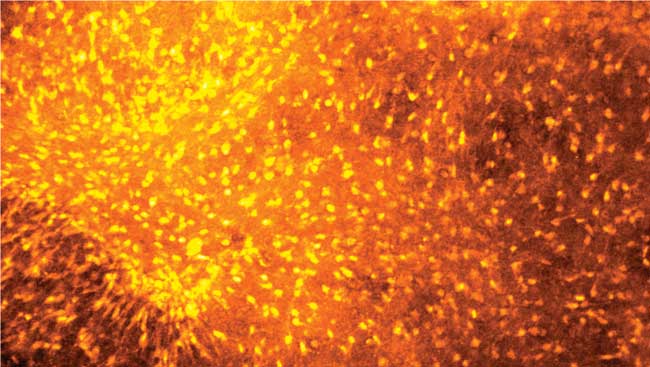 Article Scientific ResearchThe World Health Organization has labeled obesity a global epidemic with major public health implications. In humans, obesity produces many well-known health challenges, but one lesser-known danger is it diminishes cognitive function. Obesity also predisposes individuals to develop serious cognitive disorders later in life, such as dementia and Alzheimer's disease. Neuroimaging studies have shown reduced brain volume in obese humans, particularly in areas that support cognitive function. Yet, the cellular processes underlying the association between obesity and neuronal structure remain elusive.Feb 28, 2019
 -
 Article AdvocacyNeuroscientists at all training and career stages have an important role to play in advocating for science. After SfN’s Capitol Hill Day in March 2018, four participants who are also volunteer leaders on SfN’s Trainee Advisory Committee (TAC) share how they think neuroscientists can influence political and public support for research and ultimately lead to more discoveries.Feb 27, 2019
 -
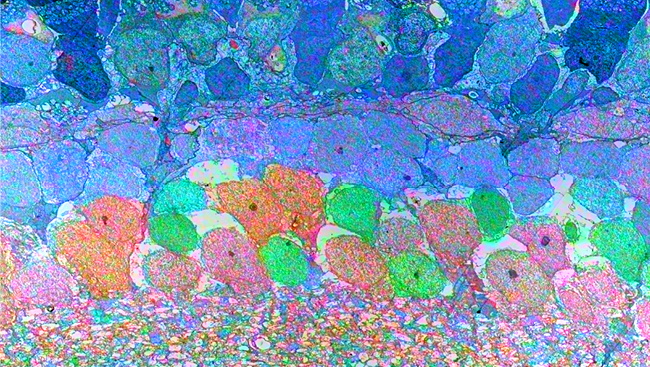 Article Scientific ResearchIn humans and mice, white matter tracts traversing the brain contain long axons especially vulnerable to TBI. TBI causes a characteristic pattern in which degenerating axons are dispersed among many intact axons in white matter tracts.Feb 21, 2019
 -
 Journal ArticleThe primary motor cortex (M1) is strongly engaged by movement planning and execution. However, the role of M1 activity in voluntary grasping is still not completely understood. Here we analyze recordings of M1 neurons during the execution of a delayed reach-to-grasp task, where monkeys had to actively grasp an object with either a side or a precision grip, and then pull it with a low or high amount of force. Single cell and neural populations analyses showed that grip type was robustly and specifically encoded by a large population of neurons, while force level was weakly and transiently encoded within mixed-selective neurons that also encoded grip type. Notably, the grip type was stably decoded from motor cortical populations during the preparation and execution epochs of the task. Our results are consistent with the idea that planning and performing specific grasping movements are high-level skills that strongly engage M1 neurons, while the execution of pulling force might be prominently encoded at lower...Apr 17, 2025
 -
Journal ArticleThe re-emergence of task-related activation patterns during awake rest has been reported to play a role in memory consolidation and perceptual learning. This study aimed to test whether such reactivation occurs in the primary sensorimotor cortex following a visuomotor task. During functional magnetic resonance imaging (fMRI) scanning, 42 healthy participants (13 women and 29 men) learned visuomotor tracking, while a rotational perturbation was introduced between the cursor position and joystick angle. This visuomotor task block was interleaved with a control block, during which participants passively viewed a replay of their previously performed cursor movements. Half of the participants used their right hand, whereas the other half used their left hand to control the joystick. Resting-state scans were acquired before and after the visuomotor task sessions. A multivariate pattern classifier was trained to classify task and control blocks and was then tested on resting-state scans collected before and after...Apr 17, 2025
-
Journal ArticleThe explore/exploit tradeoff is a fundamental property of choice selection during reward-guided decision making, where the “same” choice can reflect either of these internal cognitive states. An unanswered question is whether the execution of a decision provides an underexplored measure of internal cognitive states. Touchscreens are increasingly used across species for cognitive testing, and afford the ability to measure the precise location of choice touch responses. We examined how male and female mice in a restless bandit decision making task interacted with a touchscreen to determine if the explore/exploit tradeoff, prior reward, and/or sex differences change the variability in the kinetics of touchscreen choices. During exploit states, successive touch responses are closer together than those made in an explore state, suggesting exploit states reflect periods of increased motor stereotypy. Although exploit decisions might be expected to be rewarded more frequently than explore decisions, we find that ...Apr 17, 2025
-
Journal ArticleChildhood epilepsy is a common and devastating condition, for which many children still do not have adequate treatment. Some children with drug-resistant epilepsy require surgical excision of epileptogenic brain tissue for seizure control, affording the opportunity to study this tissue ex vivo to interrogate human epileptic neurons for potentially hyperexcitable perturbations in intrinsic electrophysiological properties. In this study, we characterized the diversity of layer L2/3 (L2/3) pyramidal neurons (PNs) in ex vivo brain slices from pediatric patients with epilepsy. We found a remarkable diversity in the firing properties of epileptic L2/3 PNs: five distinct sub-populations were identified. Additionally, we investigated whether the etiology of epilepsy influenced the intrinsic neuronal properties of L2/3 PNs when comparing tissue from patients with epilepsy due to malformations of cortical development (MCDs), other forms of epilepsy (OEs), or with deep-seated tumors. When comparing epileptic with con...Apr 17, 2025
-
 Virtual Conference Scientific ResearchNeuronline is a benefit of SfN membership. Renew your membership now to make sure you don’t lose access.Feb 20, 2019
 -
 Video Annual Meeting OutreachBeing part of a student-run outreach initiative through your institution can expand your scientific community, grow your confidence, and develop your professional skillset. In addition, your outreach efforts can make a lasting impact on the way your local community thinks about science. Watch this workshop for advice on engaging your community — whether you’re a graduate student looking to start an initiative or a faculty member providing support. You’ll learn how student-led STEM and neuroscience initiatives build trust within the community and can serve as a form of peer mentoring, as well as how those initiatives can serve as a teaching tool for talking about science approachably, managing projects, and working with different teams. Using the University of Pennsylvania’s Graduate-Led Initiatives and Activities (GLIA) committee as a model, panelists offer guidelines for establishing an organization structure, setting priorities, and evaluating what’s working and what’s not.Feb 13, 2019




