



Filter
-
(133)
-
(733)
-
(4)
-
(1)
-
(47830)
-
(91)
-
(25)
-
(14)
-
(433)
-
(7)
-
(181)
-
(8)
-
(33)
-
(17)
-
(7)
-
(9)
-
(9)
-
(5)
-
(21)
-
(8)
-
(12)
-
(9)
-
(3)
-
(10)
-
(10)
-
(56)
-
(45)
-
(12)
-
(3)
-
(7)
-
(6)
-
(5)
-
(8)
-
(7)
-
(11)
-
(58)
-
(13)
-
(30)
-
(8)
-
(5)
-
(10)
-
(5)
-
(14)
-
(4)
891 - 900
of 52751 results
-
 Podcast Professional DevelopmentIn this episode of History of SfN: 50th Anniversary, Jones Marlin, a postdoctoral researcher at Columbia University’s Zuckerman Institute and the chair of SfN’s Trainee Advisory Committee, talks about how she’s found community within the Society and her involvement with the Trainee Advisory Committee.Jun 10, 2020
 -
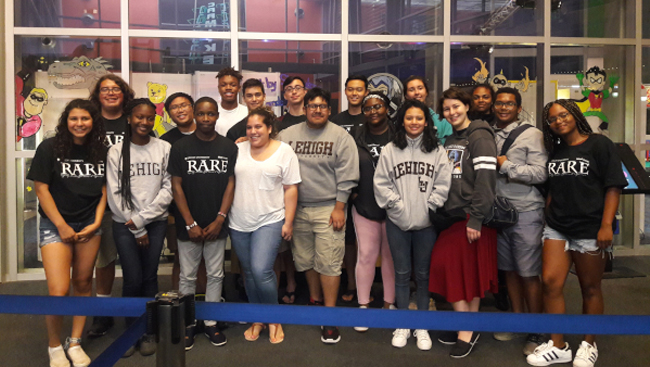 Article CommunityThere’s a national need to improve retention and graduation rates among underrepresented and first-generation students in STEM. At Lehigh University, we’re implementing institutional changes to meet this goal with the aid of grants from the Howard Hughes Medical Institute (HHMI). We want to contribute to a technologically advanced, diverse workforce by implementing multiple evidence-based practices that enhance STEM retention and graduation rates. In the longer term, we plan to scale the most successful practices to the full STEM community at Lehigh. Through the HHMI award we received in 2014, we’ve been able to set up two programs to help meet this aim: the Rapidly Accelerated Research Experience (RARE) and BioConnect. RARE is a pre-admission-to-graduation, four-year STEM immersion program designed to build outstanding scientific and leadership skills in underrepresented students. BioConnect is a collaboration with community college partners to increase STEM graduation and transfer rates to four-year institutions.Jun 10, 2020
 -
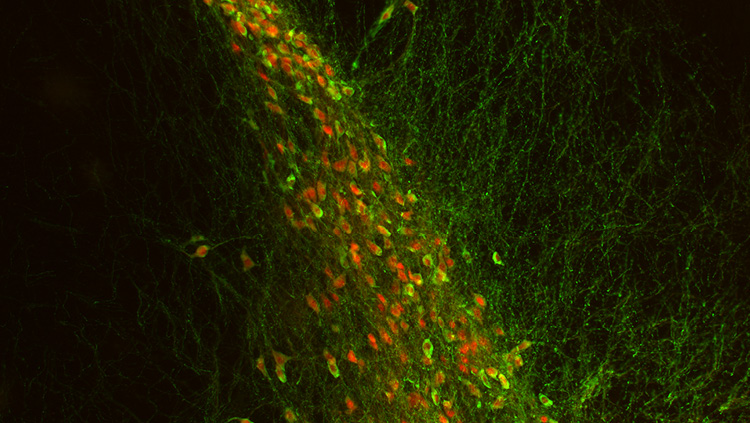 Poster Scientific ResearchExplore resources and articles on the use of voltage-sensitive dye imaging and chemogenetic methods for neural circuit interrogation.Jun 10, 2020
 -
 Article CommunityEvery academic institution has its own unique climate — a term that refers to its structures, policies, values, and work conditions as perceived by its members, as well as the quality of the interactions among its leaders and members.Jun 9, 2020
 -
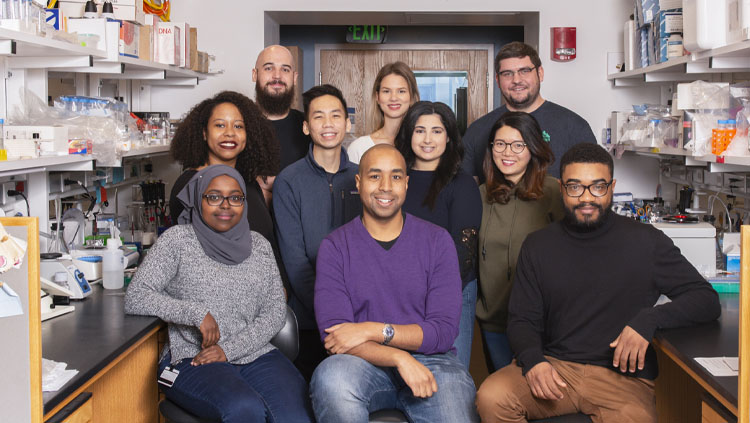 Article DiversityCorey Harwell, an assistant professor at Harvard Medical School, aims to create a diverse, collegial, and collaborative lab environment. Part of that stems from the influence of his own ambitious and caring mentors who supported his career step-by-step, often by sharing new research opportunities he wouldn’t have known existed. Here, he reflects on those relationships, his path into science, and his hopes for increasing diversity in the field, through exposing underrepresented minorities to science as a career path. His message to them, "We need you." This interview is a complement to SfN's podcast series, History of SfN: 50th Anniversary. Guests on the podcast were asked to nominate individuals whose careers are making positive cultural or scientific impacts that will shape the next 50 years of neuroscience. Corey Harwell was nominated by Bill Martin, president and chief operating officer of Blackthorn Therapeutics.Jun 9, 2020
 -
 Article Professional DevelopmentPeer review is a critical process for upholding the scientific integrity in publishing. Each year, Peer Review Week spotlights key issues and engages scientists, communicators, and the public worldwide. This year’s theme is diversity and inclusion. SfN is joining the global conversation and welcomes you to participate.Jun 9, 2020
 -
 Journal ArticleRecognition of conspecific individuals in mammals is an important skill, thought to be mediated by a distributed array of neural networks, including those processing olfactory cues. Recent data from our groups have shown that social memory can be supported by olfactory cues alone, and that interactions with an individual lead to increased neural representations of that individual in the anterior olfactory nucleus, an olfactory network strongly modulated by the neuropeptide oxytocin. We here show, using a computational model, how enhanced representations in the AON can easily arise during the encoding phase, how they can be modulated by OXT and how a dynamic memory signature in the form of enhanced oscillations in the beta range arises from the architecture of the neural networks involved. These findings have implications for our understanding how social memories are formed and retrieved and generate further hypotheses that can be tested experimentally. Significance statement Memory for con-specifics is of...Jul 15, 2025
 -
Journal ArticleThe prepositus hypoglossi nucleus (PHN), involved in horizontal gaze control, contributes to this function via cooperation with the vestibulocerebellum (VC). Furthermore, some PHN neurons have also been observed to project to cerebellar regions outside the VC. We previously reported a neuronal population in the ventral caudal PHN that projects to lobules III–V of the anterior vermis or to the cerebellar hemispheric crus. Because the properties of these neurons have not been clarified, this study aimed to determine their localization, projections, and electrophysiological and morphological characteristics in male rats. Tracing experiments revealed that these neurons were clustered within the ventral caudal PHN, approximately between bregma -12.72 mm and -12.00 mm, and did not project to the uvula/nodulus (UN), which is part of the VC. Whole-cell recordings and morphological experiments revealed that these PHN neurons exhibited high input capacitance, low input resistance, low-frequency firing, prominent vol...Jul 15, 2025
-
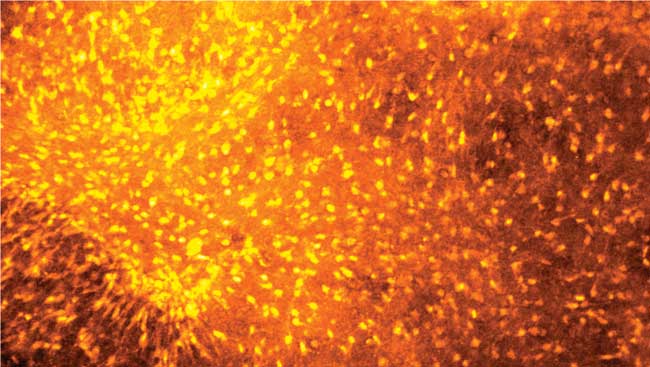 Webinar Scientific ResearchTo understand the function of the brain and how its dysfunction leads to brain diseases, it is essential to have a deep understanding of the cell type composition of the brain, how the cell types are connected with each other, and what their roles are in circuit function.Jun 4, 2020
 -
Journal ArticleEarly childhood is a critical period showing experience-dependent changes in brain structure and function. The complex link between the structural connectivity (SC) and functional connectivity (FC) of the brain is of particular interest. However, its relationship with both age and attention in early childhood is not well understood. In this study, children between the ages of 4 and 7, and at a one-year follow-up visit, underwent neuroimaging (diffusion-weighted and passive-viewing functional magnetic resonance imaging) and assessments for selective, sustained, and executive attention. We examined regional graph metrics and SC-FC coupling of the structural and functional networks. Partial least squares (PLS) was used to investigate longitudinal brain measure changes and cross-sectional associations with age and attention. We observed longitudinal changes in functional graph metrics and age-related decreases in SC modularity. Region-wise graph analyses revealed variable brain-behaviour relationships across t...Jul 14, 2025




