



Filter
-
(133)
-
(733)
-
(4)
-
(1)
-
(47833)
-
(91)
-
(25)
-
(14)
-
(433)
-
(7)
-
(182)
-
(8)
-
(33)
-
(17)
-
(7)
-
(9)
-
(9)
-
(5)
-
(21)
-
(8)
-
(12)
-
(9)
-
(3)
-
(10)
-
(10)
-
(56)
-
(45)
-
(12)
-
(3)
-
(7)
-
(6)
-
(5)
-
(8)
-
(7)
-
(11)
-
(58)
-
(13)
-
(30)
-
(8)
-
(5)
-
(10)
-
(5)
-
(15)
-
(4)
1811 - 1820
of 52756 results
-
 Webinar Scientific ResearchProper data handling standards, including appropriate use of statistical tests are integral to rigorous and reproducible neuroscience research. Training in quantitative neuroscience is a specific area of emphasis for the BRAIN Initiative, and rigorous statistical analysis methods are included in the recent Proposed Principals and Guidelines for Reporting Preclinical Research endorsed by NIH and multiple scientific associations, journals, and societies. This webinar — the third in SfN’s Promoting Awareness and Knowledge to Enhance Scientific Rigor in Neuroscience series — will cover best practices in post-experimental data analysis.Apr 22, 2016
 -
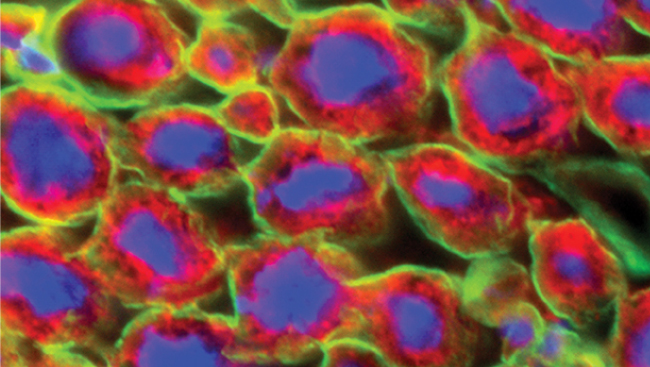 Article Scientific ResearchCircadian rhythms are altered by the aging process in humans and many other organisms.Apr 21, 2016
 -
 Journal ArticleHere we test the stochastic dynamic operator (SDO) as a new framework for describing physiological signal dynamics relative to spiking or stimulus events. The SDO is a natural extension of existing spike-triggered average (STA) or stimulus-triggered average techniques currently used in neural analysis. It extends the classic STA to cover state-dependent and probabilistic responses where STA may fail. In simulated data, SDO methods were more sensitive and specific than the STA for identifying state-dependent relationships. We have tested SDO analysis for interactions between electrophysiological recordings of spinal interneurons, single motor units, and aggregate muscle electromyograms (EMG) of major muscles in the spinal frog hindlimb. When predicting target signal behavior relative to spiking events, the SDO framework outperformed or matched classical spike-triggered averaging methods. SDO analysis permits more complicated spike–signal relationships to be captured, analyzed, and interpreted visually and i...Nov 1, 2024
 -
 Journal ArticleSuccessful behavior depends on the attentional state and other factors related to decision-making, which may modulate neuronal activity differently. Here, we investigated whether attentional state and behavioral outcome (i.e., whether a target is detected or missed) are distinguishable using the power and phase of local field potential recorded bilaterally from area V4 of two male rhesus monkeys performing a cued visual attention task. To link each trial's outcome to pairwise measures of attention that are typically averaged across trials, we used several methods to obtain single-trial estimates of spike count correlation and phase consistency. Surprisingly, while attentional location was best discriminated using gamma and high-gamma power, behavioral outcome was best discriminated by alpha power and steady-state visually evoked potential. Power outperformed absolute phase in attentional/behavioral discriminability, although single-trial gamma phase consistency provided reasonably high attentional discrimi...Nov 1, 2024
 -
 Journal ArticleThe cortico-basal ganglia loop has traditionally been conceptualized as consisting of three distinct information networks: motor, limbic, and associative. However, this three-loop concept is insufficient to comprehensively explain the diverse functions of the cortico-basal ganglia system, as emerging evidence suggests its involvement in sensory processing, including the auditory systems. In the present study, we demonstrate the auditory cortico-basal ganglia loop by using transgenic mice and viral-assisted labelings. The caudal part of the external globus pallidus (GPe) emerged as a major output nucleus of the auditory cortico-basal ganglia loop with the cortico-striato-pallidal projections as its input pathway and pallido-cortical and pallido–thalamo–cortical projections as its output pathway. GABAergic neurons in the caudal GPe dominantly innervated the nonlemniscal auditory pathway. They also projected to various regions, including the substantia nigra pars lateralis, cuneiform nucleus, and periaqueduct...Nov 1, 2024
 -
 Journal ArticleThe growing field of social neuroscience is reliant on the development of robust, ecologically valid paradigms for simulating social interaction and measuring social cognition in highly controlled laboratory settings. Perspective taking is a key component of social cognition, and accordingly several paradigms aimed at measuring perspective taking exist. A relatively novel paradigm is the ball detection task, in which participants and a virtual agent form independent beliefs about the presence of a target stimulus behind an occluder. Previous studies have shown that incongruent trials (in which the participant's and the agent's beliefs differ) affect participant reaction times and elicit increased neural activity in the so-called mentalizing network. This paradigm has important advantages over previous ones, in that experimental conditions can be fully randomized, and ceiling effects are not found even for adult populations. Here, we combined this paradigm with a stress induction and a nonstressful control ...Nov 1, 2024
 -
 Journal ArticleEach olfactory cortical hemisphere receives ipsilateral odor information directly from the olfactory bulb and contralateral information indirectly from the other cortical hemisphere. Since neural projections to the olfactory cortex (OC) are disordered and nontopographic, spatial information cannot be used to align projections from the two sides like in the visual cortex. Therefore, how bilateral information is integrated in individual cortical neurons is unknown. We have found, in mice, that the odor responses of individual neurons to selective stimulation of each of the two nostrils are significantly correlated, such that odor identity decoding optimized with information arriving from one nostril transfers very well to the other side. Nevertheless, these aligned responses are asymmetric enough to allow decoding of stimulus laterality. Computational analysis shows that such matched odor tuning is incompatible with purely random connections but is explained readily by Hebbian plasticity structuring bilatera...Nov 1, 2024
 -
 Journal ArticleIn the article “Learning to Choose: Behavioral Dynamics Underlying the Initial Acquisition of Decision-Making,” by Samantha R. White, Michael W. Preston, Kyra Swanson, and Mark Laubach …Nov 1, 2024
 -
 Journal ArticleImpulsive individuals excessively discount the value of delayed rewards, and this is thought to reflect deficits in brain regions critical for impulse control such as the anterior cingulate cortex (ACC). Delay discounting (DD) is an established measure of cognitive impulsivity, referring to the devaluation of rewards delayed in time. This study used male Wistar rats performing a DD task to test the hypothesis that neural activity states in ACC ensembles encode strategies that guide decision-making. Optogenetic silencing of ACC neurons exclusively increased impulsive choices at the 8 s delay by increasing the number of consecutive low-value, immediate choices. In contrast to shorter delays where animals preferred the delay option, no immediate or delay preference was detected at 8 s. These data suggest that ACC was critical for decisions requiring more deliberation between choice options. To address the role of ACC in this process, large-scale multiple single-unit recordings were performed and revealed that...Nov 1, 2024
 -
 Journal ArticleThe complexity of natural environments requires highly flexible mechanisms for adaptive processing of single and multiple stimuli. Neuronal oscillations could be an ideal candidate for implementing such flexibility in neural systems. Here, we present a framework for structuring attention-guided processing of complex visual scenes in humans, based on multiplexing and phase coding schemes. Importantly, we suggest that the dynamic fluctuations of excitability vary rapidly in terms of magnitude, frequency and wave-form over time, i.e., they are not necessarily sinusoidal or sustained oscillations. Different elements of single objects would be processed within a single cycle (burst) of alpha activity (7–14 Hz), allowing for the formation of coherent object representations while separating multiple objects across multiple cycles. Each element of an object would be processed separately in time—expressed as different gamma band bursts (>30 Hz)—along the alpha phase. Since the processing capacity per alpha cycle is...Nov 1, 2024




