



Filter
-
(133)
-
(733)
-
(4)
-
(1)
-
(47832)
-
(91)
-
(25)
-
(14)
-
(433)
-
(7)
-
(181)
-
(8)
-
(33)
-
(17)
-
(7)
-
(9)
-
(9)
-
(5)
-
(21)
-
(8)
-
(12)
-
(9)
-
(3)
-
(10)
-
(10)
-
(56)
-
(45)
-
(12)
-
(3)
-
(7)
-
(6)
-
(5)
-
(8)
-
(7)
-
(11)
-
(58)
-
(13)
-
(30)
-
(8)
-
(5)
-
(10)
-
(5)
-
(14)
-
(4)
1301 - 1310
of 52753 results
-
 Journal ArticleEarly psychosis (EP) is a critical period for psychotic disorders during which the brain undergoes rapid and significant functional and structural changes(Shinn et al., 2017). The Human Connectome Project (HCP) is a global effort to map the human brain's connectivity in health and disease. Here we focus on HCP-EP subjects (i.e., those within five years of the initial psychotic episode) to determine macro- and micro-structural alterations in EP (HCP-EP sample, n=179: EP, n=123, Controls, n=56) and their association with clinical outcomes (i.e., symptoms severity) in HCP-EP. We carried out analyses of Deformation-Based-Morphometry (DBM), scalar indices from the Diffusion Tensor Imaging (DTI), and Tract-Based Spatial Statistics (TBSS). Lastly, we conducted correlation analyses focused on the midbrain (DBM and DTI) to examine associations between its structure and clinical symptoms. Our results show that the midbrain displays robust alteration in its structure (DBM and DTI) in the voxel-based analysis. Complim...Mar 3, 2025
 -
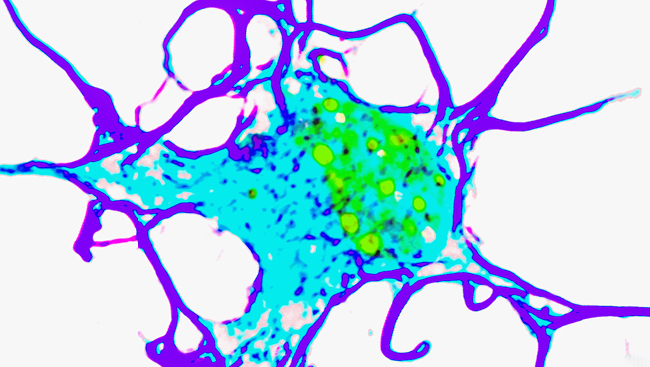 Article Scientific ResearchOrganelles are specialized subcellular structures that serve specific functions in all eukaryotic cells.May 23, 2018
 -
 Annual Meeting Video OutreachNeuroscience research regularly intersects with concepts of human nature, identity, free will, and other philosophical and religious topics. This Neuroscience 2017 Social Issues Roundtable explores paradigms for constructive engagement with diverse and religious audiences. Panelists examine tensions and domains of confluence between scientific and faith perspectives, the underlying values and assumptions in scientific research, and the role of cross-cultural dialogue on science education, practice and policy.May 22, 2018
 -
 Article Scientific ResearchMaterial below summarizes the article, Working Memory Replay Prioritizes Weakly Attended Events, published on August 14, 2017, in eNeuro and authored by Anna Jafarpour, Will Penny, Gareth Barnes, Robert T. Knight, and Emrah Duzel. Working memory is a system with limited capacity that supports keeping information in mind for a short duration. Two important questions are: One, what are the mechanisms by which information is retained during the gap between encoding and recall (that is, the maintenance period), and two, how is information within working memory prioritized? These are often studied with a cuing procedure in which subjects are prompted to focus on one item. For example, if an event in a sequence of three events is cued, the cued event can be decoded during maintenance. In this study, we investigated how the information about a sequence of multiple events is retained without cueing.May 17, 2018
 -
Journal ArticleEvolutionary pressures adapted insect chemosensation to their respective physiological needs and tasks in their ecological niches. Solitary nocturnal moths rely on their acute olfactory sense to find mates at night. Pheromones are detected with maximized sensitivity and high temporal resolution through mechanisms that are mostly unknown. While the inverse topology of insect olfactory receptors and heteromerization with the olfactory receptor coreceptor suggest ionotropic transduction via odorant-gated receptor–ion channel complexes, contradictory data propose amplifying G-protein–coupled transduction. Here, we used in vivo tip-recordings of pheromone-sensitive sensilla of male Manduca sexta hawkmoths at specific times of day (rest vs activity). Since the olfactory receptor neurons distinguish signal parameters in three consecutive temporal windows of their pheromone response (phasic; tonic; late, long-lasting), respective response parameters were analyzed separately. Disruption of G-protein–coupled transdu...Mar 1, 2025
-
 Journal ArticleWhile ketamine, an NMDA receptor antagonist, is effective in treating major depression, studies have not addressed the safety of repeated ketamine infusions in depressed patients with comorbid alcohol use disorder (AUD). In this study, we aimed to determine whether a history of chronic social isolation and alcohol exposure alter the reinforcing properties of ketamine in male and female rats. Rats were pair-housed or socially isolated for 12 weeks and underwent intermittent access to 20% alcohol. Subsequently, rats underwent intravenous ketamine self-administration under a fixed ratio 1 schedule, followed by extinction training and one session of cue-induced reinstatement. Dendritic spine morphology was examined in the nucleus accumbens, an important area implicated in reward and motivation. Our results show that females self-administered more ketamine than males, a history of alcohol increased ketamine intake in females, and a history of isolation or alcohol independently increased ketamine intake in males...Mar 1, 2025
 -
 Journal ArticleMaintenance of normal structure of the enteric nervous system (ENS), which regulates key gastrointestinal functions, requires robust homeostatic mechanisms, since by virtue of its location within the gut wall, the ENS is subject to constant mechanical, chemical, and biological stressors. Using transgenic and thymidine analog-based experiments, we previously discovered that neuronal turnover—where continual neurogenesis offsets ongoing neuronal loss at steady state—represents one such mechanism. Although other studies confirmed that neuronal death continues into adulthood in the myenteric plexus of the ENS, the complicated nature of thymidine analog presents challenges in substantiating the occurrence of adult neurogenesis. Therefore, it is vital to employ alternative, well-recognized techniques to substantiate the existence of adult enteric neurogenesis in the healthy gut. Here, by using established methods of assessing nuclear DNA content and detecting known mitotic marker phosphor-histone H3 (pH3) in Hu+...Mar 1, 2025
 -
 Journal ArticleIn models of visual spatial attention control, it is commonly held that top–down control signals originate in the dorsal attention network, propagating to the visual cortex to modulate baseline neural activity and bias sensory processing. However, the precise distribution of these top–down influences across different levels of the visual hierarchy is debated. In addition, it is unclear whether these baseline neural activity changes translate into improved performance. We analyzed attention-related baseline activity during the anticipatory period of a voluntary spatial attention task, using two independent functional magnetic resonance imaging datasets and two analytic approaches. First, as in prior studies, univariate analysis showed that covert attention significantly enhanced baseline neural activity in higher-order visual areas contralateral to the attended visual hemifield, while effects in lower-order visual areas (e.g., V1) were weaker and more variable. Second, in contrast, multivariate pattern anal...Mar 1, 2025
 -
 Journal ArticleSingular strategies for promoting axon regeneration and motor recovery after spinal cord injury (SCI) have been attempted with limited success. For instance, the deletion of RhoA and phosphatase and tensin homolog ( Pten ) (an extrinsic and intrinsic modulating factor, respectively) in corticospinal neurons (CSNs) promotes axon sprouting after thoracic SCI; however, it is unable to restore motor function. Here, we examine the effects of combining RhoA/Pten deletion in CSNs with chemogenetic neuronal stimulation on axonal growth and motor recovery after SCI in mice. We find that this combinatorial approach promotes greater axonal growth and presynaptic bouton formation in CSNs within the spinal cord compared with RhoA ; Pten deletion alone. Furthermore, chemogenetic neuronal stimulation of RhoA ; Pten -deleted CSNs improves forelimb performance in behavioral tasks after SCI compared with RhoA ; Pten deletion alone. These results demonstrate that combination therapies pairing genetic modifications with neuro...Mar 1, 2025
 -
 Journal ArticleRecent findings have shifted the view of cholecystokinin (CCK) from being a cellular neuronal marker to being recognized as a crucial neuropeptide pivotal in synaptic plasticity and memory processes. Despite its now appreciated importance in various brain regions and abundance in the basal ganglia, its role in the striatum, which is vital for motor control, remains unclear. This study sought to fill this gap by performing a comprehensive investigation of the role of CCK in modulating striatal medium spiny neuron (MSN) membrane properties, as well as the secondary somatosensory cortex S2 to MSN synaptic transmission and plasticity in rodents. Using in vivo optopatch-clamp recording in mice on identified MSNs, we showed that the application of CCK receptor Type 2 (CCK2R) antagonists decreases corticostriatal transmission in both direct and indirect pathway MSNs. Moving to an ex vivo rat preparation to maximize experimental access, we showed that CCK2R inhibition impacts MSN membrane properties by reducing sp...Mar 1, 2025




