



Filter
-
(133)
-
(733)
-
(4)
-
(1)
-
(47830)
-
(91)
-
(25)
-
(14)
-
(433)
-
(7)
-
(181)
-
(8)
-
(33)
-
(17)
-
(7)
-
(9)
-
(9)
-
(5)
-
(21)
-
(8)
-
(12)
-
(9)
-
(3)
-
(10)
-
(10)
-
(56)
-
(45)
-
(12)
-
(3)
-
(7)
-
(6)
-
(5)
-
(8)
-
(7)
-
(11)
-
(58)
-
(13)
-
(30)
-
(8)
-
(5)
-
(10)
-
(5)
-
(14)
-
(4)
841 - 850
of 52751 results
-
 Journal ArticleAutonomic imbalance—particularly reduced activity from brainstem parasympathetic cardiac vagal neurons (CVNs)—is a major characteristic of many cardiorespiratory diseases. Therapeutic approaches to selectively enhance CVN activity have been limited by the lack of defined, translationally relevant targets. Previous studies have identified an important excitatory synaptic pathway from oxytocin (OXT) neurons in the paraventricular nucleus of the hypothalamus to brainstem CVNs, suggesting that OXT could provide a key selective excitation of CVNs. In clinical studies, intranasal OXT has been shown to increase parasympathetic cardiac activity, improve autonomic balance, and reduce obstructive event durations and oxygen desaturations in obstructive sleep apnea patients. However, the mechanisms by which activation of hypothalamic OXT neurons, or intranasal OXT, enhance brainstem parasympathetic cardiac activity remain unclear. CVNs are located in two cholinergic brainstem nuclei: nucleus ambiguus (NA) and dorsal m...Aug 1, 2025
 -
 Journal ArticleIn the article “A Preprocessing Toolbox for 2-Photon Subcellular Calcium Imaging,” by Anqi Jiang, Chong Zhao, and Mark E. J. …Aug 1, 2025
 -
 Journal ArticleDespite the vivid experience of homogeneous vision, our visual system is inherently endowed with highly inhomogeneous structures. Although the temporal characteristics of visual responses vary with eccentricity, the connection between this variation, the speed of visual processing, and its underlying neurophysiological mechanisms remains a topic of debate. Here, we performed simultaneous recordings of high-precision gaze positions and EEG activity to investigate how foveal and perifoveal stimulations impact reaction times (RTs) and visual evoked potentials (VEPs). Volunteers discriminated the position and orientation of a U-shaped figure with the aperture facing either upward or downward. Stimuli were presented briefly (50 ms) either in the foveola (0.33°) or perifovea (6.5°), to the right or left of the fixation point. Stimulus size in the perifovea condition was adjusted according to the cortical magnification factor (stimulus size: 0.2° and 0.75° for the foveola and perifovea conditions, respectively). ...Aug 1, 2025
 -
 Journal ArticleInteroception and associated subjective states shape adaptive behaviors. In humans, interoceptive information is hierarchically processed in the insular cortex (IC), being integrated first in the posterior IC (PIC) and then processed in the anterior IC (AIC) to generate subjective states. However, it has not been established whether this is the case in other species nor whether utilization of interoceptive states to guide behavior is also specifically associated with functional engagement of the AIC, as suggested by this hierarchical model. We investigated in male Sprague Dawley rats whether the use of pharmacologically induced internal states to guide instrumental behavior in a discrimination task functionally engages the AIC as opposed to the mere experience of such states. Rats trained to use the interoceptive state produced by the centrally acting GABAA receptor antagonist pentylenetetrazol (PTZ) or the peripherally acting β-adrenoreceptor agonist isoproterenol to guide their behavior performed as well...Aug 1, 2025
 -
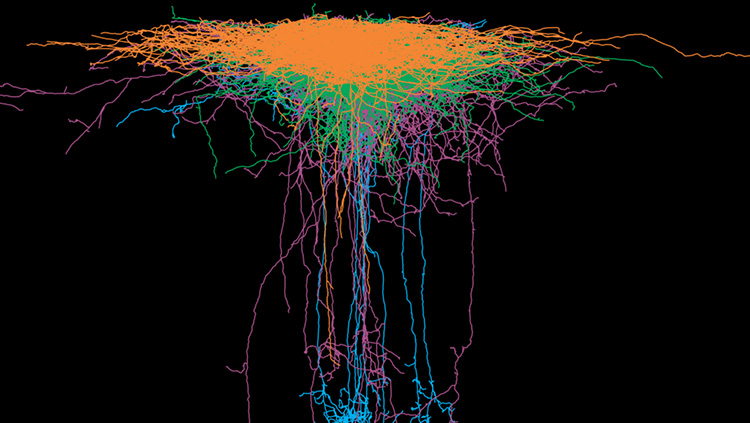 Article Professional DevelopmentThe following is an excerpt from a commentary in the Journal of Neuroscience, Recognizing Team Science Contributions in Academic Hiring, Promotion, and Tenure, that originated from two Neuroscience 2019 Professional Development workshops (watch them here and here). Read the full commentary here. The vision of a scientist as a lone investigator reaching an epiphany is a widely cherished narrative. Consistent with this ideal, single author papers were frequent 50 years ago, when the Society for Neuroscience started. However, the basic and translational questions and the public health challenges being addressed in current neuroscience research are increasingly interdisciplinary and multidimensional, and so the vast majority of significant studies require a team of investigators, working together collaboratively. This trend is evident in the increased number of authors per citation and the rapid expansion of collaborative grants. Unfortunately, academic culture has not yet caught up with the direction of the science. Hiring, promotions, and peer review tend to credit the first and last authors, with little consideration that the work required an entire team. At the 2019 SfN annual meeting, there were two workshops addressing team science. One workshop highlighted the challenges in team science for trainees, while the other focused on ways in which academic leaders could change our procedures to address the disconnect between overly narrow attention to individual first and last authorship in hiring, promotion, and tenure versus the collaborative nature of current research. This Commentary distills the ideas and recommendations brought forth by these workshops, to advocate for changes in academic recognition.Sep 1, 2020
 -
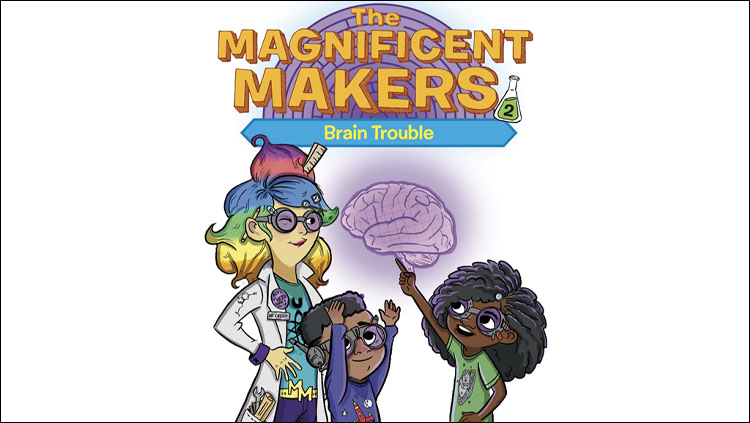 Article Career PathsSince I was a child, I’ve had two passions: science and storytelling. For the vast majority of my career, I’ve pursued the former. I majored in neuroscience at Smith College and went on to earn my doctorate at Northwestern University. I recently completed my postdoctoral training at Columbia and will soon open my independent laboratory in the Department of Physiology and Membrane Biology at the University of California Davis. Sounds like a typical climb up the academic ladder, right? Yet despite this traditional career trajectory, my passion for storytelling was ever-present. After nearly a decade as a scientist, I decided to combine it with my longstanding commitment to science education as a children’s book writer. My debut science adventure series, The Magnificent Makers, was recently published by Random House Children’s Books. As I delved into the world of writing for kids, I discovered four key aspects of my scientific training that were directly applicable to my journey as an author.Sep 1, 2020
 -
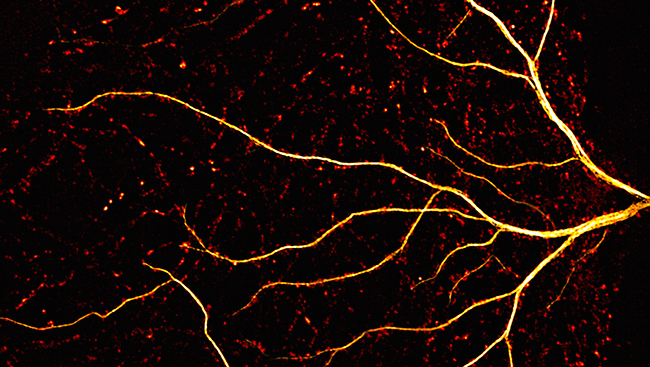 Article Professional DevelopmentThe history of Artificial Intelligence (AI) is inextricably intertwined with the history of neuroscience. Since the early days of AI, scientists turned to the human brain as a source of guidance for the development of intelligent machines. Unsurprisingly, many pioneers of AI such as Warren McCulloch were trained in the sciences of the brain. Modern AI borrowed most of its vocabulary from neurology and psychology. For instance, computational models consisting of networks of interconnected units —one of the most common approaches to AI— are called Artificial Neural Networks (ANN). Each unit is called an “artificial neuron.” Several areas of research in AI are labelled through neuropsychological categories such as computer vision, machine learning, natural language processing etc. It’s not just a matter of terminology. ANNs, for example, are actually inspired by and based on the functioning of biological neural networks that constitute animal nervous systems.Aug 27, 2020
 -
 Article CommunityPeople often ask me, “Can you have it all?” I don’t know if you can, but I’m certainly having a good time trying. Here’s how.Aug 26, 2020
 -
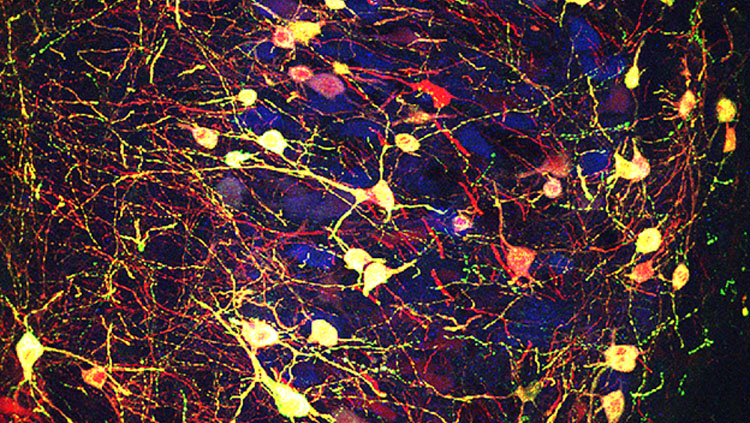 Article OutreachHuiquan Li is an assistant project scientist in the Spitzer Lab at the University of California, San Diego, where she studies neurotransmitter plasticity in the adult mouse brain and has worked since completing her graduate studies in China. Talented in strategizing how to get complex experiments to work and passionate about sharing neuroscience with anyone, in this interview she shares her advice for designing beautiful experiments. She also shares two anecdotes demonstrating that one-on-one interactions can improve individual lives while at the same time increasing understanding of the relevance of neuroscience to everyone. This interview is a complement to SfN's podcast series, History of SfN: 50th Anniversary. Guests on the podcast were asked to nominate individuals whose careers are making positive cultural or scientific impacts that will shape the next 50 years of neuroscience. Huiquan Li was nominated by Nick Spitzer, Atkinson Family Chair Distinguished Professor of Biological Sciences at University of California, San Diego.Aug 19, 2020
 -
Journal ArticleThe development of motor control over sensory organs is a critical milestone, enabling active exploration and shaping of the sensory environment. Whether the onset of sensory organ motor control directly influences the development of corresponding sensory cortices remains unknown. Here, we confirm and exploit the late onset of whisking behavior in mice to address this question in the somatosensory system. Using ex vivo electrophysiology, we describe a transient increase in the intrinsic excitability of excitatory neurons in layer IV of the barrel cortex, which processes whisker input, immediately following the onset of active whisking on postnatal days 13 and 14. This increase in neuronal gain is specific to layer IV, independent of changes in synaptic strength, and requires prior sensory experience. Further, these effects are not expressed in inhibitory interneurons in barrel cortex. The transient increase in excitability is not evident in layer II/III of barrel cortex or in the visual cortex upon eye ope...Jul 29, 2025




