



Filter
-
(133)
-
(733)
-
(4)
-
(1)
-
(47830)
-
(91)
-
(25)
-
(14)
-
(433)
-
(7)
-
(181)
-
(8)
-
(33)
-
(17)
-
(7)
-
(9)
-
(9)
-
(5)
-
(21)
-
(8)
-
(12)
-
(9)
-
(3)
-
(10)
-
(10)
-
(56)
-
(45)
-
(12)
-
(3)
-
(7)
-
(6)
-
(5)
-
(8)
-
(7)
-
(11)
-
(58)
-
(13)
-
(30)
-
(8)
-
(5)
-
(10)
-
(5)
-
(14)
-
(4)
411 - 420
of 52751 results
-
 Article Career PathsIn neuroscience, flexibility is esteemed as a direct reflection of mature executive function. As a trainee, a mentor told me to be the bonsai version of the oak. The oak is strong, but if it doesn’t bend when the wind blows, it will be easily uprooted. The bonsai, although small, moves with the wind, adapting to changes. Combine the two, and you will be strong and nimble.Apr 7, 2023
 -
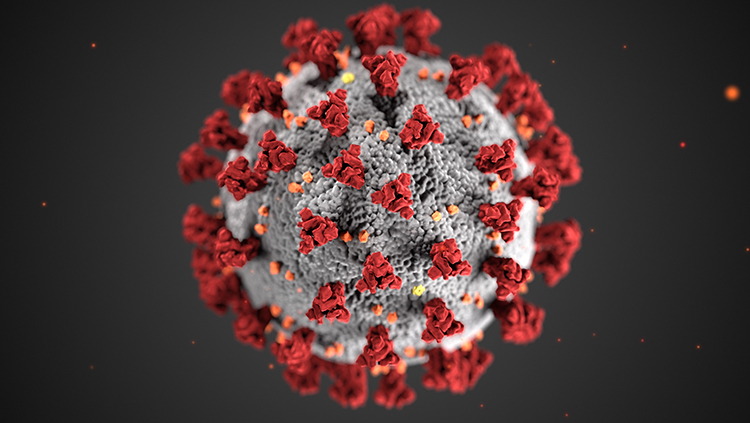 Article Scientific ResearchThe COVID-19 pandemic will be long remembered because of the death toll it caused worldwide and how it impacted our everyday lives. It is also still remembered because of some long-term effects of the viral infection which have been coined as “long COVID”.Apr 7, 2023
 -
 Journal ArticleMolecular tools available for rodent research enable detailed interrogation of the neural cell types and circuits that give rise to perception and decision-making during complex behaviors. To take full advantage of these molecular tools and successfully define causal relationships between neural function and overt actions during learning, there is a need for low-cost behavioral platforms with inherent flexibility in the implementation of task details. We present a behavioral platform capable of executing both head-fixed and freely moving task designs. The platform incorporates a user-interactive GUI that allows parameters to be adjusted on-line, during an acquisition session. Task metrics and performance indicators are acquired and organized into a standardized output, enabling single users to quickly master data analysis across a variety of task designs. To demonstrate the flexibility of the platform, mice of either sex were trained in two discrimination tasks: a head-fixed two-choice task as well as a fr...Feb 24, 2026
 -
 Article Professional DevelopmentNeuronline is a benefit of SfN membership. Renew your membership now to make sure you don’t lose access.Mar 29, 2023
 -
 Article OutreachAiming to teach broader views of science and less subject matter specialization, we created a new biomedical graduate science program that would bring the “Ph”, i.e., the philosophical foundations back into PhD, as well as master’s level training.Mar 17, 2023
 -
Journal ArticleImplicit adaptation recalibrates movements based on sensory prediction errors. It is often characterized as automatic and resource-independent, suggesting that it is insulated from cognitive influence. Here, we asked whether implicit adaptation is sensitive to goal-directed attentional demands imposed by a concurrent visual task. Across two experiments, we used clamped visual feedback to measure implicit adaptation while human adults (49 female, 23 male) monitored a rapidly changing visual stream for targets. In Experiment 1, participants performing the visual task showed modest early enhancement in implicit adaptation relative to a single-task control condition. In Experiment 2, adding response-contingent feedback to the visual task led to stronger and more sustained enhancement. Visual task accuracy and implicit adaptation were uncorrelated, arguing against resource competition. Model-based analyses revealed elevated error sensitivity under dual-task conditions, with individual differences reflecting an ...Feb 19, 2026
-
Journal ArticleReward prediction errors (RPEs) guide learning by comparing expected and obtained outcomes. In mammals, ventral tegmental area (VTA) activity is closely linked to RPE-like signaling, yet how avian VTA dynamics evolve during reinforcement learning remains less well characterized. Here we recorded VTA spiking in pigeons (2 female and 1 male) performing a cue-guided operant task in which a green cue (Cue+) predicted reward contingent on a key peck, whereas a red cue (Cue−) was unrewarded. Using a 16-channel microwire array, we analyzed pooled channel-level multi-unit activity (MUA) aligned to task events. Across sessions, Cue+ trials showed a learning-related redistribution of event-locked modulation: outcome-locked activity was more prominent early in training, while cue-locked modulation became stronger as performance stabilized, consistent with a temporal-difference–like shift of prediction-related signals. Cue− trials were sparse after early learning and showed limited cue-locked modulation in the availab...Feb 19, 2026
-
Journal ArticleRepeated restraint stress (RRS) in rats impairs cognitive flexibility, particularly when faced with additional mild acute stress (AS). We tested the hypothesis that this impairment is associated with altered dopaminergic activity in the dorsal striatum (DS) driven by corticotropin-releasing-factor receptor type 1 (CRFR1) in the substantia nigra pars compacta (SNpc). 62 male rats received RRS or handling for 14 days, before training on a two-action, two-outcome instrumental conditioning task. Initial learning was assessed using an outcome devaluation test. Cognitive flexibility was assessed by reversing the outcome identities and a second outcome devaluation test, with half the rats in each group receiving AS before reversal training. Dopamine and metabolites were quantified in the DS, and CRFR1 mRNA was quantified in the SNpc. In experiment 2, SNpc CRFR1 was pharmacologically blocked unilaterally before AS and reversal training in 32 male and 32 female rats. Increased dopaminergic activity in the DS and SN...Feb 17, 2026
-
Journal ArticleMicroglia, resident immune sentinels in the brain, are crucial in responding to tissue damage, infection, damage signals like purines (ATP/ ADP), and clearing cellular debris. It is currently unknown how microglial reactivity progresses and contributes to seizure development following Theiler’s Murine Encephalomyelitis Virus (TMEV) infection. Previously, it has been demonstrated that purinergic signaling in microglia is disrupted in the hippocampus of TMEV-infected mice. However, whether reactive cortical microglia also exhibit changes in purinergic signaling, cytokine levels, and purinergic receptors are unknown. Thus, we seek to evaluate region-based differences in microglial reactivity in the TMEV model. We employed a custom triple transgenic mouse line expressing tdTomato and GCaMP6f under a CX3CR1 Cre promoter and exogenously applied ATP/ADP to acute brain slice preparations from TMEV-infected mice and controls of either sex. Interestingly and in contrast to what is observed in hippocampus, we found t...Feb 16, 2026
-
Journal ArticlePresbycusis, a prevalent neurodegenerative disorder, is characterized by a decline in speech recognition ability. Recent studies have linked presbycusis with cognitive impairments across multiple domains. However, the underlying neurobiological mechanisms between presbycusis and cognitive impairments remain unclear. We assessed pure-tone audiometry thresholds (PTA), speech recognition thresholds (SRT), and cognitive abilities in individuals with presbycusis (24 males and 31 females) and healthy controls (23 males and 32 females). Using magnetic resonance imaging techniques, we calculated the amplitude of low-frequency fluctuations (ALFF) as a measure of functional characterization and gray matter volume (GMV) as a measure of structural characterization. Based on ALFF and GMV, we calculated Functional-Structural Ratio (FSR) to measure the functional-structural coupling. Significant correlations between GMV atrophy and ALFF changed in the putamen, fusiform gyrus, precuneus, and medial superior frontal gyrus ...Feb 16, 2026




