



Filter
-
(133)
-
(733)
-
(4)
-
(1)
-
(47832)
-
(91)
-
(25)
-
(14)
-
(433)
-
(7)
-
(181)
-
(8)
-
(33)
-
(17)
-
(7)
-
(9)
-
(9)
-
(5)
-
(21)
-
(8)
-
(12)
-
(9)
-
(3)
-
(10)
-
(10)
-
(56)
-
(45)
-
(12)
-
(3)
-
(7)
-
(6)
-
(5)
-
(8)
-
(7)
-
(11)
-
(58)
-
(13)
-
(30)
-
(8)
-
(5)
-
(10)
-
(5)
-
(14)
-
(4)
1491 - 1500
of 52753 results
-
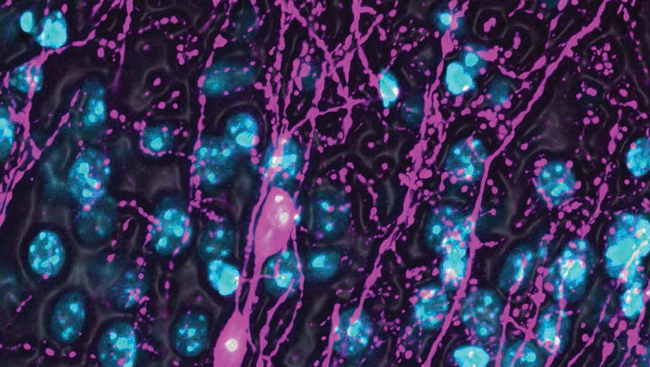 Article Scientific ResearchOur behavior is strongly influenced by the environmental cues around us.Aug 24, 2017
 -
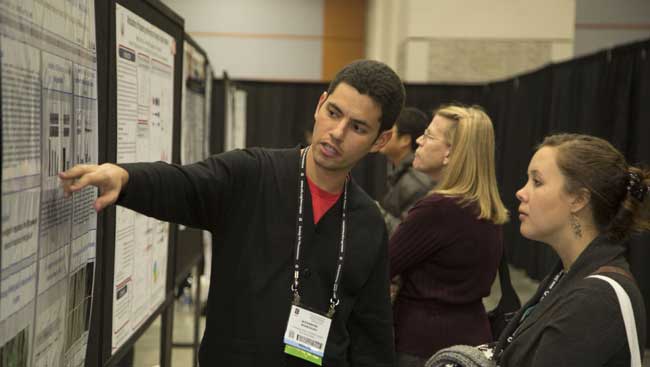 Video DiversityThis is the introductory video in the Implicit Bias Video Series from BruinX, the research and development unit within the University of California, Los Angeles's Office of Equity, Diversity and Inclusion. This video describes how biases and heuristics can influence our decision-making and behavior without us even knowing it.Aug 23, 2017
 -
 Video TrainingProcessing and analyzing massive data sets is a major challenge, but training neuroscientists how to use them is integral to moving the field forward.Aug 23, 2017
 -
 Journal ArticleHuman face categorization has been extensively studied using event-related potentials (ERPs), positing the N170 ERP component as a robust neural marker of face categorization. Recently, the fast periodic visual stimulation (FPVS) approach relying on steady-state visual evoked potentials (SSVEPs) has also been used to investigate face categorization. FPVS studies consistently report strong bilateral SSVEP face categorization responses over the occipito-temporal cortex, with a right hemispheric dominance, closely mirroring the N170 scalp topography. However, it remains unclear whether SSVEP responses can be considered a proxy for the N170 or are driven by different components. To address this question, we recorded electrophysiological signals from observers viewing face and object images during FPVS and ERP paradigms. We quantified the FPVS response in the frequency domain and extracted ERP components, including the P1, N170, and P2, from both the FPVS time domain and ERP paradigms. Our results revealed litt...Jan 14, 2025
 -
Journal ArticleChronic pain is a debilitative disease affecting 1 in 5 adults globally, and is a major risk factor for anxiety (Goldberg and McGee, 2011; Lurie, DI., 2018). Given the current dearth of available treatments for both individuals living with chronic pain and mental illnesses, there is a critical need for research into the molecular mechanisms involved in order to discover novel treatment targets. Cellular homeostasis is crucial for normal bodily functions and investigations of this process may provide better understanding of the mechanisms driving the development of chronic pain. Using the spared nerve injury (SNI) model of neuropathic pain, we found contrasting roles for BECLIN-1 in the development of pain hypersensitivity and anxiety-like behaviors in a sex-dependent manner. Remarkably, we found that male SNI mice with impaired BECLIN-1 function demonstrated heightened mechanical and thermal hypersensitivity compared to male wildtype SNI mice, while female SNI mice with impaired BECLIN-1 function demonstra...Jan 14, 2025
-
Journal ArticleHigh-frequency stimulation (HFS)-induced long-term potentiation (LTP) is generally regarded as a homosynaptic Hebbian-type LTP, where synaptic changes are thought to occur at the synapses that project from the stimulation site and terminate onto the neurons at the recording site. In this study, we first investigated HFS-induced LTP on urethane-anesthetized rats and found that cortical HFS enhances neural responses at the recording site through the strengthening of local connectivity with nearby neurons at the stimulation site, rather than through synaptic strengthening at the recording site. This enhanced local connectivity at the stimulation site leads to increased output propagation, resulting in signal potentiation at the recording site. Additionally, we discovered that HFS can also non-specifically strengthen distant afferent synapses at the HFS site, thereby expanding its impact beyond local neural connections. This form of plasticity exhibits a neo-Hebbian characteristic as it exclusively manifests i...Jan 14, 2025
-
Journal ArticleSelectively stopping individual parts of planned or ongoing movements is an everyday motor skill. For example, while walking in public you may stop yourself from waving at a stranger who you mistook for a friend while continuing to walk. Despite its ubiquity, our ability to selectively stop actions is limited. Canceling one action can delay the execution of other simultaneous actions. This stopping-interference effect on continuing actions during selective stopping may be attributed to a global inhibitory mechanism with widespread effects on the motor system. Previous studies have characterized a transient global reduction in corticomotor excitability by combining brain stimulation with electromyography (EMG). Here, we examined whether global motor inhibition during selective stopping can be measured peripherally and with high temporal resolution using EMG alone. Eighteen participants performed a bimanual anticipatory response inhibition task with their index fingers while maintaining a tonic contraction o...Jan 14, 2025
-
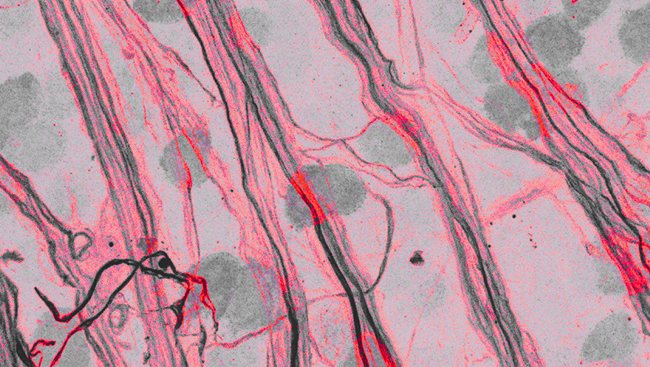 Article Professional DevelopmentPsychotic disorders, including schizophrenia and bipolar disorder with psychotic features, are characterized by noticeable deficits in “normal” behavior accompanied by hallucinations, delusions, paranoia, an early onset (the average age of onset is in the late teens or early twenties), and a derailed life course.Aug 17, 2017
 -
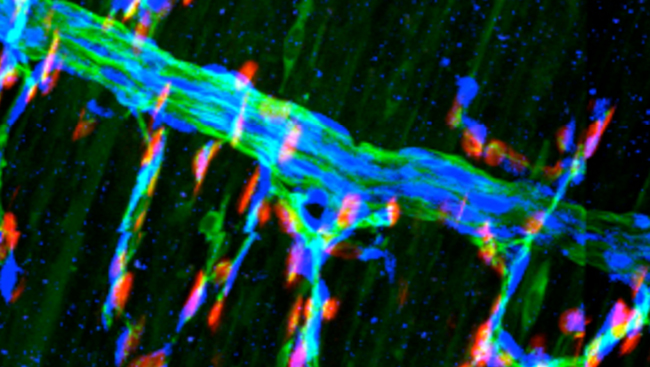 Article Annual Meeting Scientific ResearchTwo types of cells, excitatory and inhibitory neurons, come from distinct lineages during the development of the cortex.Aug 9, 2017
 -
Video Professional DevelopmentWayne Bowen, a professor at Brown University, and Kathryn Reissner, an associate professor at the University of North Carolina School of Medicine, offer tips to scientists looking to start their first lab, and share their personal experiences in launching their labs.Aug 8, 2017




