



Filter
-
(133)
-
(733)
-
(4)
-
(1)
-
(47830)
-
(91)
-
(25)
-
(14)
-
(433)
-
(7)
-
(181)
-
(8)
-
(33)
-
(17)
-
(7)
-
(9)
-
(9)
-
(5)
-
(21)
-
(8)
-
(12)
-
(9)
-
(3)
-
(10)
-
(10)
-
(56)
-
(45)
-
(12)
-
(3)
-
(7)
-
(6)
-
(5)
-
(8)
-
(7)
-
(11)
-
(58)
-
(13)
-
(30)
-
(8)
-
(5)
-
(10)
-
(5)
-
(14)
-
(4)
1361 - 1370
of 52751 results
-
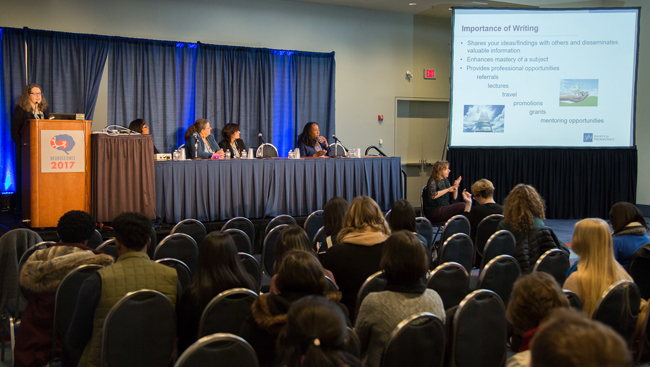 Video Annual Meeting Professional DevelopmentIn this Neuroscience 2017 event, Women in World Neuroscience (WWN), an independent mentoring and networking organization that provides opportunities for neuroscientists across the world, highlights the potential of developing strategic collaborations, identifies funding sources, and provides strategies for establishing successful research networks.Apr 10, 2018
 -
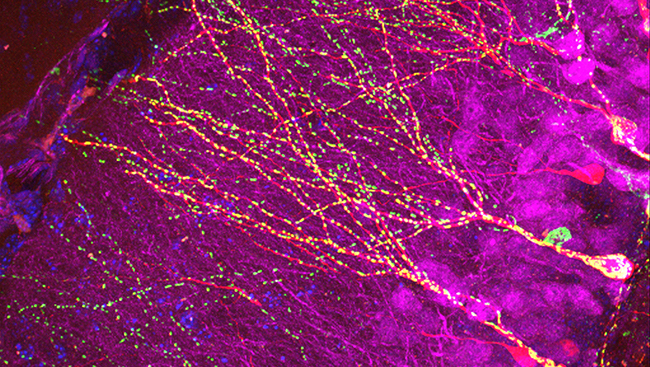 Article Scientific ResearchMaterial below summarizes the article, Problems and Progress Regarding Sex Bias and Omission in Neuroscience Research, published on November 3, 2017, in eNeuro and authored by Tyler R. Will, Stephanie B. Proaño, Anly M. Thomas, Lindsey M. Kunz, Kelly C. Thompson, Laura A. Ginnari, Clay H. Jones, Sarah-Catherine Lucas, Elizabeth M. Reavis, David M. Dorris, and John Meitzen. This study highlights the complex status of sex omission and bias in neuroscience research and provides useful information for decisions regarding policy enactment and enforcement, scientific culture, and individual action. Historically, many neuroscience research articles either neglected to report laboratory animal sex (termed sex omission), or favored one sex over another (termed sex bias, in this case male over female). Documentation of this pattern in neuroscience and other disciplines has prompted intense debate and study, including new scientific findings and regulatory policies. Relevant and high-quality analysis of sex omission and bias in the neuroscience research literature is a crucial component for informed discussion and decision making. Before our study, the last published review of sex bias and omission in the neuroscience literature did not analyze articles published after 2011. Furthermore, how sex omission and bias varies with animal species and scientific journals has been largely unexplored.Apr 5, 2018
 -
 Annual Meeting Video Professional DevelopmentAs the field of neuroscience evolves, NSF is focusing its training and research support towards team-based interdisciplinary strategies to understand how healthy brains and neural circuits function. This Neuroscience 2017 event is designed to inform educational and research leaders at all career stages about national and international funding opportunities that emphasize interdisciplinary neuroscience training and research.Apr 5, 2018
 -
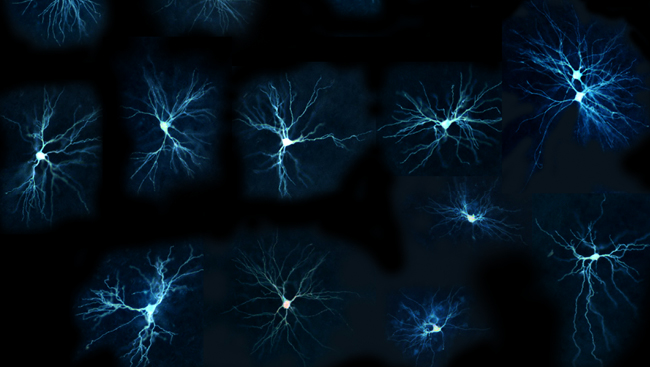 Article Scientific ResearchDespite dopamine being one of the most actively studied neurotransmitters in the brain, there is surprisingly little consensus on what specifically this molecule contributes to behavior in normal animals.Apr 3, 2018
 -
 Article Professional DevelopmentBeing a researcher is exciting and incredibly fulfilling. It can also be challenging, especially as funding, jobs in academia, and tenure are harder to secure. One of the ways to build a successful career despite these challenges is to be proactive and intentional about publishing. That’s because publishing research and disseminating the results of your hard work are just as important as doing the actual experiments. What you publish, how often you publish, and where you publish are essential considerations.Apr 1, 2018
 -
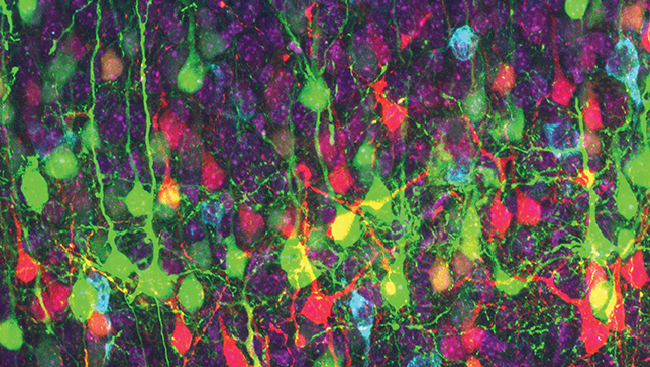 Article Scientific ResearchMaterial below summarizes the article, White Matter Structure in Older Adults Moderates the Benefit of Sleep Spindles on Motor Memory Consolidation, published online October 30, 2017 in The Journal of Neuroscience and authored by Bryce A. Mander, Alyssa H. Zhu, John R. Lindquist, Sylvia Villeneuve, Vikram Rao, Brandon Lu, Jared M. Saletin, Sonia Ancoli-Israel, William J. Jagust, and Matthew P. Walker. Best described by the classic adage “practice makes perfect,” procedural memory encapsulates the ability to acquire new skills through repeated training. This training alters how our brains and bodies process information and perform specific behaviors, so when we carry out the same actions in the future, it will be “like riding a bike.” Many studies show older adults are less able to learn new motor skills. Why this is so remains unclear, but recent findings suggest how well an older individual sleeps may matter. Established literature has demonstrated sleep critically supports the consolidation of motor skills and this sleep benefit appears to be absent in older adults. The loss of this sleep benefit parallels a decline in sleep quality, with sleep being less rich in the brain oscillations known to support motor memory. One such oscillation, called the sleep spindle, is generated in a specific nucleus in the thalamus that governs how sensory and motor information are relayed between the brain and the body. Through their expression, sleep spindles selectively modify connections within brain circuits, ultimately cementing learned skills into the brain to support adaptive behavior in the future.Mar 29, 2018
 -
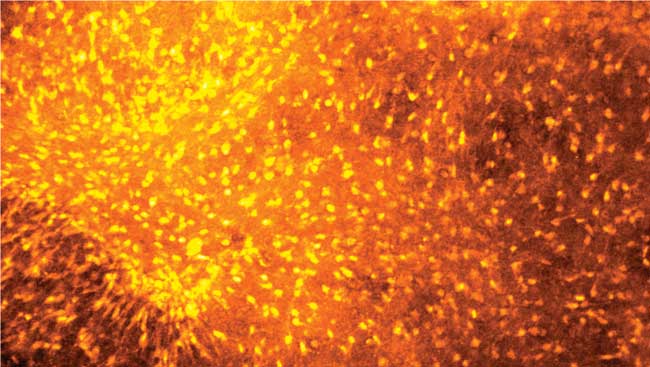 Video Annual Meeting Scientific ResearchThis Short Course from Neuroscience 2017 discusses the mediators, mechanisms, and functional implications of neural-immune crosstalk in health and disease. Researchers highlight new tools and approaches with which to study and model neural-immune signaling in different contexts, including human disease. Topics covered include: interactions between the brain and the periphery, reactive gliosis and glymphatic-lymphatic connections, microglia function and dysfunction, microbiome and gut-brain axis, and immune mechanisms of synapse loss in development and disease.Mar 28, 2018
 -
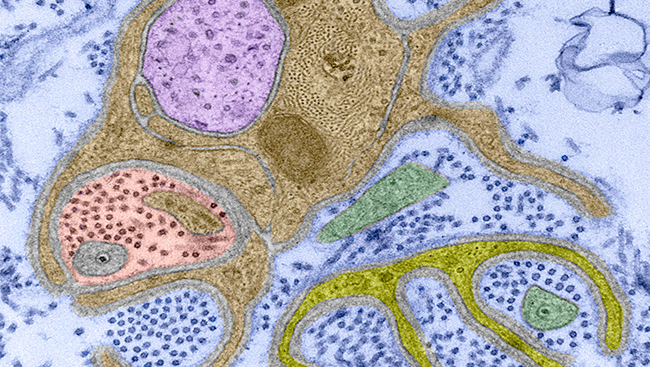 Article Scientific ResearchMaterial below summarizes the article, Obesity Accelerates Alzheimer-Related Pathology in APOE4 but not APOE3 Mice, published on June 12, 2017, in eNeuro and authored by V. Alexandra Moser and Christian J. Pike. Alzheimer’s disease (AD) is a complex, multi-factorial disease for which a number of genetic, environmental, and lifestyle risk factors have been identified. For the vast majority of those afflicted, AD does not result from any single factor, but rather the interactive effects of multiple risk factors. Despite the importance of interactions among risk factors, our understanding of how the combination of these variables affects development and progression of AD is poorly understood. In this paper, we investigated the gene-environment interaction between two well-established AD risk factors, apolipoprotein E4 (APOE4) and obesity. APOE4 is the most significant genetic risk factor for late-onset AD. APOE4 is not a genetic mutation, but rather a polymorphism. Specifically, the APOE gene has three normal alleles termed APOE2, APOE3, and APOE4, which code for proteins that differ at only two amino acids.Mar 22, 2018
 -
 Video Annual Meeting OutreachIn today's environment, animal researchers need to engage with different audiences to promote understanding of and the need for animal models. However, scientists often face specific challenges when discussing this matter with the public, policymakers, and the press. This interactive panel from Neuroscience 2017 provides engagement strategies and showcases how to connect with various audiences on the importance and benefits of animal research.Mar 21, 2018
 -
 Article Professional DevelopmentThe qualities of a good mentor include effective communication, trust, flexibility, kindness, patience, tolerance, trust, and transparency.Mar 20, 2018




