



Filter
-
(133)
-
(733)
-
(4)
-
(1)
-
(47830)
-
(91)
-
(25)
-
(14)
-
(433)
-
(7)
-
(181)
-
(8)
-
(33)
-
(17)
-
(7)
-
(9)
-
(9)
-
(5)
-
(21)
-
(8)
-
(12)
-
(9)
-
(3)
-
(10)
-
(10)
-
(56)
-
(45)
-
(12)
-
(3)
-
(7)
-
(6)
-
(5)
-
(8)
-
(7)
-
(11)
-
(58)
-
(13)
-
(30)
-
(8)
-
(5)
-
(10)
-
(5)
-
(14)
-
(4)
1331 - 1340
of 52751 results
-
 Journal ArticleEarly psychosis (EP) is a critical period for psychotic disorders during which the brain undergoes rapid and significant functional and structural changes ( [Shinn et al., 2017][1]). The Human Connectome Project (HCP) is a global effort to map the human brain's connectivity in health and disease. Here we focus on HCP-EP subjects (i.e., those within 5 years of the initial psychotic episode) to determine macro- and microstructural alterations in EP (HCP-EP sample, n = 179: EP, n = 123, controls, n = 56) and their association with clinical outcomes (i.e., symptoms severity) in HCP-EP. We carried out analyses of deformation-based morphometry (DBM), scalar indices from the diffusion tensor imaging (DTI), and tract-based spatial statistics (TBSS). Lastly, we conducted correlation analyses focused on the midbrain (DBM and DTI) to examine associations between its structure and clinical symptoms. Our results show that the midbrain displays robust alteration in its structure (DBM and DTI) in the voxel-based analy...Mar 1, 2025
 -
Journal ArticleWe aimed to better understand the dynamics of cortical neurons during nonREM sleep—a state in which neuronal populations are silenced for ∼100 ms of every second due to delta wave fluctuations. This alternation between periods of population spiking (“UP states”) and silence (“DOWN states”) generally synchronizes populations at the 1 s timescale, although some prior work has shown that anticorrelations in nonREM can occur in pairs of neurons that are anticorrelated in wake. We used 24 h recordings of frontal cortical neurons in rats to measure cross-correlation between pairs of neurons in wake, nonREM, and REM. Surprisingly, while most pairs of neurons were synchronized, we found a minority of pairs that showed significant nonREM-induced desynchronization, as indicated by negative cross-correlations in nonREM without equivalent anticorrelation in wake or REM. Interestingly, the degree of anticorrelation within NREM epochs was positively modulated by oscillations in the low-frequency (i.e., “delta” or 1–4 Hz...Mar 1, 2025
-
 Journal ArticleAlpha (8–12 Hz) oscillations and default mode network (DMN) activity dominate the brain's intrinsic activity in the temporal and spatial domains, respectively. They are thought to play crucial roles in the spatiotemporal organization of the complex brain system. Relatedly, both have been implicated, often concurrently, in diverse neuropsychiatric disorders, with accruing electroencephalogram (EEG)/magnetoencephalogram and functional magnetic resonance imaging (fMRI) data linking these two neural activities both at rest and during key cognitive operations. Prominent theories and extant findings thus converge to suggest a mechanistic relationship between alpha oscillations and the DMN. Here, we leveraged simultaneous EEG–fMRI data acquired before and after alpha-frequency transcranial alternating current stimulation ( α -tACS) and observed that α -tACS tightened the dynamic coupling between spontaneous fluctuations in alpha power and DMN connectivity (especially, in the posterior DMN, between the posterior c...Mar 1, 2025
 -
 Journal ArticleMitral cells (MCs) and tufted cells (TCs) in the olfactory bulb (OB) act as an input convergence hub and transmit information to higher olfactory areas. Since first characterized, they have been classed as distinct projection neurons based on size and location: laminarly arranged MCs with a diameter larger than 20 µm in the mitral layer (ML) and smaller TCs spread across both the ML and external plexiform layers (EPL). Recent in vivo work has shown that these neurons encode complementary olfactory information, akin to parallel channels in other sensory systems. Yet, many ex vivo studies still collapse them into a single class, mitral/tufted, when describing their physiological properties and impact on circuit function. Using immunohistochemistry and whole-cell patch–clamp electrophysiology in fixed or acute slices from adult mice, we attempted to align in vivo and ex vivo data and test a soma size-based classifier of bulbar projection neurons using passive and intrinsic firing properties. We found that the...Mar 1, 2025
 -
 Journal ArticleHumans and nonhumans alike often make choices to gain information, even when the information cannot be used to change the outcome. Prior research has shown that the anterior cingulate cortex (ACC) is important for evaluating options involving reward-predictive information. Here we studied the role of ACC in information choices using optical inhibition to evaluate the contribution of this region during specific epochs of decision-making. Rats could choose between an uninformative option followed by a cue that predicted reward 50% of the time versus a fully informative option that signaled outcomes with certainty but was rewarded only 20% of the time. Reward seeking during the informative S+ cue decreased following ACC inhibition, indicating a causal contribution of this region in supporting reward expectation to a cue signaling reward with certainty. Separately in a positive control experiment and in support of a known role for this region in sustaining high-effort behavior for preferred rewards, we observe...Mar 1, 2025
 -
Journal ArticleHow humans achieve such a high degree of prosocial behavior is a subject of considerable interest. Exploration of the neural foundations of human prosociality has garnered significant attention in recent decades. Nevertheless, the neural mechanisms underlying human prosociality remain to be elucidated. To address this knowledge gap, we analyzed multimodal brain imaging data and data from 15 economic games. The results revealed several significant associations between brain characteristics and prosocial behavior, including stronger interhemispheric connectivity and larger corpus callosum volume. Greater functional segregation and integration, alongside fewer myelin maps combined with a thicker cortex, were linked to prosocial behavior, particularly within the social brain regions. The current study demonstrates that these metrics serve as brain markers of human prosocial behavior and provides novel insights into the structural and functional brain basis of human prosocial behavior.Mar 1, 2025
-
 Journal ArticleElectrophysiology recordings from the brain using laminar multielectrode arrays allow researchers to measure the activity of many neurons simultaneously. However, laminar microelectrode arrays move relative to their surrounding neural tissue for a variety of reasons, such as pulsation, changes in intracranial pressure, and decompression of neural tissue after insertion. Inferring and correcting for this motion stabilizes the recording and is critical to identify and track single neurons across time. Such motion correction is a preprocessing step of standard spike-sorting methods. However, estimating motion robustly and accurately in electrophysiology recordings is challenging due to the stochasticity of the neural data. To tackle this problem, we introduce MEDiCINe ( M otion E stimation by Di stributional C ontrastive I nference for Ne urophysiology), a novel motion estimation method. We show that MEDiCINe outperforms existing motion estimation methods on an extensive suite of simulated neurophysiology rec...Mar 1, 2025
 -
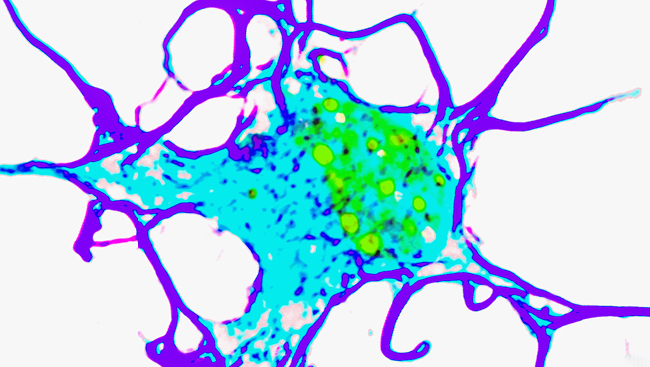 Article Scientific ResearchOrganelles are specialized subcellular structures that serve specific functions in all eukaryotic cells.May 23, 2018
 -
 Annual Meeting Video OutreachNeuroscience research regularly intersects with concepts of human nature, identity, free will, and other philosophical and religious topics. This Neuroscience 2017 Social Issues Roundtable explores paradigms for constructive engagement with diverse and religious audiences. Panelists examine tensions and domains of confluence between scientific and faith perspectives, the underlying values and assumptions in scientific research, and the role of cross-cultural dialogue on science education, practice and policy.May 22, 2018
 -
 Article Scientific ResearchMaterial below summarizes the article, Working Memory Replay Prioritizes Weakly Attended Events, published on August 14, 2017, in eNeuro and authored by Anna Jafarpour, Will Penny, Gareth Barnes, Robert T. Knight, and Emrah Duzel. Working memory is a system with limited capacity that supports keeping information in mind for a short duration. Two important questions are: One, what are the mechanisms by which information is retained during the gap between encoding and recall (that is, the maintenance period), and two, how is information within working memory prioritized? These are often studied with a cuing procedure in which subjects are prompted to focus on one item. For example, if an event in a sequence of three events is cued, the cued event can be decoded during maintenance. In this study, we investigated how the information about a sequence of multiple events is retained without cueing.May 17, 2018




