



Filter
-
(133)
-
(733)
-
(4)
-
(1)
-
(47830)
-
(91)
-
(25)
-
(14)
-
(433)
-
(7)
-
(181)
-
(8)
-
(33)
-
(17)
-
(7)
-
(9)
-
(9)
-
(5)
-
(21)
-
(8)
-
(12)
-
(9)
-
(3)
-
(10)
-
(10)
-
(56)
-
(45)
-
(12)
-
(3)
-
(7)
-
(6)
-
(5)
-
(8)
-
(7)
-
(11)
-
(58)
-
(13)
-
(30)
-
(8)
-
(5)
-
(10)
-
(5)
-
(14)
-
(4)
1271 - 1280
of 52751 results
-
 Journal ArticleAnterior-posterior interactions in the alpha band (8-12 Hz) have been implicated in a variety of functions including perception, attention, and working memory. The underlying neural communication can be flexibly controlled by adjusting phase relations when activities across anterior-posterior regions oscillate at a matched frequency. We thus investigated how alpha oscillation frequencies spontaneously converged along anterior-posterior regions by tracking oscillatory EEG activity while participants rested. As more anterior-posterior regions (scalp sites) frequency-converged, the probability of additional regions joining the frequency convergence increased, and so did oscillatory synchronization at participating regions (measured as oscillatory power), suggesting that anterior-posterior frequency convergences are driven by inter-regional entrainment. Notably, frequency convergences were accompanied by two types of approximately linear phase gradients, one progressively phase-lagged in the anterior direction...Mar 11, 2025
 -
Journal ArticleBeta event-related spectral perturbation (ERSP), including bilateral movement-related beta desynchronization (MRBD) and post-movement beta synchronization (PMBS), can be evoked by unilateral speed movement. A potential correlation might exist between power (de)synchronization and interhemispheric coherence during movement execution. However, during the PMBS phase, the existence of interhemispheric coupling and the effect of speed on it are largely undiscovered. This study aimed to answer this question. In the present study, we investigated eight healthy, right-handed volunteers using a combination of electroencephalography (EEG), transcranial magnetic stimulation (TMS), and electromyography (EMG). We explored interhemispheric (directed) coherence during isotonic right index finger abduction movements at two speeds: ballistic and self-paced. We discovered that: (i) Compared to the MRBD period, interhemispheric coherence was greater during the PMBS period. Furthermore, ballistic movement induced a larger coh...Mar 11, 2025
-
Journal ArticleAlpha (8-12 Hz) oscillations and default mode network (DMN) activity dominate the brain’s intrinsic activity in the temporal and spatial domains, respectively. They are thought to play crucial roles in the spatiotemporal organization of the complex brain system. Relatedly, both have been implicated, often concurrently, in diverse neuropsychiatric disorders, with accruing electroencephalogram/magnetoencephalogram (EEG/MEG) and functional magnetic resonance imaging (fMRI) data linking these two neural activities both at rest and during key cognitive operations. Prominent theories and extant findings thus converge to suggest a mechanistic relationship between alpha oscillations and the DMN. Here, we leveraged simultaneous EEG-fMRI data acquired before and after alpha-frequency transcranial alternating current stimulation ( α -tACS) and observed that α -tACS tightened the dynamic coupling between spontaneous fluctuations in alpha power and DMN connectivity (especially, in the posterior DMN, between the posteri...Mar 11, 2025
-
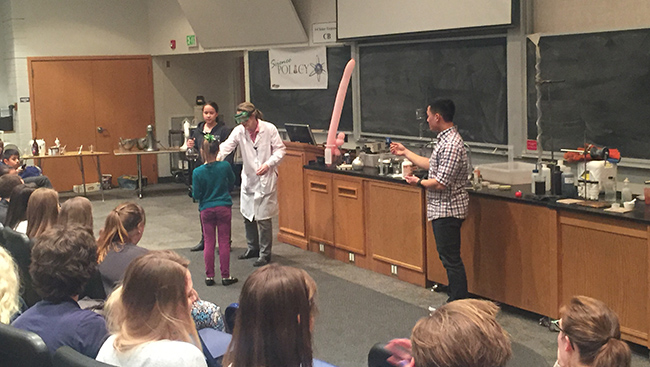 Article AdvocacyBefore becoming an SfN Early Career Policy Ambassador (ECPA), I had no experience with science policy advocacy. This is probably why I was surprised when in 2016, while attending SfN’s Capitol Hill Day, I discovered how difficult it would be to persuade my Utah representatives to support pro-science policies.Jul 18, 2018
 -
Journal ArticleCentral sensitization plays a critical role in bladder pain syndrome/interstitial cystitis (BPS/IC). Electroacupuncture (EA) nerve stimulation therapy has been broadly acknowledged as an effective means of alleviating chronic pathological pain. However, it remains to be explored whether EA is effective in mitigating pain-sensitive symptoms of BPS/IC and the mechanisms involved. This study aims to investigate the analgesic effect and mechanism of EA therapy. To achieve this goal, we employed several techniques: mechanical pain threshold tests to assess pain sensitivity, urodynamic studies to evaluate bladder function, Western blotting (WB) for protein analysis, immunofluorescence for visualizing, and transcriptomics. A rat cystitis model was established through a systemic intraperitoneal injection with cyclophosphamide (CYP). EA therapy was executed by stimulating the deep part of the hypochondriac point, where the 2nd-4th sacral nerves traverse. EA treatment was observed to effectively reduce mechanical al...Mar 10, 2025
-
Journal ArticleAlexander disease (AxD) is a rare neurological disorder caused by dominant gain-of-function mutations in the gene for glial acidic fibrillary protein ( GFAP ). Expression of mutant protein results in astrocyte dysfunction that ultimately leads to developmental delay, failure to thrive, and intellectual and motor impairment. The disease is typically fatal, and at present there are no preventative or effective treatments. To gain a better understanding of the link between astrocyte dysfunction and behavioral deficits in AxD we recently developed a rat model that recapitulates many of the clinical features of the disease, including failure to thrive, motor impairment, and white matter deficits. In the present study, we show that both male and female AxD model rats exhibit a neurodegenerative profile with a progressive neuroinflammatory response combined with reduced expression of synaptic and mitochondrial proteins. Consistent with these results AxD rats show reduced hippocampal long-term potentiation and are...Mar 10, 2025
-
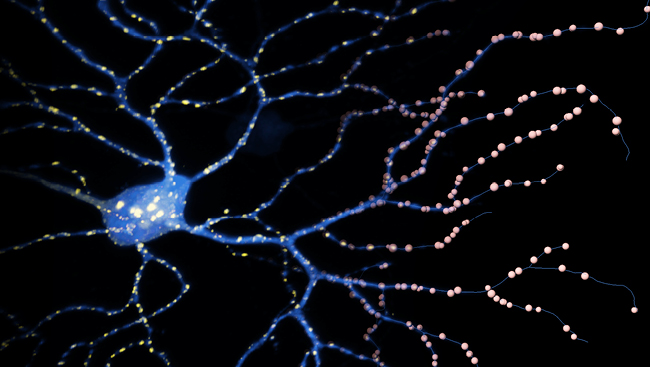 Article Annual Meeting Scientific ResearchMaterial below is adapted from the SfN Short Course, The Glymphatic System by Nadia Aalling, MSc, Anne Sofie Finmann Munk, BSc, Iben Lundgaard, PhD, and Maiken Nedergaard, MD, DMSc. Short Courses are day-long scientific trainings on emerging neuroscience topics and research techniques held just prior to SfN’s annual meeting. The glymphatic system is a network of vessels that clear waste from the central nervous system (CNS), mostly during sleep. Recent evidence suggests that the glymphatic system may be disrupted in and contribute to some diseases of the brain. Cerebrospinal fluid (CSF) flows alongside the arteries and is forced into the spaces next to the smaller blood vessels that enter the brain. There, it interchanges with interstitial fluid — the fluid surrounding the brain’s cells — often through a channel expressed by astrocytes, glial cells whose feet surround the space around the brain’s capillaries, forming the glymphatic vasculature. Glymphatic transport uses energy from arteries pulsing and from the pressure created as CSF is made, as well as from as yet unknown forces. This interchange results in the collection of waste products, such as metabolites and proteins, and their transfer to CSF, which carries them out of the brain to sites where CSF drains.Jul 17, 2018
 -
 Video Scientific ResearchThis Neurobiology of Disease Workshop, held at Neuroscience 2017, embraces the breadth of "gene therapy," including viral vectors, oligonucleotides, and cell therapies used in promising preclinical studies and clinical trials for a variety of neurological disorders long thought to be incurable. These new methods involve DNA engineering, gene replacement using virus vectors and the patient's own genetically modified cells, oligonucleotides that can "revive" beneficial gene functions or suppress toxic ones, and viruses and cells armed to tackle brain tumors.Jul 12, 2018
 -
 Webinar Scientific ResearchAdvances in gene therapy have propelled the field into the clinical realm, and new medical treatment options are beginning to offer help in neurological diseases long thought to be incurable.Jul 12, 2018
 -
 Video Annual Meeting Professional DevelopmentUnderstanding current NIH policy and priorities is advantageous to grant applicants. Much has changed at NIH, including an emphasis on rigor and transparency influencing scores in review, new policies on clinical trial, evolving scientific priorities at NIH institutes; and new funding opportunities. Hear from senior representatives at the Center for Scientific Review, National Institute of Neurological Disorders and Stroke, National Institute on Aging, National Institute on Drug Abuse, and National Institute of Mental Health about the implications of these changes for neuroscience grant applications.Jul 11, 2018




