



Filter
-
(133)
-
(733)
-
(4)
-
(1)
-
(47830)
-
(91)
-
(25)
-
(14)
-
(433)
-
(7)
-
(181)
-
(8)
-
(33)
-
(17)
-
(7)
-
(9)
-
(9)
-
(5)
-
(21)
-
(8)
-
(12)
-
(9)
-
(3)
-
(10)
-
(10)
-
(56)
-
(45)
-
(12)
-
(3)
-
(7)
-
(6)
-
(5)
-
(8)
-
(7)
-
(11)
-
(58)
-
(13)
-
(30)
-
(8)
-
(5)
-
(10)
-
(5)
-
(14)
-
(4)
961 - 970
of 52751 results
-
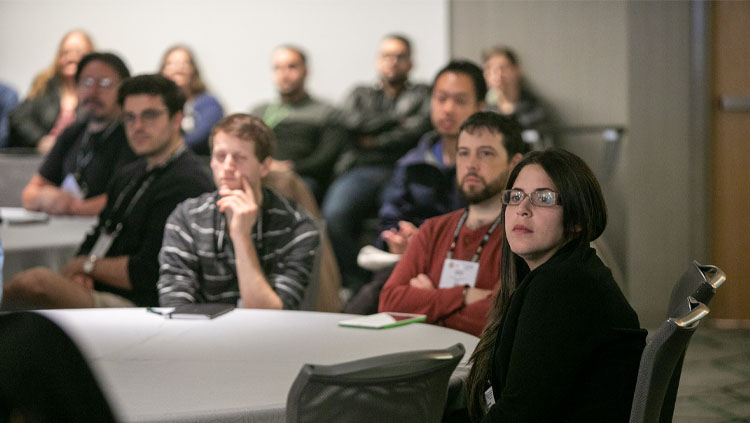 Article Professional DevelopmentYoko Yazaki-Sugiyama’s personal growth in science interweaves perfectly with lessons on how scientists use songbirds to study language development. As she shared at the 2019 Meet-the-Experts session “Lessons for Songbirds and Scientists: Learning to Communicate More Effectively by Listening to Others,” her story began at Sophia University, in Tokyo, where she studied quail with Kiyoshi Acki. Acki encouraged his students to pursue independent ideas and projects, advising his students “to work on what you can be interested in.” Taking this advice to heart, Yazaki-Sugiyama read studies of white-crowned sparrows in different locations that “spoke” different dialects. She became fascinated by the fact that when baby birds of the same species were collected from each location and raised together, they sang in the same way.Mar 11, 2020
 -
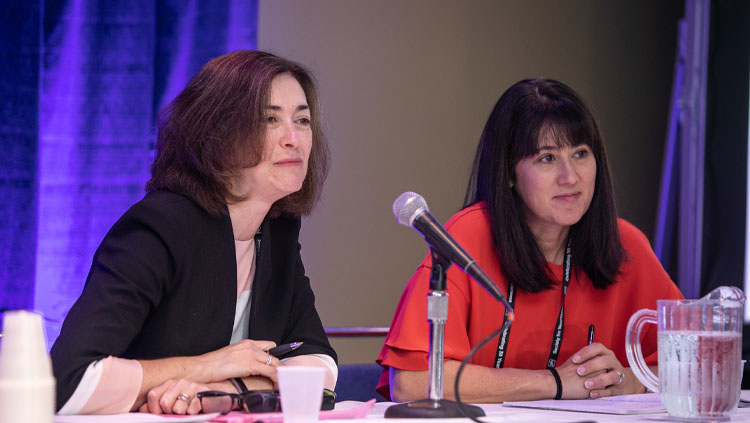
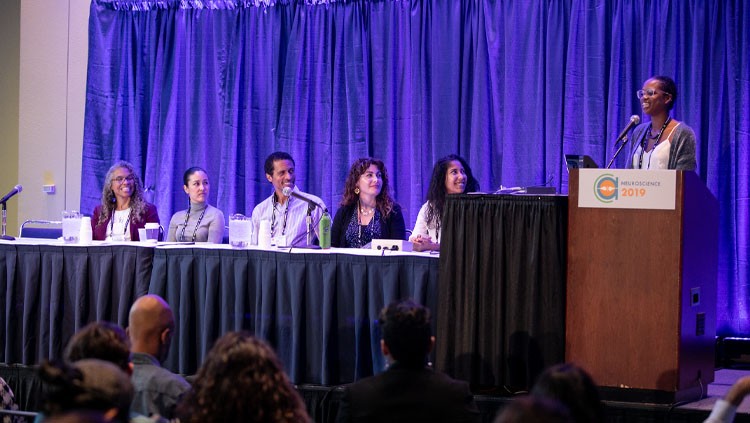 Video Annual Meeting Professional DevelopmentImpostor syndrome, often described as the fear of being exposed as a fraud, may slow or stall optimal career advancement. In this video, you’ll hear other neuroscientists’ experiences and come away with strategies for leaning into and reframing self-doubt to confront the “impostor” in yourself or your trainees.Mar 5, 2020
 -
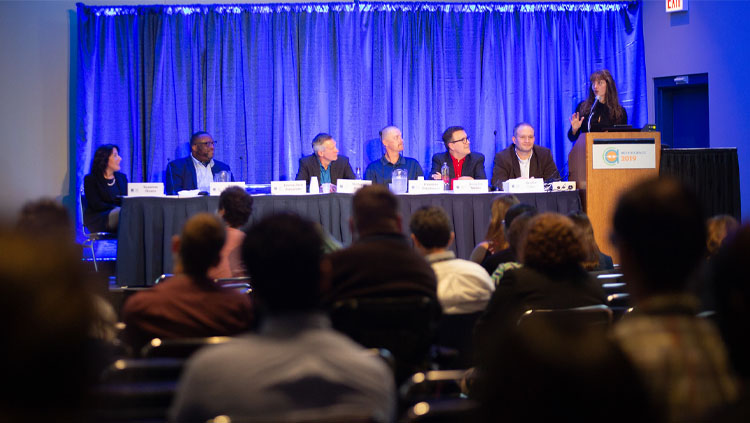 Video Scientific ResearchHow will scientists keep humanity at the center of rapidly expanding human-technology symbiotic unions? This Social Issues Roundtable addresses questions about technology's impact on society and the conditions for its governance. Panelists discuss connecting humans and machines in the context of social issues — such as equality, identify, security, privacy, and access — rather than medical application.Mar 5, 2020
 -
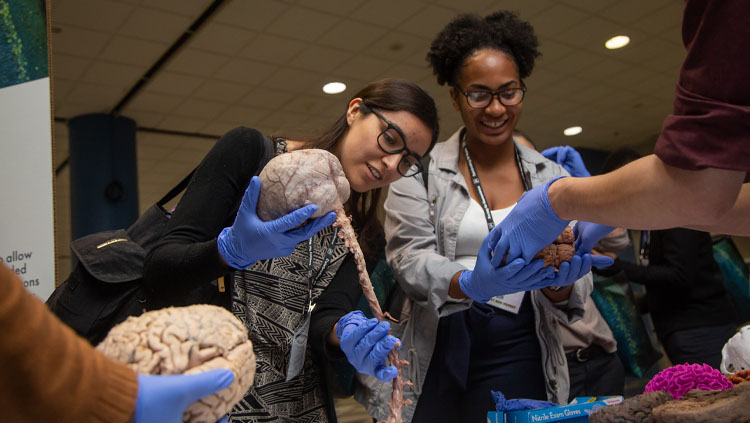 Video Annual Meeting OutreachAs a first-generation immigrant and a woman, Teodora Stoica followed her passion to a PhD program in neuroscience, adapting in part through her involvement in science outreach. In this recording from the Brain Awareness Campaign Event at Neuroscience 2019, she shares her story to show how outreach can guide the next generation of scientists along their path. Brain Awareness Week is a global campaign bringing brain science to life to increase public awareness of the impact of brain research and to celebrate its progress.Mar 5, 2020
 -
 Video Professional DevelopmentThis resource was featured in the NeuroJobs Career Center. Visit today to search the world’s largest source of neuroscience opportunities. Every scientist can write about their science in a way that brings attention to and educates nonscientists about their work. Watch this video for examples of successful science writing, questions to help you think about the story you want to tell, and components of the science writing process. You’ll also hear advice for writing clear and effective research summaries.Mar 5, 2020
 -
 Video Annual Meeting Career PathsDiscover best practices for teaching computation for neuroscience. In this video, you’ll learn: The statistical background students need. Programming languages that are the most useful for computational neuroscience. Computational methods for physiological data. Practical aspects of teaching computational neuroscience. You’ll also come away with resources for teaching and learning computational modeling in neuroscience.Mar 5, 2020
 -
 Article Career PathsThe moment is promising for women in neuroscience and related fields, in which women have been — and are — underrepresented. Studies have shown that women are conditioned to believe they are better suited for the arts than for science. Studies also suggest, however, that having female scientist role models increases women's ability to see themselves in male-dominated spaces. This series highlights the scientific accomplishments and careers of female leaders working across disciplines. It provides role models to female scientists working or considering careers in neuroscience, engineering, and technology, the boundaries of which are dissolving to define new, intermediary fields like neural engineering, becoming more like sketches than bold lines.Mar 2, 2020
 -
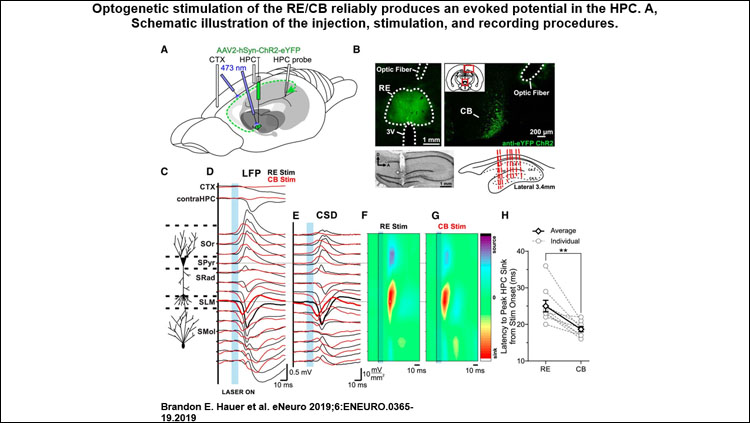 Article Scientific ResearchMaterial below summarizes the article The Reuniens Nucleus of the Thalamus Has an Essential Role in Coordinating Slow-Wave Activity Between Neocortex and Hippocampus, published on September 23, 2019, in eNeuro and authored by Brandon E. Hauer, Silvia Pagliardini, and Clayton T. Dickson. Highlights Activity in the nucleus reuniens (RE) is related to slow sleep-related oscillations in two key episodic memory areas that it connects, the prefrontal cortex (PFC) and hippocampus (HPC). Selectively inhibiting the RE robustly impairs slow-wave coordination between PFC and HPC. Because slow-wave synchrony during sleep facilitates episodic memory, the RE is likely a key node in a PFC-HPC circuit promoting memory consolidation. Brandon HauerFeb 20, 2020
 -
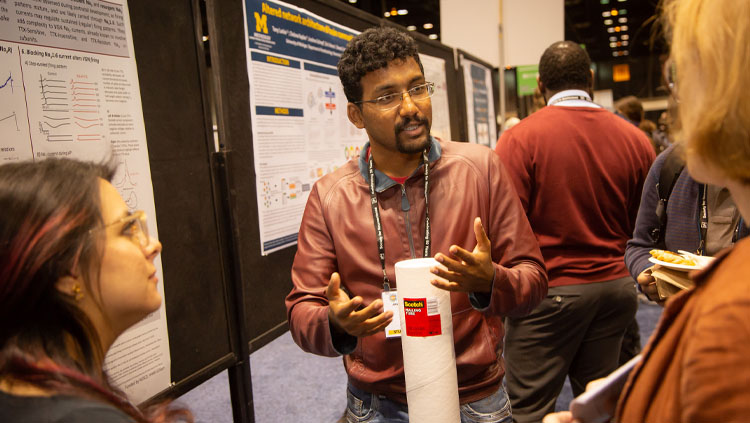 Article Professional DevelopmentExciting scientific opportunities are available practically anywhere in the world, but many PhD students consider the United States or countries in Europe as primary destinations for a postdoc. Deciding between the two can be a challenge, as they have similar demands on research quality, quantity, and impact. As with any work environment, however, science is highly influenced by local culture. If you’re deciding between Europe and the United States, focus your efforts on learning about the culture of the places you’re considering. In this article, we’ll share cultural themes that arose among our personal experiences moving from Europe to the United States. Our intent is to empower you to make a more informed choice about where to take this next step in your career.Feb 19, 2020
 -
 Video DiversityHaving mentors with backgrounds different than your own can bring you valuable perspective. A shared passion for science can be a great connector across disparate life experiences.Feb 18, 2020




