



Filter
-
(133)
-
(735)
-
(4)
-
(1)
-
(47863)
-
(93)
-
(25)
-
(14)
-
(434)
-
(7)
-
(186)
-
(8)
-
(33)
-
(17)
-
(7)
-
(10)
-
(9)
-
(5)
-
(21)
-
(8)
-
(12)
-
(9)
-
(3)
-
(10)
-
(10)
-
(56)
-
(46)
-
(12)
-
(3)
-
(7)
-
(6)
-
(5)
-
(8)
-
(7)
-
(11)
-
(58)
-
(13)
-
(31)
-
(8)
-
(5)
-
(10)
-
(5)
-
(16)
-
(4)
9581 - 9590
of 52804 results
-
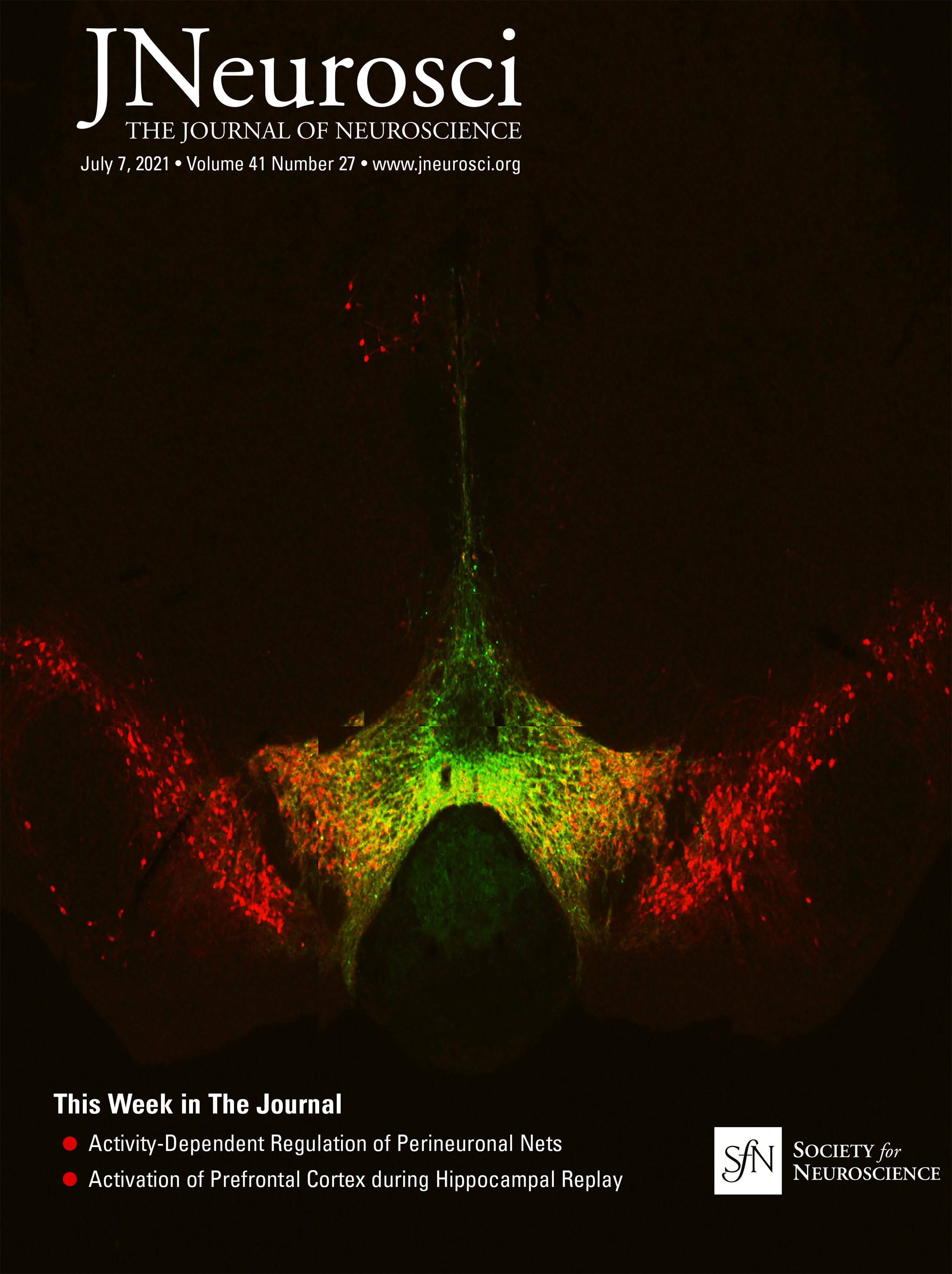 Journal ArticlePerineuronal net (PNN) accumulation around parvalbumin-expressing (PV) inhibitory interneurons marks the closure of critical periods of high plasticity, whereas PNN removal reinstates juvenile plasticity in the adult cortex. Using targeted chemogenetic in vivo approaches in the adult mouse visual cortex, we found that transient inhibition of PV interneurons, through metabotropic or ionotropic chemogenetic tools, induced PNN regression. EEG recordings indicated that inhibition of PV interneurons did not elicit unbalanced network excitation. Likewise, inhibition of local excitatory neurons also induced PNN regression, whereas chemogenetic excitation of either PV or excitatory neurons did not reduce the PNN. We also observed that chemogenetically inhibited PV interneurons exhibited reduced PNN compared with their untransduced neighbors, and confirmed that single PV interneurons express multiple genes enabling individual regulation of their own PNN density. Our results indicate that PNN density is regulated in...Jul 7, 2021
 -
Journal ArticleSystemic administration of ML297, a selective activator of G-protein-gated inwardly rectifying K+ (GIRK) channels, decreases innate avoidance behavior in male C57BL/6J mice. The cellular mechanisms mediating the ML297-induced suppression of avoidance behavior are unknown. Here, we show that systemic ML297 administration suppresses elevated plus maze (EPM)-induced neuronal activation in the ventral hippocampus (vHPC) and basolateral amygdala (BLA) and that ML297 activates GIRK1-containing GIRK channels in these limbic structures. While intracranial infusion of ML297 into the vHPC suppressed avoidance behavior in the EPM test, mirroring the effect of systemic ML297, intra-BLA administration of ML297 provoked the opposite effect. Using neuron-specific viral genetic and chemogenetic approaches, we found that the combined inhibition of excitatory neurons in CA3 and dentate gyrus (DG) subregions of the vHPC was sufficient to decrease innate avoidance behavior in the EPM, open-field, and light-dark tests in male ...Jul 7, 2021
-
Journal ArticleSynapses are actively dismantled to mediate circuit refinement, but the developmental pathways that regulate synaptic disassembly are largely unknown. We have previously shown that the epithelial sodium channel ENaC/UNC-8 triggers an activity-dependent mechanism that drives the removal of presynaptic proteins liprin-α/SYD-2, Synaptobrevin/SNB-1, RAB-3, and Endophilin/UNC-57 in remodeling GABAergic neurons in Caenorhabditis elegans ([Miller-Fleming et al., 2016][1]). Here, we report that the conserved transcription factor Iroquois/IRX-1 regulates UNC-8 expression as well as an additional pathway, independent of UNC-8, that functions in parallel to dismantle functional presynaptic terminals. We show that the additional IRX-1-regulated pathway is selectively required for the removal of the presynaptic proteins, Munc13/UNC-13 and ELKS, which normally mediate synaptic vesicle (SV) fusion and neurotransmitter release. Our findings are notable because they highlight the key role of transcriptional regulation in s...Jul 7, 2021
-
-
Journal ArticleThe ability to establish associations between visual objects and speech sounds is essential for human reading. Understanding the neural adjustments required for acquisition of these arbitrary audiovisual associations can shed light on fundamental reading mechanisms and help reveal how literacy builds on pre-existing brain circuits. To address these questions, the present longitudinal and cross-sectional MEG studies characterize the temporal and spatial neural correlates of audiovisual syllable congruency in children (age range, 4–9 years; 22 males and 20 females) learning to read. Both studies showed that during the first years of reading instruction children gradually set up audiovisual correspondences between letters and speech sounds, which can be detected within the first 400 ms of a bimodal presentation and recruit the superior portions of the left temporal cortex. These findings suggest that children progressively change the way they treat audiovisual syllables as a function of their reading experien...Jul 7, 2021
-
Journal ArticleRecent data and motor control theory argues that movement planning involves preparing the neural state of primary motor cortex (M1) for forthcoming action execution. Theories related to internal models, feedback control, and predictive coding also emphasize the importance of sensory prediction (and processing) before (and during) the movement itself, explaining why motor-related deficits can arise from damage to primary somatosensory cortex (S1). Motivated by this work, here we examined whether motor planning, in addition to changing the neural state of M1, changes the neural state of S1, preparing it for the sensory feedback that arises during action. We tested this idea in two human functional MRI studies ( N = 31, 16 females) involving delayed object manipulation tasks, focusing our analysis on premovement activity patterns in M1 and S1. We found that the motor effector to be used in the upcoming action could be decoded, well before movement, from neural activity in M1 in both studies. Critically, we fo...Jul 7, 2021
-
Journal ArticleIdentifying true motivation for Pareto lies, which are mutually beneficial for both the liar and others, can be challenging because different covert motivations can lead to identical overt behavior. In this study, we adopted a brain-fingerprinting approach, combining both univariate and multivariate analyses to estimate individual measures of selfish motivation in Pareto lies by the degree of multivoxel neural representation in the mPFC for Pareto lies conforming with those for selfish versus altruistic lies in human participants of either sex. An increase in selfish motivation for Pareto lies was associated with higher mean-level activity in both ventral and rostral mPFC. The former showed an increased pattern similarity to selfish lies, and the latter showed a decreased pattern similarity to altruistic lies. Higher ventral mPFC pattern similarity predicted faster response time in Pareto lies. Our findings demonstrated that hidden selfish motivation in white lies can be revealed by neural representation i...Jul 7, 2021
-
Journal ArticleRepeated cocaine exposure causes dendritic spine loss in the orbitofrontal cortex, which might contribute to poor orbitofrontal cortical function following drug exposure. One challenge, however, has been verifying links between neuronal structural plasticity and behavior, if any. Here we report that cocaine self-administration triggers the loss of dendritic spines on excitatory neurons in the orbitofrontal cortex of male and female mice (as has been reported in rats). To understand functional consequences, we locally ablated neuronal β1-integrins, cell adhesion receptors that adhere cells to the extracellular matrix and thus support dendritic spine stability. Degradation of β1-integrin tone: (1) caused dendritic spine loss, (2) exaggerated cocaine-seeking responses in a cue-induced reinstatement test, and (3) impaired the ability of mice to integrate new learning into familiar routines, a key function of the orbitofrontal cortex. Stimulating Abl-related gene kinase, overexpressing Proline-rich tyrosine kin...Jul 7, 2021
-
Journal ArticleTransient receptor potential (TRP) channels are broadly required in animals for sensory physiology. To provide insights into regulatory mechanisms, the structures of many TRPs have been solved. This has led to new models, some of which have been tested in vitro . Here, using the classical TRP required for Drosophila visual transduction, we uncovered structural requirements for channel function in photoreceptor cells. Using a combination of molecular genetics, field recordings, protein expression analysis, and molecular modeling, we interrogated roles for the S4–S5 linker and the TRP domain, and revealed mutations in the S4–S5 linker that impair channel opening or closing. We also uncovered differential requirements for the two highly conserved motifs in the TRP domain for activation and protein stability. By performing genetic complementation, we found an intrasubunit interaction between the S4–S5 linker and the S5 segment that contributes to activation. This analysis highlights key structural requirements...Jul 7, 2021
-
Journal ArticleThe dorsal region of the bed nucleus of the stria terminalis (dBNST) receives substantial dopaminergic input which overlaps with norepinephrine input implicated in stress responses. Using ex vivo fast scan cyclic voltammetry in male C57BL6 mouse brain slices, we demonstrate that electrically stimulated dBNST catecholamine signals are of substantially lower magnitude and have slower uptake rates compared with caudate signals. Dopamine terminal autoreceptor activation inhibited roughly half of the catecholamine transient, and noradrenergic autoreceptor activation produced an ∼30% inhibition. Dopamine transporter blockade with either cocaine or GBR12909 significantly augmented catecholamine signal duration. We optogenetically targeted dopamine terminals in the dBNST of transgenic ( TH:Cre ) mice of either sex and, using ex vivo whole-cell electrophysiology, we demonstrate that optically stimulated dopamine release induces slow outward membrane currents and an associated hyperpolarization response in a subset ...Jul 7, 2021




