



Filter
-
(133)
-
(733)
-
(4)
-
(1)
-
(47830)
-
(91)
-
(25)
-
(14)
-
(433)
-
(7)
-
(181)
-
(8)
-
(33)
-
(17)
-
(7)
-
(9)
-
(9)
-
(5)
-
(21)
-
(8)
-
(12)
-
(9)
-
(3)
-
(10)
-
(10)
-
(56)
-
(45)
-
(12)
-
(3)
-
(7)
-
(6)
-
(5)
-
(8)
-
(7)
-
(11)
-
(58)
-
(13)
-
(30)
-
(8)
-
(5)
-
(10)
-
(5)
-
(14)
-
(4)
871 - 880
of 52751 results
-
 Webinar Scientific ResearchWhile COVID-19 is often thought of as primarily a respiratory disease, many neurological symptoms are present in those affected. Societal changes in response to the pandemic, such as social isolation and economic disruption, influence mental health. In this webinar, we will discuss recent findings on the direct and indirect implications of COVID-19 on the health and function of the nervous system.Jul 6, 2020
 -
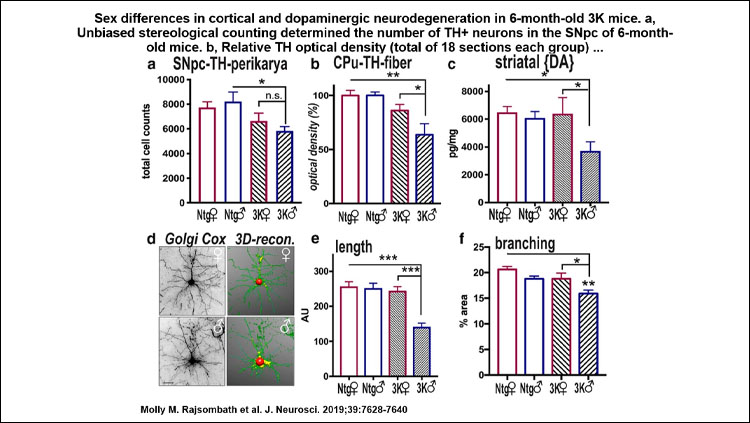 Article Scientific ResearchFemale sex preserves physiological a-synuclein (αS) tetramer formation vs. monomer clustering into vesicle and lipid-rich aggregates. Increasing brain estrogen improves αS tetramer-to-monomer ratio, neurite fiber abundance and mitigates the Parkinson’s disease-like motor deficits. Female sex, and estrogen in particular, link to healthy αS tetramers and associated vesicle lipid changes suggest viable drug targets in Parkinson’s disease.Jul 2, 2020
 -
 Article Professional DevelopmentYou will only get busier as you advance in your career, but that doesn’t mean your life has to feel unmanageable. Use these tips to manage your time, self, and overall goals.Jun 30, 2020
 -
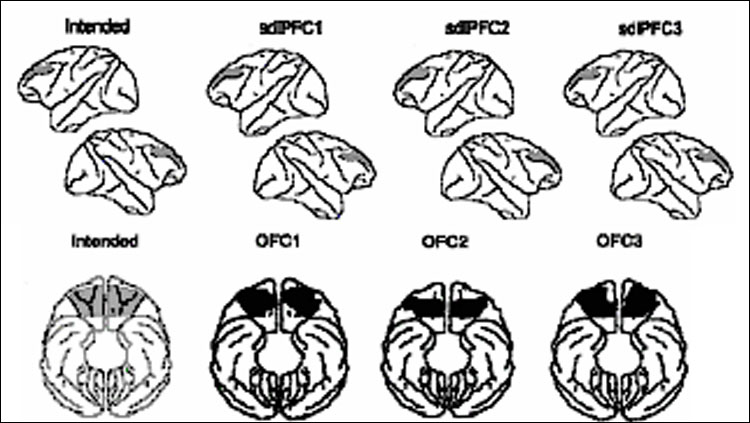 Article Scientific ResearchMacaque monkeys can evaluate their own memory success. Introspection of their own memory success depends on the superior dorsolateral prefrontal cortex but not the orbitofrontal cortex. PFC contains distinct elements of metacognition.Jun 25, 2020
 -
 Webinar CommunityNeuroscience is stronger with diverse perspectives. Although there have been gains in the percentage of underrepresented neuroscience researchers in recent years, there is still more work to be done to increase representation of diverse researchers and to create inclusive and equitable research environments.Jun 23, 2020
 -
 Article Scientific ResearchMarta Pratelli researches the downstream effects of environment and experience on brain health and the risk of developing psychiatric illness. In addition to insights from her own research, in this interview she offers her perspective on the role of collaboration and chance in scientific breakthroughs as well as areas of mental health research, such as epigenetics, that have potential for future outcomes.Jun 23, 2020
 -
 Article Professional DevelopmentLi-Huei Tsai’s journey to understand the pathogenic mechanisms behind neurological disorders has led her lab to develop a novel yet simple light-based therapy for Alzheimer’s disease that is on its way to human trials.Jun 22, 2020
 -
 Journal ArticleInteroception and associated subjective states shape adaptive behaviours. In humans, interoceptive information is hierarchically processed in the insular cortex (IC), being integrated first in the posterior IC (PIC) and then processed in the anterior IC (AIC) to generate subjective states. However, it has not been established whether this is the case in other species nor whether utilization of interoceptive states to guide behaviour is also specifically associated with functional engagement of the AIC, as suggested by this hierarchical model. We investigated in male Sprague Dawley rats whether the use of pharmacologically-induced internal states to guide instrumental behaviour in a discrimination task functionally engages the AIC as opposed to the mere experience of such states. Rats trained to use the interoceptive state produced by the centrally-acting GABAA receptor antagonist pentylenetetrazol (PTZ) or the peripherally-acting β-adrenoreceptor agonist isoproterenol to guide their behaviour, performed as...Jul 17, 2025
 -
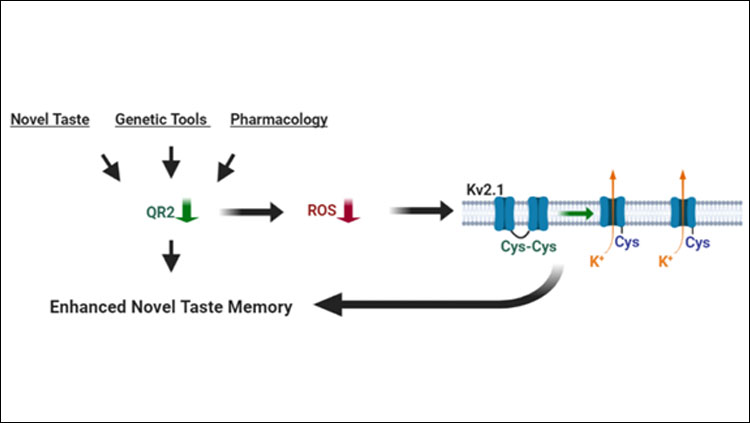 Article Scientific ResearchQR2 is involved across species in the important process of forming new memories of unfamiliar tastes, enabling animals to learn about safe or harmful foodstuffs. It does so by being removed from the anterior insular cortex (aIC), via the destabilization of its mRNA by miR182, which is itself dependent on local disinhibition of acetylcholine (ACh) release. Removal of QR2 in the aIC reduces reactive oxygen species (ROS) there, affecting the potassium channel Kv2.1, which results in a stable long-term memory of a newly experienced taste, a process that deteriorates with age and disease.Jun 18, 2020
 -
 Article OutreachIn a continuously digitizing world, how can your chapter evolve its purpose to meet these needs? As you develop a strategy to increase opportunities for networking and outreach online, here are three high-level principles to keep in mind.Jun 17, 2020




