



Filter
-
(133)
-
(733)
-
(4)
-
(1)
-
(47830)
-
(91)
-
(25)
-
(14)
-
(433)
-
(7)
-
(181)
-
(8)
-
(33)
-
(17)
-
(7)
-
(9)
-
(9)
-
(5)
-
(21)
-
(8)
-
(12)
-
(9)
-
(3)
-
(10)
-
(10)
-
(56)
-
(45)
-
(12)
-
(3)
-
(7)
-
(6)
-
(5)
-
(8)
-
(7)
-
(11)
-
(58)
-
(13)
-
(30)
-
(8)
-
(5)
-
(10)
-
(5)
-
(14)
-
(4)
711 - 720
of 52751 results
-
 Journal ArticleThe environment experienced by children, such as exposure to chronic early life adversity (ELA), increases lifespan brain disorder risk. The mechanisms that link ELA exposure to functional brain disruptions are not well understood. A limited-bedding and nesting paradigm, in which ELA is induced in mouse pups over the first postnatal week through disruption of maternal care, is characterized by limited resources, environment unpredictability, and disruption of reward and cognitive behaviors. Studies using this model demonstrated sex-selective alterations in hippocampal mitochondrial-associated proteins in response to ELA compared to care as usual (CAU). Further, oxidative phosphorylation (OXPHOS) capacity and complex I activity are increased in ELA juveniles, yet decreased in adults, with the impact of ELA moderated by sex in female adults. Given that altered mitochondrial function is a key mediator in metabolic adaptations, the goal of the present study was to evaluate the possibility of reversing mitochon...Sep 11, 2025
 -
Journal ArticleAngelman syndrome (AS) is a rare neurodevelopmental disorder caused by loss of expression of the maternal UBE3A allele, and is characterized by a constellation of impactful neurological symptoms. While previous work has uncovered outsized contributions of GABAergic neuron-selective Ube3a deletion to seizure susceptibility and electroencephalography (EEG) phenotypes in a mouse model of AS, the neuronal populations governing a broader range of behaviors have not been studied. Here, we used male and female mice to test the consequences of Ube3a deletion from GABAergic or glutamatergic neurons across a well-characterized battery of AS-relevant behaviors. Surprisingly, we observed deficits in numerous motor and innate behaviors in mice with glutamatergic Ube3a deletion, and relatively few consequences of GABAergic Ube3a deletion. Furthermore, genetic Ube3a reinstatement in glutamatergic neurons rescued multiple motor and innate behaviors. When tested for sleep-wake behaviors, the selective loss of Ube3a from gl...Sep 11, 2025
-
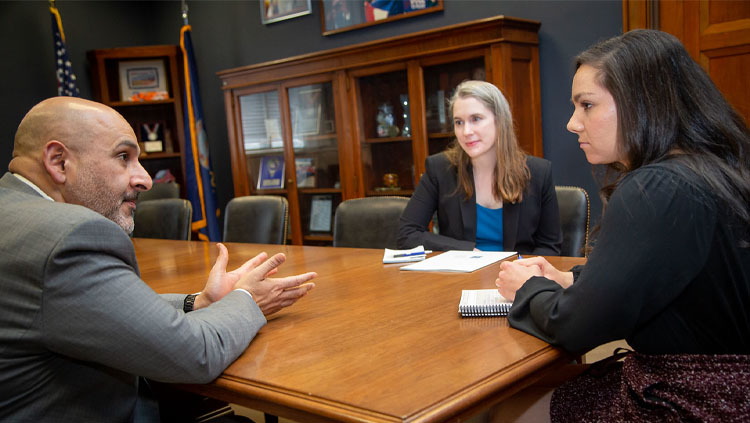 Article AdvocacyThis resource was featured in the NeuroJobs Career Center. Visit today to search the world’s largest source of neuroscience opportunities. I was recently selected as one of the top neuroscience advocates in the country through SfN’s year-long NeuroAdvocate Challenge. I feel honored to be chosen and grateful for the opportunities given to me as a top advocate, including an invitation to speak to members of Congress about neuroscience funding at SfN’s 2021 virtual Capitol Hill Day. When the NeuroAdvocate Challenge was launched in October 2019, I decided to participate because I was approaching the end of my doctorate, was (and still am) interested in pursuing a career in science policy and advocacy, and welcomed an external source of motivation to keep practicing community outreach. As I reflect on the past year of advocacy, there are a handful of guiding principles that kept me motivated, accountable, and effective in my work. I hope these principles help you feel confident in your own advocacy work.Mar 24, 2021
 -
 Poster TrainingIn this short series of lectures, participants will take a look at articles using TVB in a clinical context. Specifically, participants will see how TVB can help to predict recovery after stroke and how individual epileptic seizures are simulated. The course lecturers will briefly describe the methods used and results achieved in the articles. Using the graphical user interface, participants will replicate the principle ideas of the articles and see how artificial lesions introduced in the connectome alter brain dynamics, as well es how seizures spreading through the brain network can be modelled. All videos are using the default TVB dataset, such that you can follow along each step in your own TVB GUI.Mar 16, 2021
 -
Journal ArticleThe plasma membrane acts as a capacitor that plays a critical role in neuronal excitability and signal propagation. Neuronal capacitance is proportional to the area of the cell membrane, thus is often used as a measure of cell size that is assumed to be relatively stable. Recent work proposes that the capacitance of dentate granule cells and cortical pyramidal cells changes across the light-dark cycle in a manner that alters synaptic integration. We addressed this potential change in capacitance using a large dataset of dentate granule cell recordings from adult male and female mice across the light cycle. Our data show that daily changes in the membrane time constant of granule cells result from fluctuation in membrane resistance rather than capacitance. We also confirm the ability to resolve changes in neuronal capacitance induced by altering dentate granule cell membrane area via acute axotomy or genetically induced overgrowth using either voltage-clamp or current-clamp approaches. Our results demonstra...Sep 9, 2025
-
 Article AdvocacyA scientist by training, Karen L. Jones followed her passion for sharing her research with others to become a neuroscience advocate and is now working toward a career in science policy, as the inaugural Trudy Schafer Advocacy Fellow at the League of Women Voters of California. Read her advice for getting started in advocacy as well as why she believes all scientists should advocate, how your scientific background can inform conversations, and policy career opportunities for scientists.Mar 11, 2021
 -
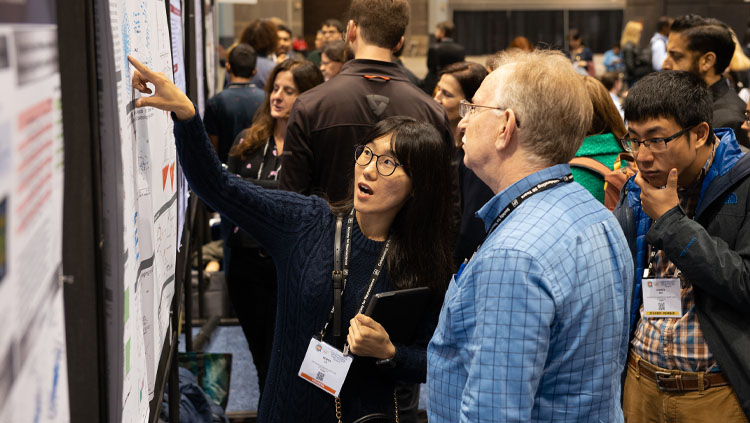 Article DiversityKelley Remole directs scientific and educational programming at Columbia's Zuckerman Institute, a state-of-the-art facility bringing together researchers from across the University and career spectrum to study the brain. Central to the work of the Institute is a commitment to developing diverse research talent, across career levels. Her contributions to this effort and the Institute as a whole are informed by her conviction that academic administrators have a role to play in training the next generation of scientific thought.Mar 10, 2021
 -
Journal ArticleCancer patients experience circadian rhythm disruptions during and after chemotherapy that can contribute to debilitating side effects. It is unknown how chemotherapy mediates circadian disruptions, and specifically the extent to which these disruptions occur at the level of the principal clock, the suprachiasmatic nuclei (SCN) of the hypothalamus. In the present study, we assessed how the commonly used chemotherapeutic, paclitaxel, impacts the SCN molecular clock and SCN-dependent behavioral adaptations to circadian challenges in female mice. Following a repeated chemotherapy regimen, we measured rhythmic SCN expression of molecular clock and circadian-associated transcripts. Paclitaxel chemotherapy disrupted the SCN molecular clock through abolished rhythmicity ( Bmal1 , Nr1d2 ) and damped rhythmic transcription ( Ciart, Dbp, Nr1d1, Per2 ) of key molecular clock genes. We further determined chemotherapy-induced changes to SCN function by measuring circadian wheel running adaptations to a jet lag phase-de...Sep 8, 2025
-
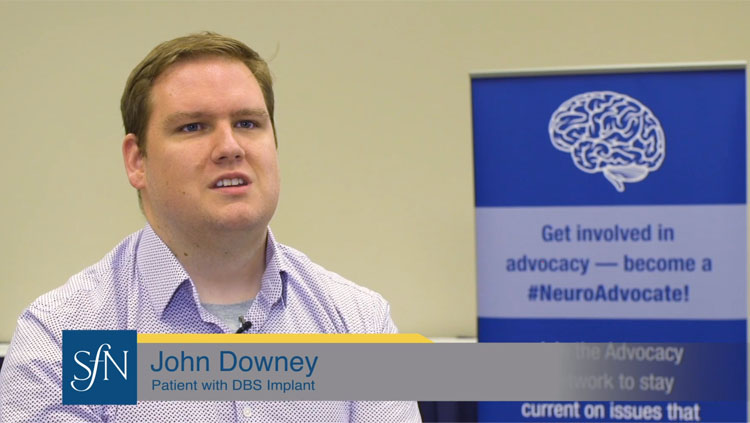 Video AdvocacyAnimal models are essential to the development of life-changing medical devices and technologies. Deep brain stimulation (DBS), for example, used to treat brain disorders such as Parkinson’s and dystonia, developed out of what clinician-scientist Alexandra Nelson calls a “discovery-based approach” to research. It’s helped countless patients including John Downey, who lives with a form of early-onset dystonia called DYT1.Mar 9, 2021
 -
 Webinar Professional DevelopmentPoor mental health among academics and researchers has long been a problematic and pervasive issue but, until recently, it has largely been ignored or even denied. Recent research (Evans 2018, Woolston 2019) and the increased pressure of the COVID19 pandemic, however, have rendered mental health in academia an urgent topic. Dragonfly Mental Health, a nonprofit dedicated to cultivating excellent mental health among academics worldwide, will lead a webinar that aims to destigmatize mental health struggles among SfN members, discuss the prevalence and manifestation of various mental illnesses among neuroscientists, and start the conversation about how we as a community can better support ourselves and each other. This resource was featured in the NeuroJobs Career Center. Visit today to search the world’s largest source of neuroscience opportunities.Mar 4, 2021




